West London has a strong concentration of children’s attractions covering wildlife, science, nature, history, creative play and outdoor recreation. For families travelling from Cardiff, the area provides a practical mix of full-day destinations and shorter activities that suit different ages, interests and weather conditions.
- What are the best children’s attractions in West London?
- Why is Kew Gardens one of the best family attractions in West London?
- Which West London attractions are best for children who love animals?
- Which West London attractions are best for science and educational activities?
- How does Hampton Court Palace provide activities for children?
- What can younger children do at West London attractions?
- Which West London children’s attractions work best in rainy weather?
- How should Cardiff families plan a children’s day out in West London?
- How accessible are children’s attractions in West London?
- What makes West London suitable for a family holiday from Cardiff?
The main attractions include Royal Botanic Gardens, Kew, London Zoo, the London Wetland Centre, Hampton Court Palace, the Science Museum, the Natural History Museum and KidZania London. Each venue provides a different type of family experience, from outdoor exploration and wildlife observation to interactive learning and historical discovery.
West London is particularly suitable for family visitors because attractions are spread across several well-connected areas. Richmond and Kew provide gardens and wildlife experiences. fulham/hammersmith/">Hammersmith and Shepherd’s Bush provide indoor entertainment. South Kensington provides major science and natural-history museums. Hampton provides palace history, gardens and outdoor play.
For families travelling from Cardiff, planning by age, weather, transport and visit duration helps create a more efficient itinerary. Many attractions also provide family facilities, accessibility resources, educational activities and dedicated children’s areas.
What are the best children’s attractions in West London?
The best children’s attractions in West London include Kew Gardens, London Zoo, London Wetland Centre, Hampton Court Palace, KidZania London, the Science Museum and Natural History Museum, offering nature, wildlife, history, science, role play and interactive learning.
These attractions cover the principal categories of family entertainment available across West London and nearby districts.
Royal Botanic Gardens, Kew
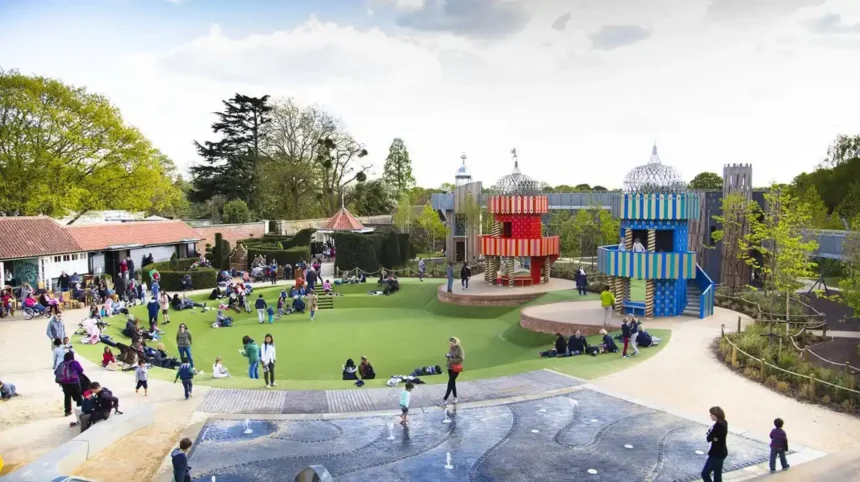
Royal Botanic Gardens, Kew provides one of the strongest outdoor family experiences. Its Children’s Garden is designed for children aged 2 to 12 and occupies a natural setting equivalent to approximately 40 tennis courts. It contains more than 100 mature trees and includes a 4-metre-high canopy walk around a 200-year-old oak tree.
Kew also contains the Treetop Walkway, which rises 18 metres above ground level. Children can observe trees, birds, insects, lichens and fungi from an elevated position. The Hive installation introduces visitors to bee behaviour and colony activity through a large-scale architectural installation.
London Zoo
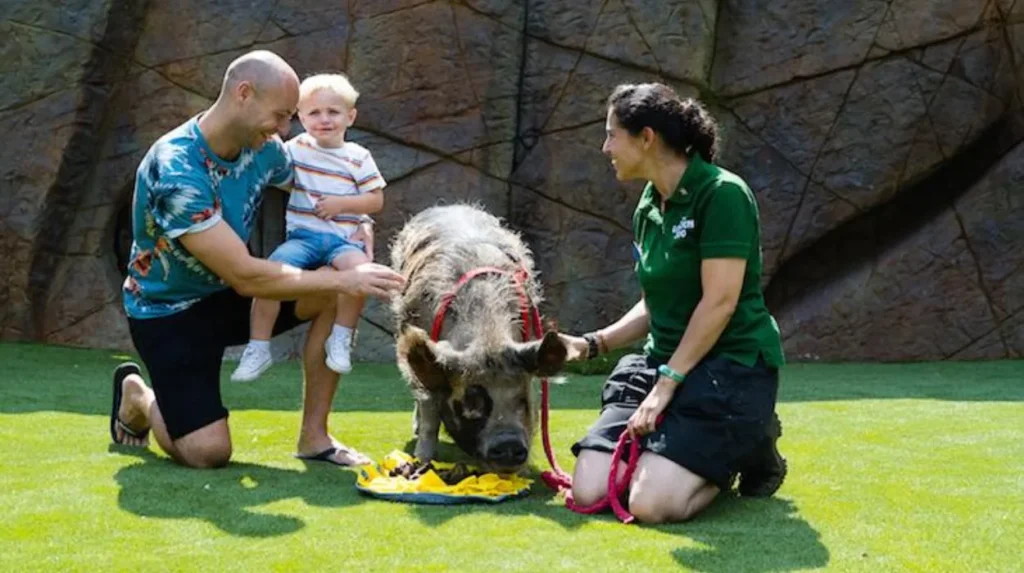
London Zoo is operated by the Zoological Society of London, an international conservation organisation. The zoo houses more than 8,000 animals and provides animal talks, walk-through habitats and dedicated play facilities.
Its Animal Adventure area provides an outdoor play environment with slides, climbing equipment and a Splash Zone. ZooTown provides indoor role play, costumes, toys and interactive activities. Children under three receive free admission according to the zoo’s current family information.
London Wetland Centre
London Wetland Centre provides a different type of wildlife experience. It combines wetland habitats with educational opportunities focused on birds and other wildlife.
The centre is described by its learning programme as an urban wetland environment where learners of different ages and abilities can interact with birds and wildlife from Britain and other parts of the world.
Hampton Court Palace
Hampton Court Palace combines Tudor history, gardens, play and outdoor exploration. The palace was associated with Henry VIII and provides family activities that explain Tudor life through interactive displays, historical spaces and family trails.
The gardens include the Magic Garden adventure playground and the historic hedge Maze. Home Park extends across 750 acres and provides additional outdoor space and wildlife observation.
KidZania London
KidZania London is an indoor role-play attraction located at Westfield London. It is designed for children aged 4 to 14 and recreates a miniature city where children participate in activities based on occupations and adult responsibilities.
Activities include roles such as pilot, surgeon, firefighter, radio DJ and baker. The attraction combines role play with basic concepts of work, earning, spending and learning.
Why is Kew Gardens one of the best family attractions in West London?
Kew Gardens combines outdoor play, botanical science, wildlife observation and educational activities across a major historic garden. Its Children’s Garden serves ages 2 to 12, while trails, learning cards and nature activities support different family learning levels.
Kew Gardens is particularly useful for families seeking an attraction that combines physical activity with structured learning.
The Children’s Garden focuses on what plants need to grow. Its different areas introduce children to water, sunlight, soil and natural processes through physical exploration. The Water Garden includes stepping stones and water features, while the Sun Garden provides sensory planting and pathways.
The attraction also supports family learning beyond conventional museum displays. Kew provides family learning cards, seasonal spotter sheets, nature activities and explorer backpacks. Its Mini and Young Scientist Backpacks are designed for children aged 3–7 and children aged 7 and above.
The Children’s Garden operates without pre-booking for the garden attraction itself, although general Kew admission requirements still apply. Opening times vary seasonally, so families should check the current schedule before travelling.
Kew also has accessibility resources for families. These include quiet sessions in the Children’s Garden, sensory activity packs, Picture Exchange Communication resources and an accessibility map identifying sensory and access information.
For Cardiff families, Kew works well as a substantial outdoor day because it offers several activities within one site. Parents can combine nature trails, play, gardens, cafés and educational activities without moving between multiple attractions.
Which West London attractions are best for children who love animals?
London Zoo and London Wetland Centre provide the strongest wildlife-focused attractions in West London. London Zoo offers thousands of animals, talks and play areas, while London Wetland Centre focuses on wetland habitats, birds, conservation and hands-on environmental learning.
London Zoo provides the larger animal collection. Its official visitor information states that more than 8,000 animals live at the zoo. The collection includes mammals, birds, reptiles, amphibians, fish and invertebrates.
The zoo’s animal talks add an educational component to the visit. Zoo staff explain animal behaviour, conservation challenges and endangered species. This makes the attraction suitable for children who want factual information alongside animal viewing.
The zoo also provides dedicated facilities for younger children. Animal Adventure is an outdoor play area, while ZooTown is an indoor role-play environment. These spaces provide a break from animal exhibits and help families manage longer visits.
London Wetland Centre provides a more habitat-focused experience. Its educational programme emphasises interaction with birds and wildlife from Britain and around the world. This creates opportunities to learn about ecosystems rather than focusing only on individual animals.
The difference between the two venues is important for itinerary planning. London Zoo is centred on a large zoological collection and conservation. London Wetland Centre is centred on wetland habitats, birds and environmental education.
Families interested in nature photography, birdwatching and quieter outdoor exploration can therefore consider the Wetland Centre. Families seeking a larger collection of animals and dedicated play facilities can choose London Zoo.
Which West London attractions are best for science and educational activities?
The Science Museum and Natural History Museum provide major educational attractions for children in West London and nearby South Kensington. They cover science, technology, dinosaurs, mammals, Earth science and interactive learning through galleries, objects and family activities.
Science Museum provides free general admission and is open daily from 10:00 to 18:00, excluding 24–26 December. The museum states that visitors should pre-book free general admission tickets.
Its family attractions include Wonderlab, an interactive science gallery, and Power Up, an interactive gaming exhibition covering five decades of video games and consoles. Destination Space also introduces children to space-related subjects.
The Science Museum is particularly suitable for children who enjoy engineering, technology, space and experiments. The interactive galleries encourage active engagement rather than passive viewing.
The Natural History Museum focuses on the natural world. Its family information highlights dinosaurs, volcanoes, mammals, birds, minerals and scientific research.
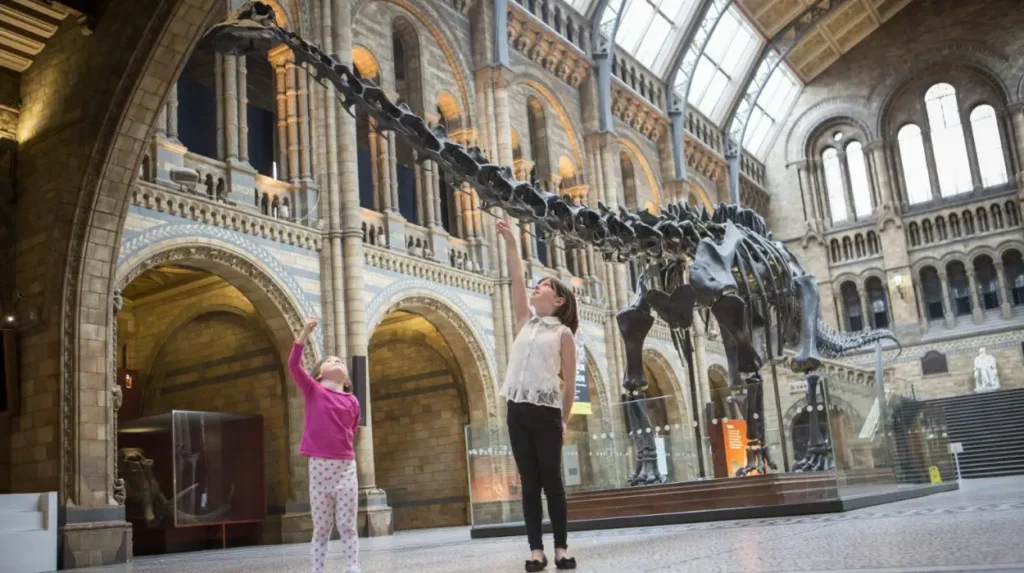
The museum’s Mammals Hall includes a blue whale model and displays about large mammals. The Minerals Gallery contains thousands of geological specimens, including a 635-kilogramme iron meteorite and a 9,381-carat blue topaz.
Children can also explore the museum’s gardens. These provide opportunities to observe wildlife, learn about plants and examine aspects of human evolution and environmental change.
For Cardiff families, both museums can form part of a South Kensington itinerary. The museums are located within the same general cultural district, making it practical to combine them with other London attractions.
How does Hampton Court Palace provide activities for children?
Hampton Court Palace combines Tudor history with interactive exhibitions, family trails, gardens, a playground and a historic maze. Children can learn about Henry VIII, Tudor kitchens and palace life while also using outdoor spaces for play and exploration.
Hampton Court Palace provides a strong historical alternative to conventional children’s attractions.
The palace is closely associated with Henry VIII, the Tudor monarch who ruled England from 1509 until 1547. Visitors can explore Tudor apartments, kitchens, historic rooms and exhibitions that explain court life.
The Tudor World exhibition includes interactive displays, digital artworks and tactile objects. Palace hosts also provide historical information throughout the visitor route.
The Historic Kitchens explain the operation of the Tudor royal household. The palace states that the kitchens supported a household that could require more than 800 meals per day. This provides a practical historical context for children learning about food, work and royal life.
The Family Room contains soft-play equipment for younger children. Family-friendly audio guides and Time Explorers resources provide additional challenges and quizzes.
Outside the palace, the Magic Garden provides a history-themed playground. The Maze is another major family feature and is described by Historic Royal Palaces as the UK’s oldest surviving hedge maze. Home Park provides 750 acres of parkland.
Hampton Court also provides accessibility-focused family programming. Relaxed Morning sessions in the Magic Garden are designed for neurodivergent and learning-disabled children and their families.
The combination of history, play and gardens makes Hampton Court suitable for families with children who have different interests.
What can younger children do at West London attractions?
Younger children have dedicated play and discovery opportunities at Kew Gardens, London Zoo, Hampton Court Palace and KidZania London. These include climbing, sensory exploration, animal discovery, soft play, role play, outdoor playgrounds and age-specific educational activities.
Age suitability is an important factor when selecting children’s attractions.
Kew’s Children’s Garden is specifically designed for children aged 2 to 12. The environment provides physical play through climbing, jumping, running and exploration. Its natural setting also introduces children to basic plant science.
London Zoo provides activities for toddlers and younger children. Children under three enter the zoo free according to its current visitor information. Animal Adventure provides slides, climbing areas and a Splash Zone.
Hampton Court Palace provides a Family Room with soft play equipment. Baby-changing facilities are available in several locations across the palace site, including Base Court, Fountain Court and the Magic Garden.
KidZania London is aimed at children aged 4 to 14. Its activities provide structured role play based on occupations and everyday responsibilities. This makes it more suitable for children who can participate independently in guided activities.
Families with toddlers should therefore prioritise attractions with dedicated early-years facilities. Families with school-age children have a wider choice, including museums, historical sites, wildlife attractions and interactive role-play venues.
Which West London children’s attractions work best in rainy weather?
Indoor attractions provide the most reliable options during wet weather. KidZania London, the Science Museum, the Natural History Museum and indoor facilities at London Zoo and Hampton Court Palace provide activities that reduce dependence on outdoor conditions.
London weather can affect outdoor attractions, particularly gardens, wildlife reserves and palace grounds. Indoor destinations provide more consistent access to activities during rain.
KidZania London operates as an indoor miniature city. Children participate in role-play activities inside Westfield London, making it a practical wet-weather option for families staying in West London.
The Science Museum provides extensive indoor galleries and interactive experiences. Wonderlab and Power Up are particularly relevant for children who prefer hands-on activities.
The Natural History Museum also provides extensive indoor galleries. Dinosaurs, mammals, minerals, birds and Earth science displays provide multiple subjects within one building.
London Zoo is primarily an outdoor attraction, but it contains indoor animal areas and ZooTown. Families should therefore check the daily programme and weather conditions before planning the entire visit around outdoor exhibits.
Hampton Court Palace provides substantial indoor historical spaces alongside its gardens and playground. Families can therefore use the palace interiors as the principal activity during wet conditions and visit outdoor areas when weather permits.
For Cardiff visitors travelling to London, indoor attractions are especially useful because they provide greater certainty when a trip has already been planned around fixed travel dates.
How should Cardiff families plan a children’s day out in West London?
Cardiff families should select attractions according to children’s ages, interests, weather, travel time and required visit length. Booking tickets where required, checking opening times and grouping nearby destinations creates a more efficient West London family itinerary.
Families travelling from Cardiff should begin with the attraction rather than trying to cover the entire West London area in one day.
Kew Gardens is most suitable for families seeking outdoor nature, gardens and physical play. Its Children’s Garden, Treetop Walkway and family learning resources provide several activities within one destination.
London Zoo is suitable for animal-focused visits. Its large collection, talks, play areas and family facilities support longer visits.
The Science Museum and Natural History Museum are suitable for educational city days. Their South Kensington location allows families to focus on science, technology, dinosaurs, mammals and Earth science without travelling between distant parts of London.
Hampton Court Palace is particularly useful for families interested in history. The palace, gardens, Magic Garden and Maze create a combination of indoor and outdoor activities.
KidZania provides a strong indoor option for children aged 4 to 14. Its location at Westfield London also places families near extensive shopping, food and transport facilities.
Families should check official opening times, ticket requirements, temporary closures and event dates before travelling. Kew states that opening times vary seasonally, while the Science Museum requires pre-booking for free general admission.
A practical itinerary should normally focus on one major attraction for a full day. Combining too many large venues creates unnecessary travel and reduces the time available for children to explore.
For a Cardiff family making a short London visit, the best approach is to select an attraction that matches the main purpose of the day. Nature-focused families can choose Kew. Animal-focused families can choose London Zoo. Science-focused families can choose South Kensington museums. History-focused families can choose Hampton Court. Children interested in role play can choose KidZania.
Explore More Area Guide
Soft Play Centres in West London: Family Guide 2026
Kids Clubs and Classes in West London
How accessible are children’s attractions in West London?
Major West London children’s attractions provide accessibility resources covering mobility, sensory needs, family facilities and visitor planning. Kew provides sensory resources, Hampton Court offers relaxed sessions, and major museums provide accessible facilities and visitor information.
Accessibility should form part of family attraction planning rather than being treated as an additional consideration.
Kew provides a dedicated accessibility map, visual guide, Picture Exchange Communication resources and sensory activity packs. It also runs quiet sessions in the Children’s Garden for children with special educational needs and disabilities.
Hampton Court Palace provides quiet Magic Garden sessions for neurodivergent and learning-disabled children and their families. The palace also provides baby-changing facilities and a family room with soft play equipment.
The Science Museum provides accessibility information and assistance with lifts. Its visitor guidance also provides sensory versions of maps and information for families planning visits.
The Natural History Museum provides family activities and self-guided resources. Its family programme includes museum maps and drawing activities that can help children engage with collections at their own pace.
Families should check the official accessibility pages before travelling because specific facilities, quiet sessions and temporary arrangements can change.
What makes West London suitable for a family holiday from Cardiff?
West London provides a broad concentration of family attractions covering nature, wildlife, science, history and indoor role play. Its combination of major institutions, gardens, parks and entertainment venues supports family trips across different ages and weather conditions.
West London is particularly useful for families because the attractions serve different educational and recreational purposes.
Kew provides botanical science and outdoor exploration. London Zoo provides wildlife and conservation. The London Wetland Centre provides wetland ecology and bird-focused learning. Hampton Court Palace provides Tudor history and gardens. KidZania provides occupation-based role play. The Science Museum provides science and technology. The Natural History Museum provides natural science.
This range gives families a choice based on children’s interests rather than relying on one type of attraction.
The educational value is also significant. Children encounter scientific collections, historic buildings, living animals, plants, ecosystems and interactive environments. These experiences connect leisure visits with subjects taught in school, including science, history, geography, environmental studies and creative learning.
Kew’s family learning cards and nature trails encourage children to investigate plants and ecosystems. Hampton Court’s school trails cover subjects including English, history and geography and provide age-specific routes for different educational stages.
The range of attraction types also supports different trip lengths. A family can spend a full day at Kew, London Zoo or Hampton Court. A shorter indoor visit can focus on a specific museum gallery or KidZania session.
For visitors from Cardiff, West London therefore works as both a destination in its own right and part of a wider London family itinerary. The key is to choose attractions by location, age suitability and purpose rather than attempting to visit every major venue.
West London’s children’s attractions also remain relevant beyond school holidays. Kew provides year-round botanical collections and family resources. Museums maintain permanent galleries. London Zoo operates daily. Hampton Court provides permanent historical collections and gardens.
Seasonal programmes add another layer of family activity. Kew’s 2026 family programme includes the Henry Moore Family Trail from 9 May 2026 to 31 January 2027, while London Zoo’s 2026 summer programme includes family activities and ZooTown.
Families should always verify current dates before travelling because temporary exhibitions, seasonal activities, opening hours and ticketing conditions change.
West London consequently offers one of the strongest concentrations of children’s attractions around the capital. Its combination of major cultural institutions, wildlife venues, historic sites, botanical gardens and interactive entertainment gives families from Cardiff multiple ways to build a structured and educational London day out.
What are the best children’s attractions in West London?
West London has several major family attractions, including Kew Gardens, London Zoo, London Wetland Centre, Hampton Court Palace, KidZania London, the Science Museum and the Natural History Museum.