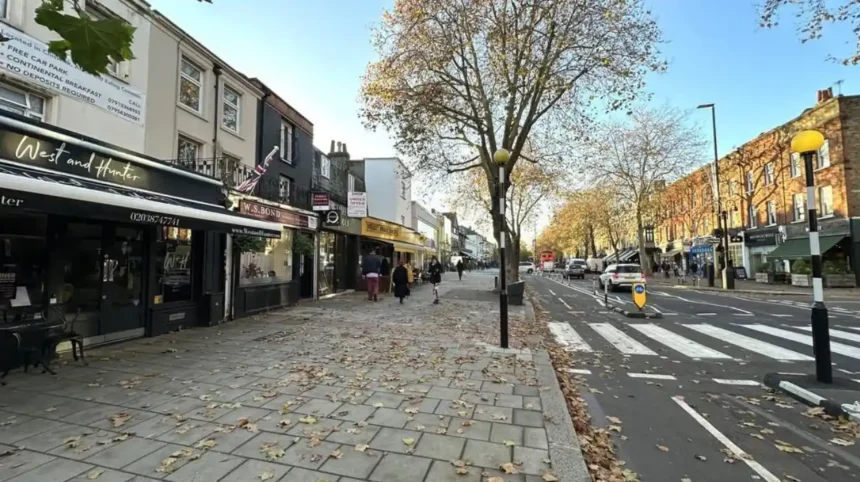
West London has a diverse independent shopping network spanning historic high streets, village centres, specialist retail streets and riverside neighbourhoods. hounslow/chiswick/">Chiswick, Barnes, Richmond, Teddington, Kew, ealing/hanwell/">Hanwell, Ealing and surrounding districts each provide distinct independent retail environments.
- What are independent shops in West London?
- Why does West London have so many independent shopping areas?
- Which West London areas are best known for independent shops?
- What types of independent shops can visitors find in West London?
- How do independent shops contribute to West London’s high streets?
- How important are small businesses to the UK retail economy?
- How do independent shops differ between major and smaller West London centres?
- What makes Chiswick important for independent shopping?
- Why is Barnes a strong destination for independent shopping?
- Why should visitors explore Teddington and Kew for independent shops?
- How are West London councils supporting independent shops?
- How should visitors plan an independent shopping trip in West London?
- What challenges do independent shops face in West London?
- What is the future of independent shops in West London?
Independent shops are privately owned or locally operated businesses that trade outside large national retail chains. They include specialist food shops, fashion boutiques, bookshops, antique dealers, gift shops, florists, homeware stores, galleries, repair businesses and other specialist retailers.
The importance of these businesses extends beyond shopping. Local authorities across West London identify independent businesses as contributors to town-centre character, employment, community activity and local economic resilience. Richmond Council, for example, describes smaller local centres as providing a large range of independent shops and services, while Ealing Council identifies high streets as important economic, social and civic focal points.
The wider UK business environment also provides important context. Government statistics recorded approximately 5.5 million private-sector businesses at the start of 2024, with 99.8% classified as small or medium-sized enterprises. Wholesale and retail trade and repair accounted for 558,000 SMEs, representing 10% of the UK’s SME population.
West London’s independent shops therefore form part of a much larger small-business economy while retaining a strong local identity based on individual neighbourhoods.
What are independent shops in West London?
Independent shops in West London are locally owned or independently operated retailers offering specialist goods, services and products outside major national chains, with examples across Chiswick, Barnes, Richmond, Teddington, Kew, Hanwell and Ealing.
The term “independent shop” describes the ownership and operating structure of a retailer rather than one specific product category. An independent retailer can operate a single shop, several local branches or a specialist business with both physical and online sales.
West London’s independent retail sector includes food retailers, fashion businesses, bookshops, antiques specialists, homeware retailers, gift stores, florists and specialist service providers. The precise mix differs between neighbourhoods.
Chiswick is one of the clearest examples. Hounslow Council identifies Chiswick town centre as a Major Centre in the London Plan 2021 and states that it contains a wide range of independent shops alongside chain stores, professional services, restaurants, cafés, pubs, bars and markets.
Richmond upon Thames provides another important example. Its council identifies Richmond as a major town centre alongside district centres including East Sheen, Teddington, Twickenham and Whitton. Smaller local centres provide independent shops and services with distinct local identities.
This geographical spread makes independent shopping a significant component of West London’s town-centre economy rather than an isolated retail niche.
Why does West London have so many independent shopping areas?
West London has many independent shopping areas because its town centres developed around established residential communities, transport routes, historic buildings and local demand, creating commercially diverse high streets that support specialist retailers alongside national chains.
The physical structure of West London helps explain its retail diversity. The area contains established town centres, suburban high streets, village-style shopping areas and commercial corridors.
Many neighbourhoods developed before modern shopping centres became dominant. Their traditional street layouts created small retail units within continuous terraces. These properties remain suitable for specialist businesses that require smaller premises and direct access to local customers.
Chiswick provides a strong example of this structure. Hounslow Council describes the town centre as having low-rise buildings, leafy streets, conservation areas and green spaces including Chiswick Common and Turnham Green. The council also identifies independent shops as part of the town centre’s established commercial offer.
Barnes has a different physical character. Richmond Council describes it as having a village feel, strong transport connections and many independent businesses selling unusual gifts, clothes and food.
Teddington also has a highly established retail structure. Richmond Council describes an almost continuous road of shops extending from the River Thames towards Bushy Park and identifies mainly small independent retail units within the district centre.
These different environments give West London several types of independent shopping destinations.
Which West London areas are best known for independent shops?
Chiswick, Barnes, Richmond, Teddington, Kew, Twickenham, Mortlake, East Sheen, Hanwell and Ealing contain established independent retail activity, with each area offering a different combination of food, fashion, gifts, homeware, specialist services and everyday shopping.
Chiswick High Road is one of the most established independent retail destinations in West London. Its retail environment combines independent businesses with national chains, cafés, restaurants, professional services and leisure venues. Hounslow Council’s current regeneration information specifically identifies independent shops as part of the town centre’s commercial strength.
Barnes is known for its village-style shopping environment. Richmond Council identifies independent businesses selling gifts, clothing and food, while Barnes town centre includes smaller shops around Barnes Green and Church Road.
Richmond provides a larger town-centre environment. The borough also contains smaller centres with independent businesses, including Kew, Teddington, Twickenham, East Sheen and Mortlake.
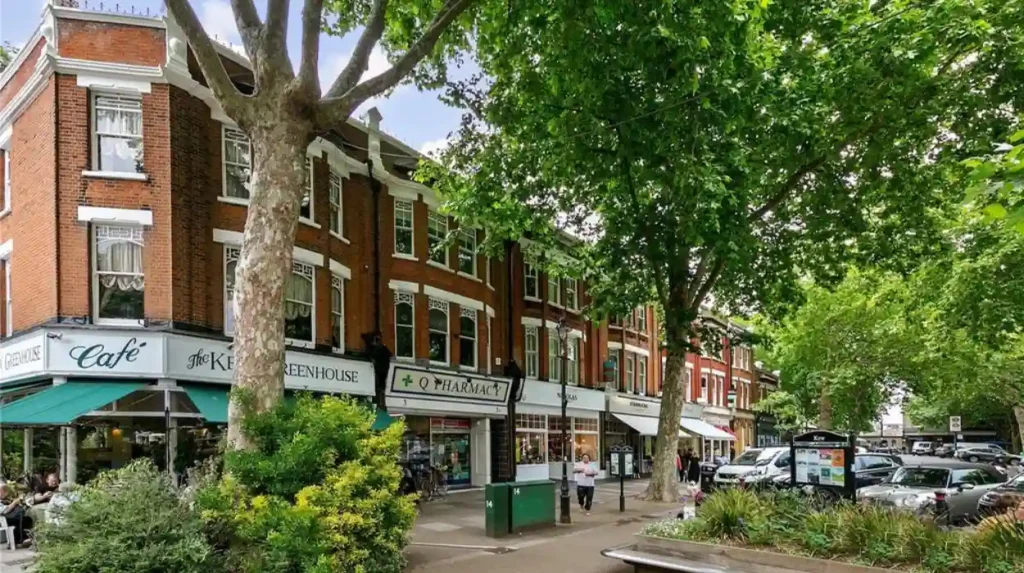
Kew has a smaller shopping environment focused on local services, cafés and independent retailers. Richmond Council specifically describes Kew Village as having a mix of independent shops and cafés.
Teddington has a particularly strong independent-retail presence. Its conservation-area assessment states that original shopfronts, independent shops and varied retail premises contribute to the character of the High Street.
Hanwell is another important destination in Ealing. Ealing Council describes Hanwell as a historic area with a bustling high street and independent stores. The council’s High Streets Taskforce focuses investment on improving the town centre environment and diversifying its commercial offer.
What types of independent shops can visitors find in West London?
Visitors can find independent food shops, fashion boutiques, bookshops, antique retailers, gift stores, florists, homeware businesses, galleries, specialist retailers and repair services across West London, with the exact selection changing between larger town centres and smaller neighbourhood shopping parades.
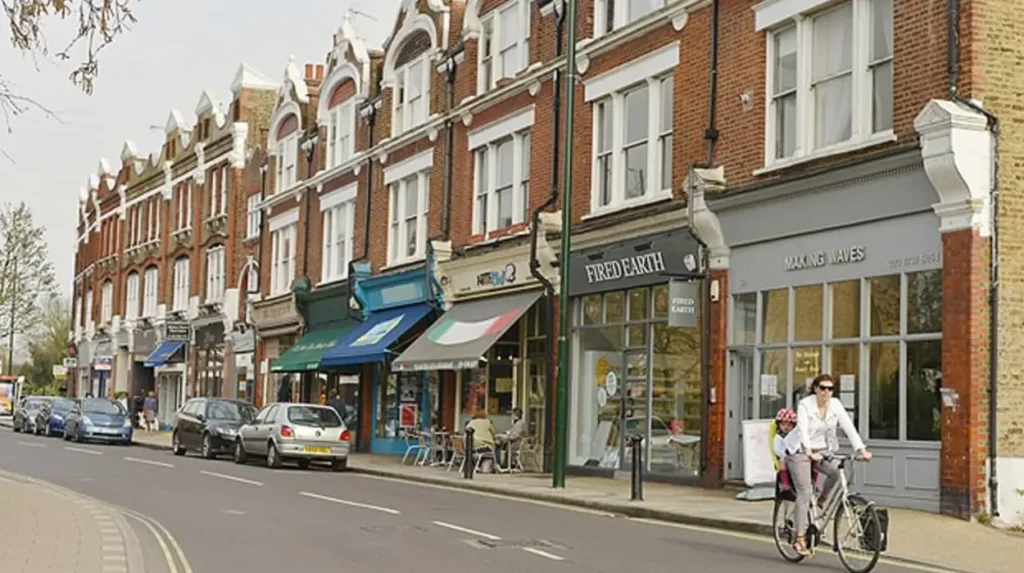
Food retail is an important category because independent businesses can specialise in products that differ from standard supermarket ranges. Local food shops also serve residents who prefer neighbourhood shopping for everyday purchases.
Fashion and accessories provide another significant category. Small boutiques typically operate from compact premises and focus on selected product ranges rather than the extensive inventories associated with department stores.
Antiques and vintage retail also have a long association with West London’s established neighbourhoods. Chiswick’s town-centre strategy recognises antique and vintage markets within its commercial offer.
Gift and lifestyle stores are particularly relevant in village-style shopping centres. Barnes, for example, is officially recognised for independent shops selling unusual gifts, clothing and food.
Bookshops, florists, specialist homeware retailers and independent service businesses add further variety. These businesses often occupy smaller premises and rely heavily on repeat local customers.
The distinction between retail and service businesses is also important. West London’s independent high streets contain businesses that combine retail with professional or personal services. This creates a broader town-centre ecosystem rather than a shopping environment based exclusively on merchandise.
How do independent shops contribute to West London’s high streets?
Independent shops contribute to West London high streets by providing local employment, attracting visitors, filling specialist retail niches, supporting nearby businesses and maintaining distinctive commercial environments that councils identify as important to community and economic life.
Independent shops contribute to high-street activity through direct and indirect economic effects. A retailer employs staff, pays business-related costs and purchases goods or services. Customers visiting one shop also generate potential demand for cafés, restaurants, transport and other local services.
Ealing Council describes its town centres and high streets as places to meet, learn, work, relax and access everyday services. The council also identifies local pride, business attraction and employment as functions of these centres.
Richmond Council similarly states that shopping locally supports the local economy, strengthens neighbourhoods and helps maintain the character and uniqueness of high streets.
The effect is particularly visible in smaller centres. A cluster of independent businesses creates a retail destination where different needs are met within a relatively compact area.
The UK government business statistics reinforce the importance of small businesses nationally. At the start of 2024, 5.45 million UK businesses were small businesses with between zero and 49 employees. Small businesses accounted for 99.2% of the total private-sector business population.
Independent retailers are therefore part of an economic structure dominated numerically by small businesses.
How important are small businesses to the UK retail economy?
Small businesses represent the overwhelming majority of UK private-sector businesses, while wholesale and retail trade remains a major SME sector, providing important national context for the independent retailers operating across West London’s high streets.
Government Business Population Estimates for 2024 recorded 5,498,990 private-sector businesses in the UK. Of these, 5,452,990 were small businesses with zero to 49 employees. SMEs represented 99.8% of the entire business population.
Wholesale and retail trade and repair contained an estimated 558,000 SMEs at the start of 2024. This represented 10% of all UK SMEs. The sector accounted for 14% of SME employment and 34% of SME turnover.
These figures do not provide a separate count of independent shops in West London. Government statistics classify businesses by size, sector, geography and legal form rather than using “independent shop” as a standalone national statistical category.
This distinction is important for accurate SEO content. Independent retail should not be presented as a precisely measured West London business population unless a local dataset provides that figure.
The available evidence instead demonstrates the wider importance of SMEs and retail businesses, while local council evidence confirms the presence and role of independent shops in specific West London centres.
How do independent shops differ between major and smaller West London centres?
Major centres such as Chiswick and Richmond offer broader retail mixes, while smaller centres such as Barnes, Kew, Mortlake and Teddington provide more compact shopping environments where independent retailers form a prominent part of local commercial identity.
Major centres typically serve larger catchment areas. They contain more retail categories and a greater mixture of independent and national businesses.
Chiswick illustrates this model. Hounslow Council identifies Chiswick as a Major Centre and describes its retail environment as a combination of independent shops, chain stores, services, restaurants, cafés, pubs, markets and leisure uses.
Richmond operates at a different scale but also functions as a major town centre. Its surrounding district centres create a wider network of local shopping destinations across the borough.
Smaller centres have different commercial characteristics. Teddington’s retail area contains mainly small independent units and extends along a substantial shopping road.
Mortlake has a smaller range of local independent businesses and a business centre, according to Richmond Council.
The distinction matters for visitors. Major centres provide breadth, while smaller centres provide concentrated local retail environments.
What makes Chiswick important for independent shopping?
Chiswick is an important independent shopping destination because its High Road combines specialist retailers with cafés, restaurants, markets, services and historic surroundings, creating a large mixed-use town centre recognised by Hounslow Council as a Major Centre.
Chiswick High Road forms the commercial spine of the district. The town centre benefits from a combination of retail, hospitality, professional services and leisure uses.
Hounslow Council states that Chiswick has a wide range of independent shops alongside chain stores. It also identifies flower, food, antique and vintage markets within the wider town-centre offer.
The area’s conservation areas also influence the physical setting. Much of the town centre retains low-rise buildings and traditional streetscapes, with Chiswick Common and Turnham Green contributing green-space infrastructure.
The council’s town-centre strategy explicitly supports specialist, independent and boutique shops as part of Chiswick’s shopping attraction. It also identifies trader networks, markets and community-led initiatives as elements of town-centre development.
For visitors, this creates a practical combination of shopping, food, heritage and leisure within the same district.
Why is Barnes a strong destination for independent shopping?
Barnes combines a village-style environment with independent food, fashion and gift businesses, supported by local retail areas, community organisations, transport connections and proximity to the River Thames and London Wetlands Centre.
Barnes occupies a distinctive position within West London. Richmond Council describes it as having a unique urban-village feel despite its connections to central London. The borough also identifies many independent businesses selling gifts, clothes and food.
The area’s retail character is connected to its physical environment. Barnes Green, the River Thames, Church Road and surrounding residential streets create a compact neighbourhood setting.
The conservation-area documentation records historic shopfronts and buildings within the Barnes commercial environment. This architectural continuity contributes to the visual identity of the shopping area.
Barnes also has a Town Centre Manager through the Barnes Community Association. This provides an organised local structure for supporting the centre and coordinating community interests.
The result is a shopping district where independent retail forms part of a wider neighbourhood experience rather than operating as a standalone commercial zone.
Why should visitors explore Teddington and Kew for independent shops?
Teddington and Kew provide smaller-scale independent shopping environments where local retailers, cafés and services operate within established neighbourhood centres connected to the River Thames, Bushy Park, Kew Gardens and surrounding residential communities.
Teddington has a particularly strong independent retail identity. Richmond Council describes its district centre as a continuous shopping area extending from the river towards Bushy Park, with mainly small independent retail units.
Its conservation-area assessment also identifies original shopfronts and independent shops as important elements of the High Street’s character.
Kew provides a smaller retail environment. Richmond Council describes Kew Village as a shopping area containing independent shops and cafés.
These centres work well for visitors who want to combine shopping with local attractions. Teddington sits close to Bushy Park and Teddington Lock, while Kew is closely associated with Kew Gardens and the surrounding riverside environment.
The retail experience in these areas is therefore integrated with local leisure and heritage destinations.
Explore more Area Guide
Health and Wellness in West London: Services, Support, and Prevention
Community Life in West London: Neighbourhoods, Culture, and Local Life
How are West London councils supporting independent shops?
West London councils support independent shops through town-centre strategies, regeneration programmes, trader networks, high-street investment, local campaigns and measures designed to improve public spaces, commercial diversity, accessibility and long-term high-street activity.
Local authority involvement is significant because high-street conditions depend on more than individual retailers. Public-realm quality, transport access, planning policy, conservation, events and town-centre management all affect commercial environments.
Ealing Council’s high-street strategy focuses on improving town centres, supporting local trade, encouraging enterprise and creating jobs. The council identifies seven town centres alongside additional local shopping parades.
Hanwell provides a specific example. Ealing Council describes the area as having independent stores and states that its High Streets Taskforce is focused on improving the physical environment and diversifying the commercial offer.
Richmond Council operates a network of town-centre and traders’ associations covering places such as Barnes, Kew, Richmond, Teddington, Twickenham and Whitton.
Hounslow’s Chiswick regeneration programme also identifies support for local shops and traders, markets and specialist independent businesses.
These policies demonstrate that independent retail is treated as part of wider town-centre management.
How should visitors plan an independent shopping trip in West London?
Visitors should choose one West London shopping centre based on retail interests, combine independent shops with nearby cafés or attractions, check individual opening arrangements, use public transport where practical and allow time to explore smaller streets beyond the main high road.
A practical shopping trip starts with choosing the right district.
Chiswick suits visitors seeking a broad combination of independent retail, food, markets, cafés and heritage. Barnes suits a compact village-style environment with independent food, fashion and gift businesses. Teddington provides a long established independent shopping street close to Bushy Park and the Thames.
Kew suits visitors combining local shopping with Kew Gardens. Richmond provides a larger town-centre experience with access to multiple surrounding shopping districts.
Visitors should also check opening times directly with individual retailers. Independent businesses operate different schedules from large chains, and opening hours can change according to staffing, seasonal trading and local events.
Walking is useful in compact centres because many independent businesses operate close together. Public transport also connects major West London districts with central London and neighbouring areas.
The best approach is to treat the high street as a network rather than focusing on one store.
What challenges do independent shops face in West London?
Independent shops face competition from online retail, large shopping centres, changing consumer behaviour, operating costs, property pressures and the need to maintain footfall, while local councils increasingly use regeneration and town-centre programmes to strengthen high-street resilience.
The challenges facing West London’s independent shops reflect wider UK high-street pressures.
Ealing Council explicitly identifies competition from out-of-town shopping centres and online retailers as challenges for its high streets.
Independent businesses also operate within the wider cost structure affecting UK SMEs. Staffing, premises, utilities, stock, transport and technology all influence operating costs.
The government recorded a 1% decline in the total UK private-sector business population between 2023 and 2024, equivalent to approximately 56,000 businesses. At the same time, SMEs continued to represent 99.8% of the private-sector business population.
The response from local authorities focuses on maintaining attractive town centres and improving conditions for traders.
Chiswick’s regeneration strategy, for example, includes better public-space design, improved accessibility, trader networks, markets and measures supporting specialist independent businesses.
The future of independent retail therefore depends on both individual business performance and the wider quality of the high-street environment.
What is the future of independent shops in West London?
Independent shops remain an important part of West London’s future retail landscape because local councils continue to support diverse high streets, while established neighbourhoods provide strong locations for specialist retail, food, services and community-focused businesses.
West London’s independent retail sector has a strong structural foundation. The region contains numerous established town centres and local shopping parades with distinct identities.
Richmond Council’s current business information recognises independent shops across multiple local centres. Hounslow Council continues to identify independent retail as an important component of Chiswick’s Major Centre. Ealing Council continues to invest in high-street regeneration and local trade.
National business statistics also show that small enterprises dominate the UK business population. The 2024 estimates recorded more than 5.45 million small businesses.
The long-term retail model is therefore based on coexistence. Independent retailers operate alongside national chains, online businesses, hospitality venues, markets and services.
For West London, the strongest independent shopping destinations are likely to remain those where retail diversity, accessible streets, local community activity and distinctive built environments work together.
Independent shops are consequently not simply places to purchase specialist products. They form part of the commercial and social structure of West London’s town centres.
What are independent shops in West London?
Independent shops in West London are locally owned or independently operated businesses offering products and services outside major national retail chains. They include food shops, boutiques, bookshops, gift stores, florists, antique shops and specialist retailers.