Community life in West London is shaped by diverse neighbourhoods, shared public spaces, local institutions, and everyday social participation. It includes housing, schools, faith groups, parks, markets, arts venues, volunteer organisations, and the informal ties that help people feel connected.
- What is community life in West London?
- How has West London developed historically?
- What shapes everyday neighbourhood life?
- Which communities live in West London?
- What role do parks and public spaces play?
- How do arts and events strengthen community life?
- How do charities and volunteering support residents?
- What pressures affect local community life?
- What is the future of community life in West London?
- Which places define West London identity?
What is community life in West London?
Community life in West London is the network of local relationships, services, and shared places that support daily living and social belonging. It brings together residents through neighbourhood centres, high streets, parks, libraries, sports clubs, and cultural events across the western part of London.
West London is not one single place. It is a broad area made up of many boroughs and neighbourhoods with different identities, housing patterns, and populations. That variety creates a community landscape built from local centres rather than one dominant core.
Community life also depends on routine contact. People connect through shopping streets, schools, buses, workplaces, and public spaces. These repeated interactions form the basis of trust, familiarity, and local identity.
How has West London developed historically?
West London developed through transport growth, suburban expansion, migration, and changing housing patterns. Over time, older villages and estates became dense urban neighbourhoods with strong local identities and mixed communities.
The area changed as rail and road links improved. Places that were once separate settlements became connected to central London and to each other. This helped turn West London into a residential and commercial region with many local centres.
Migration also played a major role. People from different parts of the UK and from overseas settled in West London, adding new languages, religions, foods, and cultural traditions. That history shaped the area’s present-day diversity.
Postwar development added more housing, community facilities, and public infrastructure. Local institutions such as schools, churches, mosques, temples, libraries, and community centres became important anchors for social life.
What shapes everyday neighbourhood life?
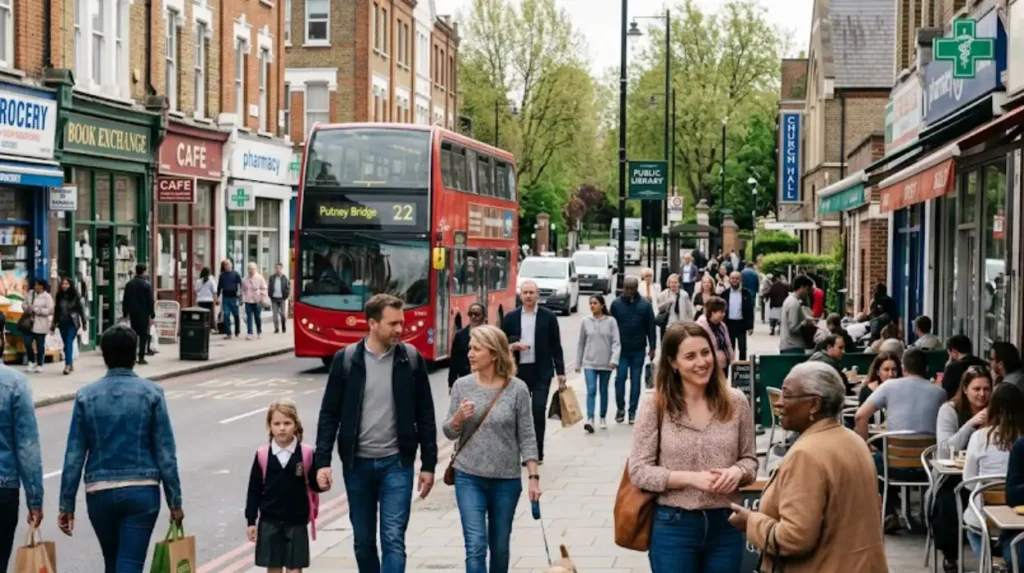
Everyday neighbourhood life in West London is shaped by transport, housing, public space, local shops, and access to services. These factors influence how easily residents move, meet, shop, and take part in community activity.
Transport has a strong effect on community behaviour. Good rail, Underground, bus, and road links make it easier for people to travel to work, attend events, and maintain social connections across borough boundaries.
Housing type also matters. Terraced streets, estates, riverside developments, and co-living buildings create different kinds of neighbour interaction. Shared entrances, communal areas, and resident groups often increase contact between people living close together.
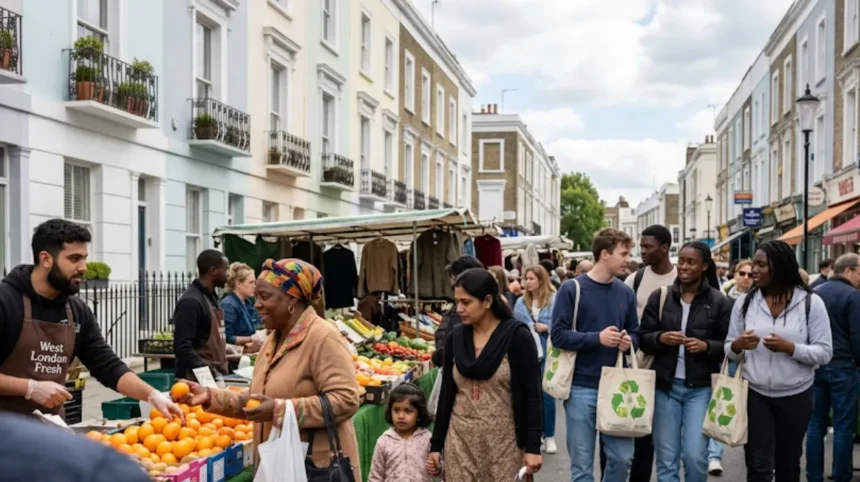
Local commerce gives neighbourhoods daily rhythm. Shops, cafés, food markets, barbers, restaurants, and independent businesses create repeated social contact. These places often become informal meeting points and help people feel rooted in the area.
Which communities live in West London?
West London is home to many ethnic, national, religious, and linguistic communities. The area includes long-established local families, new arrivals, migrants, students, professionals, and refugee communities.
This diversity is one of West London’s defining features. Many neighbourhoods have residents with different cultural backgrounds living side by side. That creates a strong mix of languages, foods, traditions, and community organisations.
Diversity affects daily life in practical ways. Community centres often provide advice, language help, youth support, and social activities. Schools and faith institutions also play a major role in bringing people together.
The result is a community structure built around inclusion and adaptation. People often belong to more than one local network, such as a workplace, a religious group, a sports club, or a tenant association.
What role do parks and public spaces play?
Parks and public spaces give West London its shared social ground. They support exercise, family time, informal gatherings, and everyday contact between residents who might not otherwise meet.
Public spaces are essential in a dense city because they are open, low-cost, and accessible. Parks allow walking, play, relaxation, and community events. They also create space for people of different ages and backgrounds to share the same environment.
Markets, squares, libraries, and high streets serve a similar role. They are not only commercial spaces. They also act as meeting points where local identity becomes visible through routine use and repeated presence.
In West London, this matters because people often live busy, mobile lives. Shared public space helps maintain community connection even when residents work long hours or travel across the city.
How do arts and events strengthen community life?
Arts and events strengthen community life by creating shared experiences and bringing residents into public spaces. In West London, theatre, music, festivals, workshops, and markets all support local participation and identity.
Cultural activity gives neighbourhoods a stronger sense of place. Local theatres, music venues, galleries, and event spaces provide opportunities for residents to gather, learn, and take part in creative activity.
Events are important because they encourage direct interaction. Workshops, live performances, exhibitions, and seasonal festivals create reasons for people to leave home, meet others, and spend time in the same public setting.
These activities also support local economies. Visitors spend money in nearby cafés, shops, and transport links, which helps keep neighbourhood centres active and socially important.
How do charities and volunteering support residents?
Charities and volunteering support residents by offering practical help, social connection, and community participation. In West London, voluntary organisations often focus on wellbeing, migration, training, and inclusion.
Voluntary groups fill gaps that formal services do not always cover. They can provide advice, mentoring, food support, English classes, youth activities, and signposting to other help.
Volunteering also creates local leadership. Residents who give their time often gain skills, confidence, and contact with people from different backgrounds. That strengthens the wider social fabric of the area.
Community centres are especially important because they bring together people with different needs in one place. They offer a practical model of support that combines services with belonging.
What pressures affect local community life?
West London community life is affected by housing costs, population movement, inequality, and pressure on services. These forces influence who stays in an area, how often people move, and how connected they feel.
High housing costs can reduce stability. When residents move often, it becomes harder to build long-term relationships with neighbours, schools, and local groups.
Population churn can weaken informal ties, but it also creates new social mixes. West London often gains cultural energy and diversity from movement into and out of the area.
Service pressure matters too. Schools, health centres, transport, and community organisations all face strong demand. Where these services are well supported, neighbourhood life becomes more stable and resilient.
Explore More Area Guide
Cost of Living in West London: Housing, Expenses, Budgeting Explained
Best Areas to Live in West London: Top Neighborhoods for Every Lifestyle
What is the future of community life in West London?
The future of community life in West London depends on whether growth and regeneration stay inclusive. Strong communities will rely on affordable access, local services, public space, and places that encourage repeated face-to-face contact.
West London continues to change through new housing, new developments, and shifting demographics. That creates both opportunities and risks.
If change supports community infrastructure, local life becomes stronger. Parks, libraries, community centres, markets, and cultural venues help residents stay connected even as the city evolves.
The long-term strength of the area will come from mixed-use neighbourhoods where people can live, work, shop, and gather nearby. That pattern supports everyday belonging and keeps local identity visible.
Which places define West London identity?
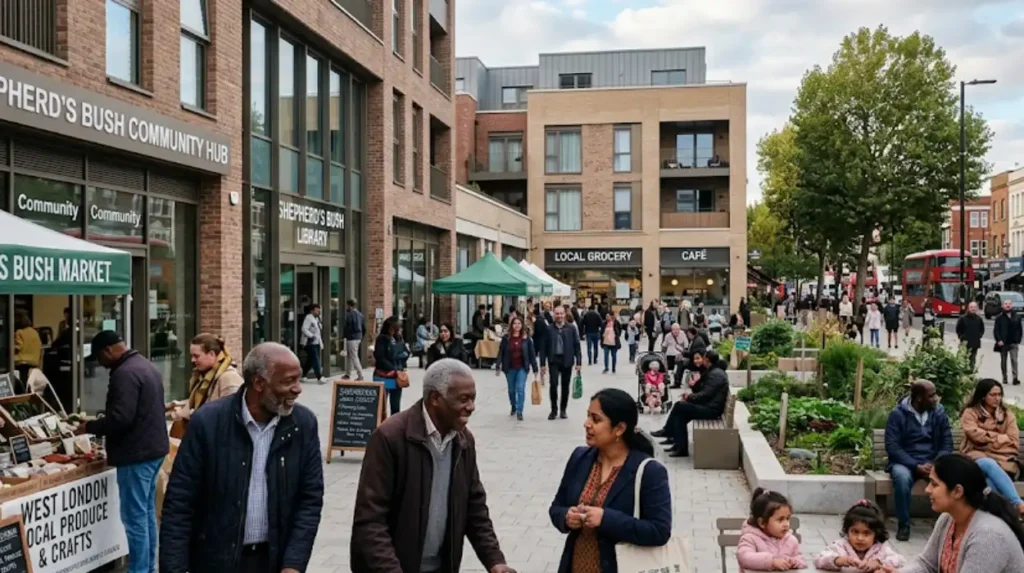
West London identity is defined by neighbourhoods, parks, markets, and community hubs rather than one single landmark. Places such as fulham/hammersmith/">hammersmith-and-fulham/shepherds-bush/">Shepherd’s Bush, White City, Old Oak, and local parks give the area its lived character.
Shepherd’s Bush is one of the clearest examples. It combines retail, food, entertainment, and culture in a dense urban setting, which makes it a strong social and commercial centre.
Newer residential and mixed-use areas such as Old Oak and White City show how West London keeps evolving. These places reflect modern urban living while still depending on shared local services and nearby public space.
The identity of West London comes from this combination of old and new. It is built through daily routines, local institutions, and repeated interaction between residents.