Kilburn stands as a dynamic district in northwest London, perfectly encapsulating the area’s rich history and multicultural spirit. Straddling the boroughs of Camden, Brent, and Westminster, it offers an authentic slice of West London life along its iconic High Road, appealing to residents and visitors year-round.
Ancient Origins
Kilburn’s story begins as a humble linear hamlet along the ancient Roman road Watling Street, now the bustling A5 Kilburn High Road, which marks the boundary between Brent and Camden. The district’s name originates from Kilburn Priory, established in 1134 by a hermit named Godwyn beside the Kilburn Brook—known historically as Cuneburna or “royal stream”—at the junction of today’s Kilburn High Road and Belsize Road. This Augustinian nunnery catered to pilgrims heading to shrines in St Albans and Willesden until its dissolution by Henry VIII between 1536 and 1537, leaving behind a legacy that influenced nearby landmarks like Abbey Road. Early inns such as the Red Lion, possibly dating to 1444, and the Bell Inn around 1600, served as vital stops, while a chalybeate well uncovered in 1714 near the Bell Inn birthed Kilburn Wells, a fashionable tea garden and spa rivaling Hampstead’s, complete with gardens, music, and health claims.
Victorian Expansion
The 19th century transformed Kilburn from rural outpost to urban hub, with initial development post-1819 around St John’s Wood accelerating after James Bailey’s 1857 land deals with the Church Commissioners spurred southern growth. Builder Solomon Barnett left his mark in the late 1800s, naming streets after West Country places or poets like Tennyson, creating the Victorian terraces and mansion blocks that define the skyline today. Railways revolutionized access starting in 1852 with the Kilburn & Maida Vale station—later renamed Kilburn High Road—while the Metropolitan line’s 1879 arrival fueled further expansion. St Augustine’s Church, finished in 1880 by architect John Loughborough Pearson, earned its “Cathedral of North London” moniker for its towering Gothic spire and intricate interiors, standing as a testament to the era’s ambition.
Iconic Landmarks
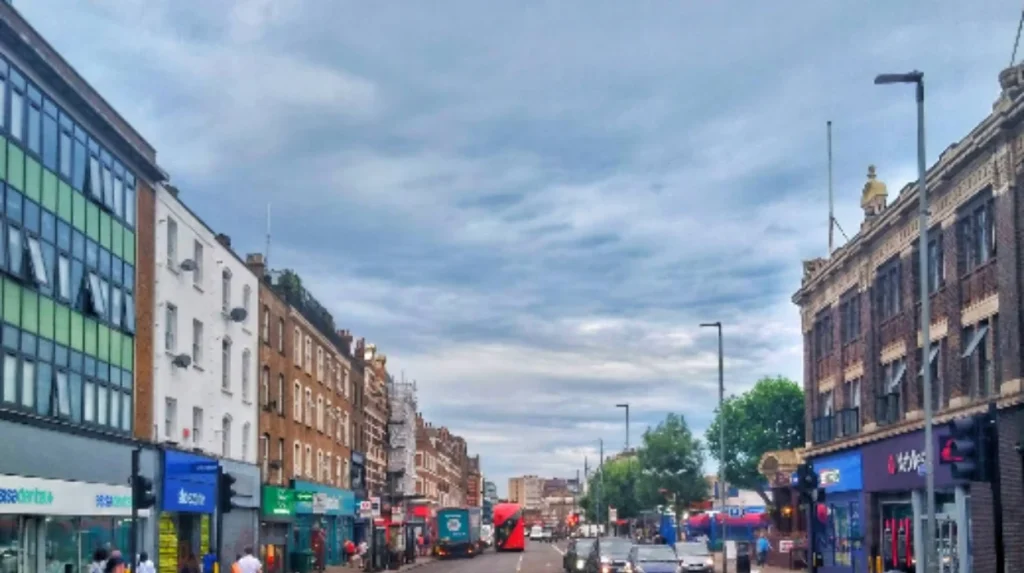
Kilburn High Road buzzes with architectural treasures, including the Grade II*-listed Gaumont State Cinema from 1937, designed by George Coles as once Europe’s largest auditorium with 4,004 seats, now repurposed as a church. The Kiln Theatre, formerly the Tricycle since 1980, anchors cultural life on the High Road with its acclaimed political dramas, verbatim plays, and community programs. South of the road, St Augustine’s looms majestically, complemented by the green oasis of Kilburn Grange Park to the east, ideal for picnics and relaxation. Other gems include the rebuilt Carlton Tavern with its 1920s faience tiles and the Tin Tabernacle, a rare 1863 Grade II-listed iron church, while paving stones along the High Road nod to Watling Street and lost wells.
Seamless Transport Hub
Kilburn’s connectivity makes it a commuter’s dream in West London. The Jubilee line’s Kilburn station in Zone 2, opened in 1879 as Kilburn & Brondesbury, connects to Stratford and Stanmore with Night Tube service since 2016, while nearby Kilburn Park on the Bakerloo line reaches central London swiftly. London Overground stops at Brondesbury and Kilburn High Road stations add versatility, supported by frequent buses like the 16, 32, 189, 316, and 332 along the High Road. A striking 1914 viaduct emblazoned with “METROPOLITAN RAILWAY” inscriptions enhances the historic rail charm.
Vibrant Multicultural Fabric
Renowned for London’s largest Irish community—4.7% Irish-born with even more second-generation residents—Kilburn weaves a rich multicultural tapestry including Afro-Caribbean, Indian, Eritrean, and Ethiopian influences. In Brent’s Kilburn ward, the 2011 census showed 28% White British, 17% Other White, and 12% Black African, while Camden’s portion reflected 35% White British and 19% Other White. This diversity shines in Irish pubs, GAA clubs, and St Patrick’s Day festivities, captured in films like The Commitments, alongside community repair cafes, Grange Park picnics, and live music at Kilburn Bridge events.
Contemporary Lifestyle Appeal
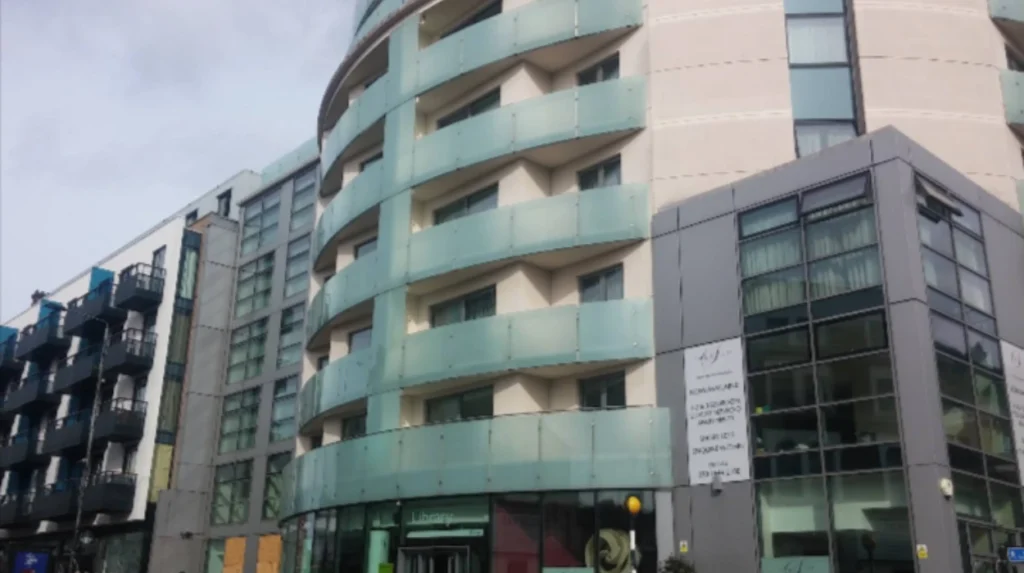
Modern Kilburn blends heritage with practicality, boasting average property prices around £550,000 as of 2023, with one-bedroom rentals at £1,600 monthly and two-beds at £2,200, attracting young professionals and families. Victorian and Edwardian homes coexist with council estates, underscoring social contrasts yet benefiting from regenerations like the Kilburn Quarter’s elegant bay-windowed apartments by Alison Brooks Architects. Designated a major centre in the London Plan, its night-time economy strategy enhances retail, leisure, and green spaces across Brent and Camden, with Brent’s Kilburn ward home to about 17,212 people per 2021 data.
Thriving Cultural Scene
Kilburn pulses with artistic energy, from the Kiln Theatre’s boundary-pushing productions and cinema to the Gaumont State’s ongoing events. Sports thrive via Kilburn Cosmos RFC, Kilburn Gaels GAA, and South Kilburn F.C., while music legends like Ian Dury’s Kilburn & the High Roads and Flogging Molly pay homage in song. Hidden delights along the High Road include the Black Lion pub, Music Mile murals, and markers for Kilburn Wells, covered by local outlets like Brent & Kilburn Times and Camden New Journal.
Celebrated Local Talent
Kilburn has nurtured global stars including singer Lily Allen, actor Cillian Murphy, author Zadie Smith, actress Thandiwe Newton, musician Brian Eno, and Daisy Ridley, alongside Jason Isaacs, Kate Moss, DJ Annie Mac, and writer China Miéville. Civil rights figure Billy Strachan also called it home, adding to its legacy of inspiring diverse achievements.
Kilburn endures as West London’s beating heart, where history meets modernity in an endlessly explorable mosaic.