Feltham’s name derives from the Saxon words “feld” (clearing) and “ham” (home or settlement), indicating its roots as a woodland clearing south of the Roman road to Staines, centuries before the Norman conquest. The town first appears in the Domesday Book of 1086 as “Felteha,” recording 21 households and an annual value of six pounds sterling. It was held by Robert, Count of Mortain, and later passed through several noble families, including the Redvers and de Burgh families, before being annexed to the manor of Hampton Court by Henry VIII in the 16th century. Feltham’s early history is closely tied to the royal courts and the development of the surrounding manorial system.
Feltham Through the Centuries
By the 17th century, Feltham was primarily an agricultural community, with manorial rights gradually fading by the end of the 17th century as courts ceased to be held. The Longford River, constructed in 1638 on the orders of King Charles I, was a significant development, providing water to Hampton Court Palace and passing through Feltham. This period saw the gradual shift from rural to more connected settlements, with the construction of roads and infrastructure supporting local growth.
The 19th century marked a turning point with the arrival of the railway in 1848, which transformed Feltham from a village into a commuter town. The establishment of Feltham railway station facilitated easier access to central London, spurring residential and commercial development. By the early 20th century, Feltham was declared an Urban District in 1903 and expanded to include neighbouring parishes such as East Bedfont and Hanworth in 1930. In 1965, Feltham became part of the London Borough of Hounslow following the reorganisation of Middlesex.
Economic and Social Development
Feltham’s economy has evolved significantly over the years. In the early 20th century, the town became known for its industrial base, including the Ford Motor Company plant established in 1923, which played a crucial role in the local economy for decades. The plant’s closure in the 1980s led to a shift towards retail, services, and light industry, with the town centre adapting to changing needs.
Feltham’s town centre has seen several redevelopment phases, with the demolition of historic buildings such as the mediæval manor house in the 1960s to make way for modern retail and commercial spaces. Today, the town offers a mix of traditional shops, supermarkets, and community facilities, reflecting its ongoing adaptation to contemporary life.
Cultural and Community Life
Feltham boasts a diverse community, with a mix of long-standing residents and newcomers drawn by its accessibility and amenities. The town is home to several cultural and recreational facilities, including parks, libraries, and community centres. St Dunstan’s Church, one of Feltham’s oldest buildings, remains a focal point for local heritage and community events.
The town also hosts various festivals and events throughout the year, celebrating its multicultural population and fostering a sense of community. Local schools, sports clubs, and arts groups contribute to a vibrant social scene, making Feltham an attractive place to live and visit.
Key Landmarks and Points of Interest
- St Dunstan’s Church: One of the oldest buildings in Feltham, dating back to the 12th century.
- Feltham Railway Station: Opened in 1848, pivotal in the town’s transformation into a commuter suburb.
- Longford River: Constructed in 1638, an engineering feat that supplied water to Hampton Court Palace.
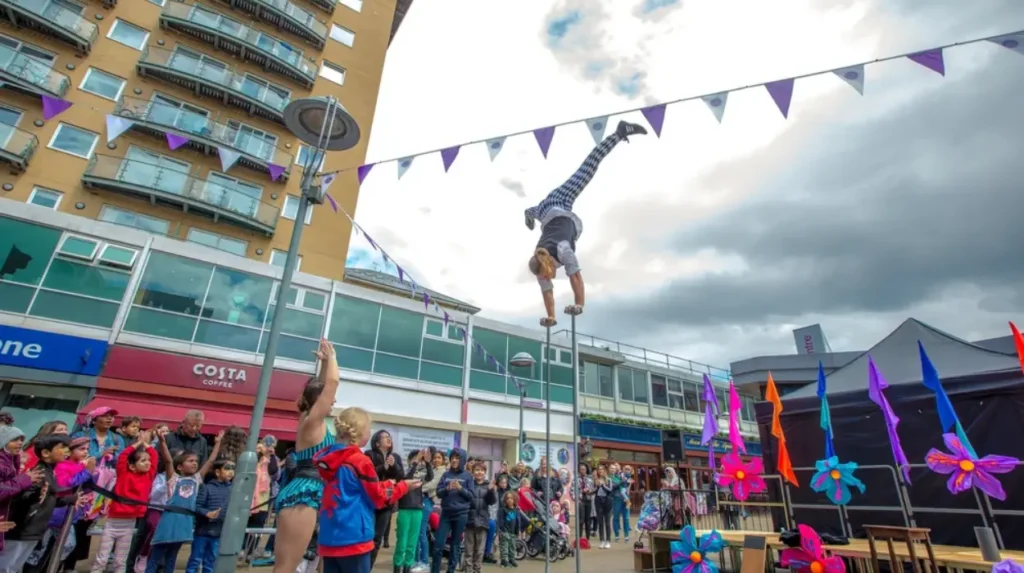
- Feltham Town Centre: Modern retail and community hub, reflecting the town’s evolution from rural village to urban centre.
Feltham’s Place in West London
As part of West London, Feltham benefits from its proximity to major transport links, employment opportunities, and cultural attractions. The town’s blend of history, modern amenities, and community spirit makes it a unique and appealing destination within the region. Its ongoing redevelopment and commitment to preserving heritage ensure that Feltham remains a dynamic and welcoming community for generations to come.