Kensal Green offers a perfect 2-day west London weekend combining Victorian cemetery history, Grand Union Canal walks to Little Venice, and traditional hidden pubs. This 1800+ word evergreen itinerary covers transport, tour times, distances, pub addresses, and practical details for first-time visitors.
- What is Kensal Green and why visit it for a weekend itinerary?
- Key geographic and transport facts
- How do you plan Day 1: Cemetery tour and canal walk?
- Morning to early afternoon: Arrive and explore before the tour
- 2pm Sunday tour: What you’ll learn and see
- Afternoon canal walk: Kensal Green to Little Venice
- Canal walk route details
- evening: Dinner and pub at Little Venice
- Where should you stay and how do you get to Kensal Green?
- Transport options to Kensal Green
- Accommodation recommendations near Kensal Green
- What are the best hidden pubs near Kensal Green and Cemetery?
- The William IV: Historic corner pub from 1837
- Parlour: Eclectic gastropub with Chef’s Table
- The Whippet Inn: Neighborhood gastropub with beer garden
- Paradise By Way of Kensal Green: Traditional pub near cemetery
- What practical details do you need for Day 2: Pubs and neighborhood exploration?
- Day 2 timeline
- Street walking route for Day 2
- Accessibility and timing notes
- What historical context makes Kensal Green Cemetery significant?
- Historical timeline
- Architectural significance
- Magnificent Seven context
- How does the Grand Union Canal towpath work for walking and cycling?
- Towpath features
- What unique features define west London’s Kensal Green neighborhood?
- What makes Kensal Green unique compared to other west London areas
What is Kensal Green and why visit it for a weekend itinerary?
Kensal Green is a Zone 2 west London neighborhood known for London’s first commercial cemetery (opened 1833), the Grand Union Canal towpath, and historic pubs like The William IV from 1837. The area sits on the Paddington Arm of the Grand Union Canal, enabling direct canal walks to Little Venice, Paddington Basin, and Regents Canal without traffic.
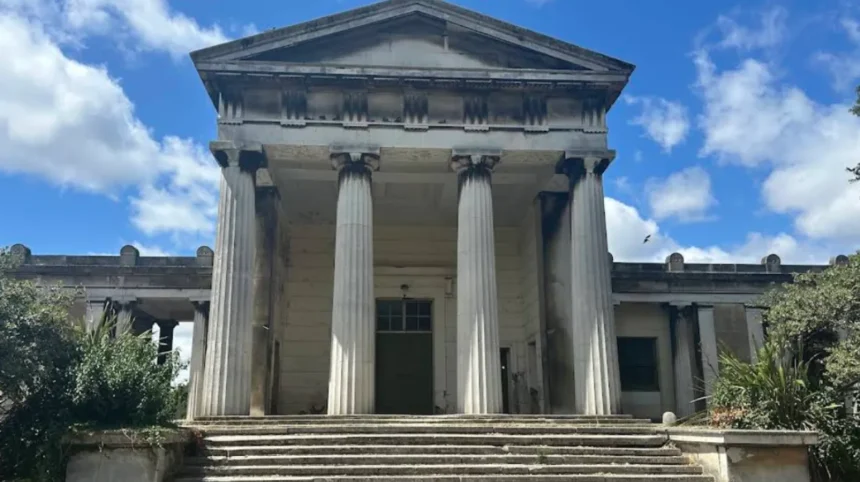
Kensal Green gained fame as the location of the Magnificent Seven cemeteries—Victorian garden cemeteries built 1832–1854 to address London’s burial crisis. Kensal Green Cemetery was the first to open in 1833, designed by architect John Griffith in Greek Revival style with two chapels (Anglican and Dissenters), catacombs, and landscaped grounds by Head Gardener Richard Forrest.
The neighborhood serves west London travelers because it combines three distinct experiences: historic cemetery tours (every Sunday 2pm), flat canal towpath walks (3 hours to Little Venice), and CAMRA-listed traditional pubs. Kensal Green tube station sits on the Bakerloo line and London Overground Watford DC Line between brent/willesden/">Willesden Junction and Queen’s Park.
Key geographic and transport facts
- Location: Kensal Green, Royal Borough of Kensington and Chelsea, west London NW10
- Distance to Little Venice: 2 miles along the canal towpath
- Canal walk duration: Approximately 3 hours from Kensal Green Station to Little Venice
- Tube zone: Zone 2 on Bakerloo line and London Overground
- Nearby stations: Queen’s Park (3-minute change to Elephant and Castle), Willesden Junction
How do you plan Day 1: Cemetery tour and canal walk?
Day 1 starts with the 2pm Sunday cemetery tour (£12 standard, £10 concessions) at Kensal Green Cemetery’s Anglican Chapel, followed by a 3-hour canal walk to Little Venice ending at Maida Vale/Warwick Avenue. Book tour advance booking essential at tours@kensalgreen.co.uk because tours may not run without advance reservations.
Morning to early afternoon: Arrive and explore before the tour
Arrive at Kensal Green tube station by 1:30pm to allow 10 minutes walking from either gate to the Anglican Chapel start point. The cemetery’s Top Gate entrance sits at Harrow Road, London W10 4RA.
Before the tour, walk the cemetery grounds independently to see:
- Two chapels: Anglican Chapel (Greek Revival) and Dissenters’ Chapel (Gothic-style)
- Catacombs: Located beneath both chapels as part Henry Edward Kendall’s original 1831 competition design
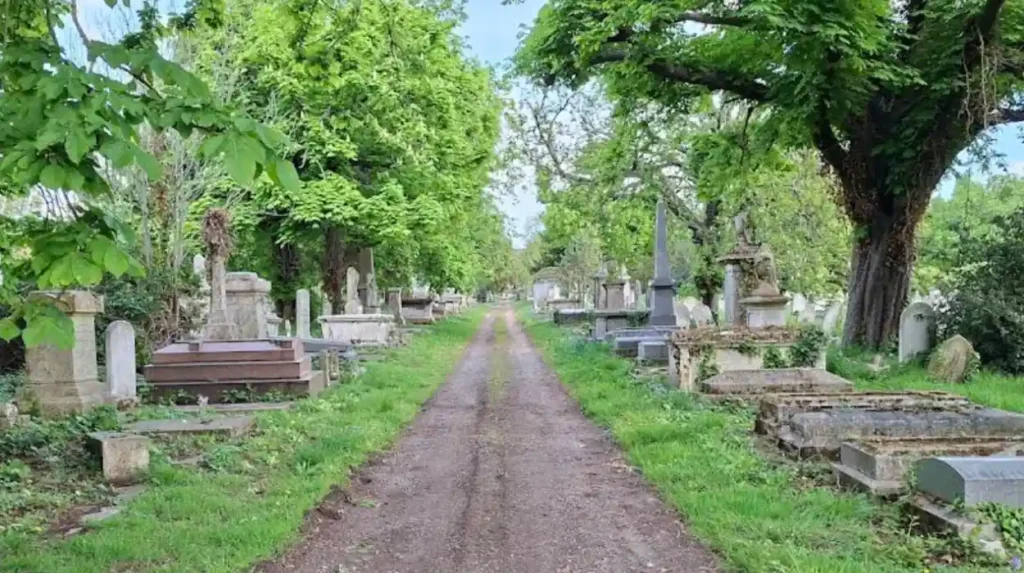
- Notable monuments: Mausoleums and obelisks in neo-classical style with Victorian occult symbolism
- Landscaped grounds: Designed by Richard Forrest from Syon Park with lush planting for monuments
The cemetery covers approximately 27 acres of landscaped garden cemetery space, making it one of London’s largest Magnificent Seven cemeteries.
2pm Sunday tour: What you’ll learn and see
The 2-hour guided tour covers notable monuments, cemetery history, architecture, development, and famous figures buried within the necropolis, concluding with light refreshments in the Dissenters’ Chapel for private tours. Regular Sunday tours cost £12 per person standard, £10 for students/over 65/English Heritage members, and free for Friends of Kensal Green Cemetery members with advance booking.
Tour highlights include:
- History: Parliament’s 1832 bill incorporating the General Cemetery Company, land purchase in 1831, and 1833 opening as London’s first commercial burial ground
- Architecture: Greek Revival style for Anglican section, Gothic-style for Dissenters section, with entrance arch, colonnades, and catacombs
- Famous burials: Princes, writers, engineers, scientists, novelists, and a tightrope walker as final resting places
- Occult symbolism: Tombs and mausoleums rich with occult symbols where Aleister Crowley and William Butler Yeats studied for the Hermetic Order of the Golden Dawn
Private tours typically cost £12 per person (minimum £50) for 2-hour tours with light refreshments in the Dissenters’ Chapel.
Afternoon canal walk: Kensal Green to Little Venice
Start the canal walk from Kensal Green Station along the Grand Union Canal’s Paddington Arm, walking 2 miles (3 hours) to Little Venice ending at Maida Vale/Warwick Avenue Tube Station. The towpath is flat, traffic-free, and accessible for walking and cycling.
Canal walk route details
The Paddington Arm passes by Kensal Green Cemetery and connects to Little Venice, Paddington Basin, Paddington Station, and Regents Canal. From Bridge 3 and St Mary Magdelene church, you’ll find the Grand Junction Cafe with boats double-banked on the towpath side.
The walk offers “steady but relaxed” pedalling or walking for 12 miles from Little Venice without locks, accompanied throughout by birdlife and waterside activity—described as “rare in urbs” (nature in the city).
evening: Dinner and pub at Little Venice
End Day 1 at Little Venice with dinner at a canal-side gastropub. Little Venice features colorful canal houses, narrowboats, and the best characterful canal scenery in west London.
Where should you stay and how do you get to Kensal Green?
Kensal Green tube station is in Zone 2 on the Bakerloo line and London Overground, with direct services to Elephant and Castle Underground and Harrow & Wealdstone, making it 15–25 minutes from central London. The station has 2 platforms, lifts, and step-free access.
Transport options to Kensal Green
- Bakerloo line: Direct from Oxford Circus (12 minutes), Paddington (8 minutes), Bond Street (15 minutes)
- London Overground Watford DC Line: Direct from Willesden Junction, Queen’s Park
- Bus: Multiple routes serve Harrow Road and Chamberlayne Road
- Walking from Paddington: 20-minute canal towpath walk along Grand Union Canal
Accommodation recommendations near Kensal Green
Stay in these west London neighborhoods for easy Kensal Green access:
- Kensal Rise: 5-minute walk, near The Whippet Inn gastropub
- Queen’s Park: 10-minute walk, quiet residential area
- Paddington: 15-minute canal walk, central location with Elizabeth line access
- Little Venice: 2-mile canal walk end point, picturesque canal houses
What are the best hidden pubs near Kensal Green and Cemetery?
The William IV (built 1837, CAMRA three-star pub on National Inventory) sits on Harrow Road/Warfield Street corner; Parlour gastropub at 5 Regent Street NW10 5LG serves British cuisine £70pp Chef’s Table; The Whippet Inn at 64–66 Chamberlayne Road NW10 3JJ offers seasonal food with heated garden. These three pubs represent Kensal Green’s historic and modern drinking scenes.
The William IV: Historic corner pub from 1837
The William IV is a large corner pub rebuilt in interwar years (possibly by Trumans) with an original pub built in 1837 during William IV’s reign, featuring an interior of outstanding national historic importance on CAMRA’s National Inventory. Located at 786 Harrow Road, Kensal Green, NW10 5JX, it’s a three-star pub with outstanding interior historic significance.
The William IV serves modern British dishes, hearty pub classics, and contemporary small plates in refurbished interiors. Opening times: Mon–Sat 8:00–23:00, Sun 8:00–20:00.
Parlour: Eclectic gastropub with Chef’s Table
Parlour at 5 Regent Street, Kensal Green NW10 5LG offers British cuisine with eclectic twists including pâtés & pickles, cow pie, fishcake, ham with parsley potatoes, macaroni cheese, and Chef’s Table surprise menu at £70pp including cocktails. The gastropub is near Kensal Green/Kensal Rise tube stations with prosecco via Sabrage and DIY cocktails.
Lunch and dinner daily at Parlour, with average costs £60 for two including drinks. Nearest tube: Kensal Green/Kensal Rise.
The Whippet Inn: Neighborhood gastropub with beer garden
The Whippet Inn at 64–66 Chamberlayne Road, Kensal Rise NW10 3JJ is an independent local pub offering modern seasonal food, local/continental craft beer, wine list, and heated all-weather garden space for alfresco drinking and dining. Open Monday–Sunday 12:00–23:00 (Fri–Sat to 00:00), kitchen hours 12:00–22:00 daily.
The Whippet Inn serves fantastic food with excellent craft beer selection, reflecting vibrant neighboring communities of Kensal Rise, Queens Park, and Willesden. Contact: 020 8968 8142, contact@thewhippetinn.com.
Paradise By Way of Kensal Green: Traditional pub near cemetery
Paradise By Way of Kensal Green at 19 Kilburn Lane, Queen’s Park W10 4AE is a lovely old pub near Kensal Green Cemetery. This traditional pub sits in Queen’s Park, walking distance from the cemetery.
What practical details do you need for Day 2: Pubs and neighborhood exploration?
Day 2 focuses on exploring Kensal Green’s hidden pubs, walking Chamberlayne Road and Harrow Road streets, visiting The Whippet Inn’s heated garden, and trying Parlour’s eclectic British menu before departing via Bakerloo line. Start at 10am with breakfast at Parlour, afternoon pub visits at The William IV and The Whippet Inn, and evening departure from Kensal Green station.
Day 2 timeline
Street walking route for Day 2
Walk these Kensal Green streets for neighborhood exploration:
- Harrow Road: Main road with The William IV pub, cemetery Top Gate entrance
- Warfield Street: Corner street with The William IV on Harrow Road intersection
- Chamberlayne Road: Kensal Rise location of The Whippet Inn gastropub
- Regent Street: Kensal Green location of Parlour gastropub
- Kilburn Lane: Queen’s Park location of Paradise By Way of Kensal Green pub
Accessibility and timing notes
- Cemetery tour booking: Essential—contact tours@kensalgreen.co.uk for advance booking
- Tour frequency: Every Sunday March–October, first/third Sunday November–February
- Canal walk accessibility: Flat towpaths, level access off towpath at Little Venice
- Pub opening: The Whippet Inn kitchen 12:00–22:00 daily, Sunday 12:00–21:00
What historical context makes Kensal Green Cemetery significant?
Kensal Green Cemetery opened in 1833 as London’s first commercial burial ground, responding to Parliament’s 1832 bill incorporating the General Cemetery Company after London’s burial crisis demanded “detached cemeteries” outside the city. Henry Edward Kendall won the 1831–1832 architectural competition with 48 entrants, but John Griffith redesigned in Greek Revival style for the final construction.
Historical timeline
Architectural significance
The cemetery’s buildings—including entrance arch, two chapels, colonnades, and catacombs—were designed in elegant Greek Revival style, with the Anglican section in Greek Revival and Dissenters section in Gothic-style. Richard Forrest, Head Gardener at Syon Park, designed the final landscaped layout with monuments for graves.
Kensal Green became “the most fashionable necropolis in England” for Victorian burials, especially after royalty was interred there, establishing prestige as a burial place.
Magnificent Seven context
Kensal Green was the first of the Victorian “Magnificent Seven” garden cemeteries built in London during the Victorian era (1832–1854). Two Magnificent Seven cemeteries are in west London: Kensal Green Cemetery and Brompton Cemetery, both offering Sunday tours.
The Magnificent Seven included:
- Kensal Green (1833)
- Bloomsbury (1839)
- Abney Park (1840)
- West Norwood (1837)
- Highgate (1839)
- Hampstead (1854)
- Brompton (1840)
How does the Grand Union Canal towpath work for walking and cycling?
The Grand Union Canal’s Paddington Arm towpath runs 12 miles from Little Venice to Bull’s Bridge Hayes without locks, enabling steady relaxed walking/cycling with birdlife and waterside activity throughout. The towpath is flat, traffic-free, and accessible for disabled boaters with level access off the towpath at Little Venice.
Towpath features
- Locks: Zero locks from Little Venice to Bull’s Bridge (12 miles)
- Terrain: Flat towpaths suitable for walking and cycling
- Boats: Double-banked on towpath side from Bridge 3 and St Mary Magdelene church
- Accessibility: Level access off towpath at Little Venice visitor mooring; barrier may impede wide mobility scooters
- Connectivity: Connects to C25 cycle route and Quietway system for traffic-free westward travel
The canal passes through ealing/southall/">Southall, Greenford, Alperton, Park Royal, Old Oak Common, Ladbroke Grove, and Westbourne Park on the mainline Grand Union Canal.
What unique features define west London’s Kensal Green neighborhood?
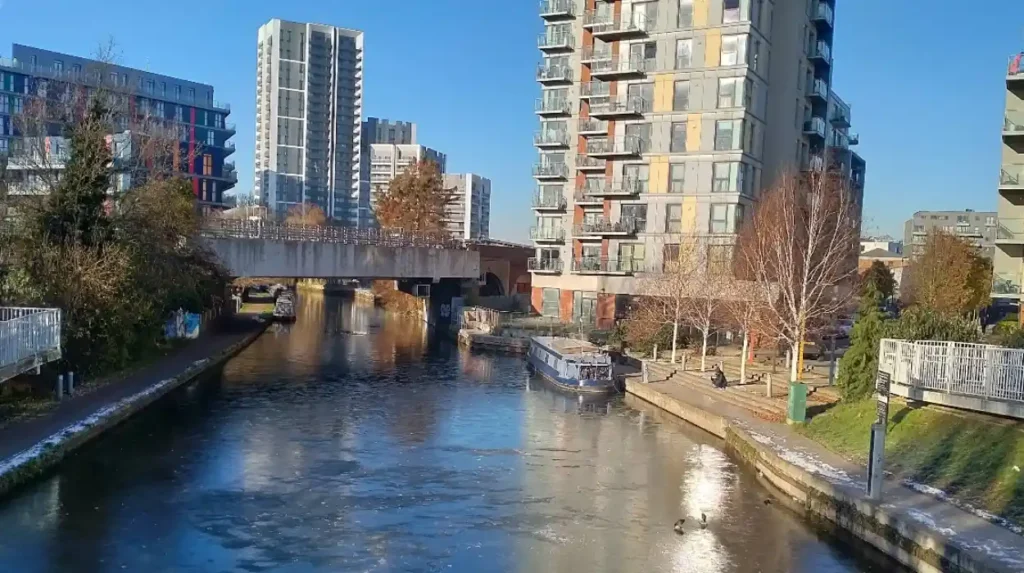
Kensal Green combines Victorian necropolis architecture (Greek Revival chapels, Gothic Dissenters Chapel), flat canal towpath access to Little Venice/Core London waterways, and CAMRA-listed historic pubs from 1837, creating west London’s only neighborhood with cemetery + canal + traditional pub in 2 miles. The area sits on the Paddington Arm enabling direct walks to Paddington Basin, Regents Canal, and Hyde Park without traffic.
What makes Kensal Green unique compared to other west London areas
Kensal Green represents west London’s hidden gem status with non-touristy activities including Victorian cemetery tours, canal walks, and historic pubs away from central London crowds.
What is Kensal Green known for?
Kensal Green is a historic West London neighborhood known for Kensal Green Cemetery, the Grand Union Canal towpath, and traditional pubs. It is home to London’s first commercial garden cemetery, opened in 1833, and offers easy canal walks to Little Venice.