Key Points
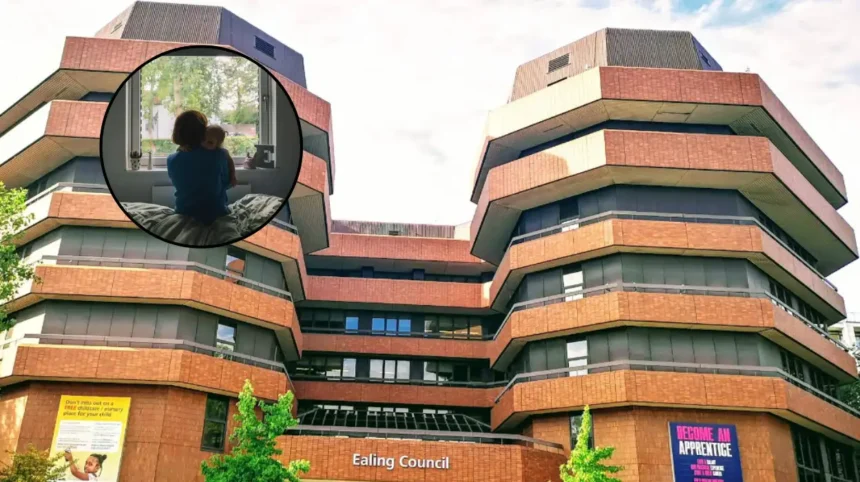
- Ealing Council failed a vulnerable mother and her infant by denying them the statutory right to escalate a formal grievance to a Stage 3 independent review panel.
- The mother, identified as Miss X, raised serious grievances regarding a foster placement that lacked basic necessities, specifically central heating and hot water.
- Further allegations brought forward by Miss X detailed claims of religious discrimination and restricted travel caused by perceived racial profiling.
- Although an internal Stage 2 investigation by Ealing Council upheld all four of Miss X’s complaints, the local authority subsequently refused her request to escalate the matter to Stage 3 to challenge a reduced financial compensation offer.
- The Local Government and Social Care Ombudsman investigated the case, ruling that Ealing Council was at fault for blocking the statutory escalation process.
- The Ombudsman has ordered Ealing Council to convene a Stage 3 panel, pay symbolic compensation for the distress caused, and deliver comprehensive training to social care and complaints personnel.
Ealing (West London News) August 27, 2026 – As reported by Local Democracy Reporter Philip James Lynch of MyLondon, Ealing Council committed a severe administrative fault by depriving a young mother of her legal right to escalate a formal complaint after she and her newborn baby were placed in foster care accommodation lacking basic heating and hot water facilities. The mother, referred to in official investigation documentation as Miss X, was placed alongside her infant child into a specialist unit and subsequently relocated to a mother-and-baby foster placement following the granting of an Interim Care Order by the family courts. Under the legal terms of an Interim Care Order, parental responsibility for the child is shared jointly between the biological mother and the local authority whilst formal care proceedings and background welfare investigations remain ongoing.
During her tenure at the designated foster home, Miss X submitted formal grievances to Ealing Council detailing living conditions devoid of hot water and central heating. In addition to the structural and utility deficiencies, Miss X complained of institutional religious discrimination and alleged that restrictive actions driven by racial profiling had directly hindered her ability to travel. Despite an internal council investigation ultimately upholding every point raised by the mother, local authority officers subsequently blocked her attempts to access the final stage of the statutory children’s complaints process, prompting an intervention by the independent local government watchdog.
Why did Ealing Council refuse to escalate the mother’s statutory complaint?
As detailed in official case records published by the Local Government and Social Care Ombudsman, the administrative breakdown began following the initial submission of Miss X’s complaints regarding her living conditions and personal treatment. Initially, Ealing Council conducted an informal assessment that partially upheld only one of the grievances. Unsatisfied with this initial outcome, Miss X exercised her right under the Children Act 1989 representations procedure to escalate the matter to Stage 2 of the Statutory Children’s Complaints Process.
During the Stage 2 investigation, an independent Investigating Officer reviewed the evidence and recommended that all four of Miss X’s complaints be fully upheld—a conclusion officially accepted by the council’s Adjudicating Officer. The accepted findings confirmed that the mother and her baby had indeed been subjected to unacceptable living arrangements without adequate heating or hot water, and acknowledged the validity of her grievances regarding religious discrimination and travel restrictions.
Following the Stage 2 determination, the council agreed to implement five specific remedial recommendations, which included issuing a formal written apology to Miss X and providing equality and diversity training to relevant social care staff. However, a financial dispute arose when Miss X requested monetary compensation to account for the emotional distress, physical hardship, and inconvenience suffered, alongside financial losses linked to her disrupted travel plans.
Ealing Council initially offered to cover merely 10 per cent of the financial sum requested by Miss X. Although the local authority later modestly increased its financial offer, Miss X deemed the settlement insufficient given the severity of the living conditions and civil rights breaches. She formally requested that Ealing Council convene a Stage 3 Independent Review Panel to re-examine the financial redress package. Ealing Council refused to convene the panel, terminating the statutory process prematurely.
What were the key findings and rulings of the Local Government Ombudsman?
As documented in the final decision statement issued by the Local Government and Social Care Ombudsman, Ealing Council acted in direct violation of statutory guidance governing children’s social care complaints. The Ombudsman emphasized that statutory regulations dictate that once a local authority accepts a complaint under the formal children’s framework, the complainant maintains an absolute legal right to advance the matter through all three distinct stages of the process.
The watchdog determined that Ealing Council was clearly at fault for denying Miss X access to a Stage 3 Panel, thereby depriving her of a fair and transparent review by an independent panel. The ruling highlighted that local authorities do not possess the discretionary authority to arbitrarily cut short the statutory complaints pathway simply because an agreement cannot be reached on financial compensation.
To remedy the injustice experienced by Miss X, the Ombudsman ordered Ealing Council to execute a binding set of corrective measures:
- Convene a formal Stage 3 Review Panel without further delay to independently evaluate Miss X’s complaint and the suitability of the compensation offer.
- Make an additional symbolic monetary payment directly to Miss X to acknowledge the unnecessary stress, frustration, and prolonged uncertainty caused by the council’s refusal to escalate her grievance.
- Draft and disseminate updated operational guidance and training modules for council complaints officers and children’s social care staff to ensure full compliance with the statutory three-stage procedure in future cases.
Ealing Council accepted the findings of the Ombudsman in full and agreed to implement every recommended remedy. As noted by Philip James Lynch of MyLondon, Ealing Council was approached for press comment regarding the ruling but failed to respond prior to publication.
Background of the particular development
The statutory framework governing complaints in children’s social care within England is established under the Children Act 1989 and the Children Act 1989 Representations Procedure (England) Regulations 2006. This legal structure was intentionally created to safeguard vulnerable children, care leavers, and parents engaged with children’s services by offering a robust, transparent, and multi-layered mechanism to challenge local authority decisions and service failures.
The procedure is strictly defined across three distinct stages:
- Stage 1 (Local Resolution): The local authority attempts to resolve the grievance informally at a operational level within 10 to 20 working days.
- Stage 2 (Formal Investigation): If the complainant remains unsatisfied, the council must appoint an Independent Person and an Investigating Officer to conduct a thorough inquiry and produce a comprehensive report.
- Stage 3 (Independent Review Panel): If the complainant disagrees with the Stage 2 outcome or the proposed remedies, they are legally entitled to request an independent panel comprising three independent members. The panel reviews the case and submits formal recommendations to the council’s Director of Children’s Services.
In recent years, local authorities across England have faced immense financial constraints alongside severe shortages in specialized foster care placements and temporary mother-and-baby residential units. However, the Ombudsman has consistently maintained that legal duties regarding child welfare and statutory rights to administrative justice cannot be compromised or bypassed due to budgetary pressures or resource limitations. The refusal to grant a Stage 3 panel represents a recurring point of procedural failure identified by the Ombudsman across several London boroughs, leading to heightened scrutiny over how local councils handle corporate parenting obligations.
Explore More Ealing News
Ombudsman Slams Ealing Council Over Dementia Care Failures Ealing 2026
Ealing Hospital Launches Digital Mobile A&E Check-In System Ealing 2026
Prediction: How this development can affect the local community and social care service users
This regulatory ruling and public exposure are likely to trigger direct consequences across multiple groups within the London Borough of Ealing and the broader social care sector.
Impact on Parents and Children in Care
For service users, particularly mothers placed in supervised or specialized foster care arrangements, this ruling reinforces their legal rights when confronting inadequate housing or discriminatory treatment. It establishes a clear administrative precedent that councils cannot force families to accept low financial settlements or dismiss complaints without granting full access to independent oversight. Families currently utilizing children’s services in West London will have greater leverage to demand acceptable living conditions, ensuring basic necessities like functioning heating and hot water are consistently met.
Operational Changes for Ealing Council
Ealing Council faces immediate administrative and financial exposure. Beyond fulfilling the mandatory financial compensation and organizing the Stage 3 panel for Miss X, the local authority must re-evaluate its internal complaints processing mechanisms. The mandatory staff training required by the Ombudsman will necessitate a retraining of officers within the Children and Families Directorate to prevent staff from improperly acting as gatekeepers to statutory rights. Furthermore, council housing officers and social workers will likely be subjected to stricter oversight regarding the verification and vetting of foster care placements before placing vulnerable infants.
Sector-Wide Policy Scrutiny
Across Greater London, local government watchdogs and legal advocacy groups are expected to use this case to highlight systemic issues in foster placement standards and administrative compliance. Neighboring local authorities may audit their own children’s social care complaints departments to ensure they are not inadvertently blocking Stage 3 review panels, thereby mitigating potential legal liabilities and Ombudsman sanctions.