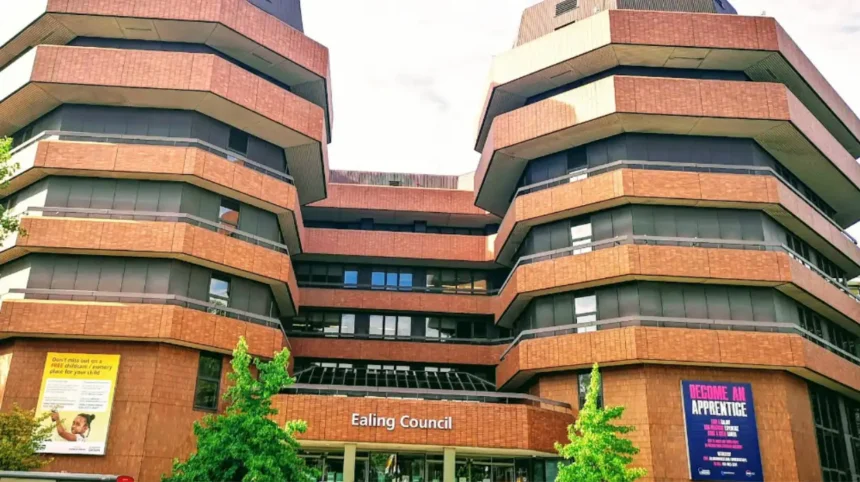
Key Points
- Ealing Council placed a mother and her newborn baby into accommodation that lacked essential facilities, including heating and hot water.
- The mother, identified as Miss X, submitted four formal complaints regarding her living conditions and allegations of racial profiling.
- While Ealing Council initially upheld her complaints during internal reviews, it refused her statutory right to escalate the matter to a Stage 3 panel review.
- The Local Government and Social Care Ombudsman investigated the case, ruling that Ealing Council was at fault for blocking the statutory complaints procedure.
- The watchdog ordered the local authority to conduct a Stage 3 panel without delay, issue a written apology, pay additional financial compensation, and provide staff training.
Ealing (West London News) August 28, 2026 – Ealing Council has been faulted by the local government watchdog after placing a vulnerable mother and her infant child into accommodation without heating and hot water, and subsequently denying the mother her legal right to escalate her complaints through the formal statutory process.
- Key Points
- How Did Ealing Council Fail to Process the Complaints Correctly?
- What Did the Ombudsman Decision State Regarding the Council’s Actions?
- Background: What Is Ealing Council’s Recent Track Record in Housing and Social Care Delivery?
- Prediction: How Will This Development Impact Local Residents and Public Authorities?
As reported by Philip James Lynch and Tom Place of the Standard, the mother, referred to in official documentation as Miss X, was subject to an Interim Care Order following the birth of her baby. This order established shared parental responsibility between Miss X and Ealing Council whilst court proceedings evaluated ongoing child welfare considerations. Under this arrangement, the mother and child were initially moved into a specialist unit before being transferred into a mother-and-baby foster placement managed under council oversight.
During her time at the foster placement, Miss X encountered severe sub-standard living conditions. She formally raised concerns with Ealing Council, citing a total lack of hot water and heating inside the property. Additionally, Miss X submitted complaints alleging religious discrimination, stating that racial profiling had unfairly restricted her ability to travel, and accused the local authority of failing to investigate these issues properly.
How Did Ealing Council Fail to Process the Complaints Correctly?
Upon receiving the initial grievances, Ealing Council launched an internal investigation that only partially upheld her concerns. Expressing dissatisfaction with the initial outcome, Miss X requested a Stage 2 investigation. During this second phase, the local authority fully upheld all four of her complaints and issued a formal written apology.
Alongside the apology, Ealing Council agreed to implement five internal recommendations and commit to staff re-training. However, a dispute arose regarding financial compensation. Miss X requested monetary redress to cover the emotional distress, hardship, and loss caused by her restricted travel plans and poor living conditions. The council initially agreed to pay just 10 per cent of her requested amount. Although the local authority later offered a slight increase to this financial offer, Miss X requested that a Stage 3 independent complaints panel review the settlement. Ealing Council refused her request to convene the panel.
What Did the Ombudsman Decision State Regarding the Council’s Actions?
Following the council’s refusal, the matter was escalated to the Local Government and Social Care Ombudsman. As reported by Philip James Lynch and Tom Place of the Standard, the Ombudsman determined that Ealing Council’s refusal to convene a Stage 3 panel constituted clear fault under statutory guidelines.
The Ombudsman noted that once a local authority accepts a formal complaint under the statutory social services complaints procedure, the complainant possesses an absolute legal right to pursue that complaint through all three designated stages. By blocking the Stage 3 panel, Ealing Council unlawfully deprived Miss X of her statutory rights.
The Ombudsman directed Ealing Council to:
- Convene a Stage 3 complaints panel to complete the statutory procedure without further delay.
- Issue a direct, symbolic financial payment to Miss X to compensate for the unnecessary stress, uncertainty, and delay caused by refusing her escalation request.
- Provide revised guidance and training to relevant local authority staff to ensure compliance with statutory complaint procedures in the future.
Ealing Council confirmed it accepted all of the Ombudsman’s findings and agreed to implement the recommendations in full.
Background: What Is Ealing Council’s Recent Track Record in Housing and Social Care Delivery?
This latest finding by the Local Government and Social Care Ombudsman adds to a series of administrative and operational challenges faced by Ealing Council regarding housing, social care, and statutory compliance.
Under national childcare legislation, local authorities operating under Interim Care Orders share parental duty and are legally bound to ensure accommodation provided to vulnerable mothers and infants meets basic human needs, including adequate sanitation and working heating systems. Over recent years, housing and social care services across various London boroughs, including Ealing, have come under increased scrutiny from both the Local Government Ombudsman and the Housing Ombudsman regarding delayed repairs, poor living conditions in temporary placements, and procedural delays during administrative reviews.
The statutory three-stage complaints procedure exists specifically to offer an independent, transparent mechanism for residents to challenge decisions made by local councils. The decision against Ealing Council highlights ongoing systemic challenges in how administrative teams handle grievances, particularly when complaints move beyond internal reviews into independent panel assessments.
Explore More Ealing News
Ealing Council Failed Mother In Unheated Foster Care: Ombudsman Ealing 2026
Eight Rescued After Shackleton Road House Blaze Hits Southall 2026
Prediction: How Will This Development Impact Local Residents and Public Authorities?
This ruling carries direct implications for several key stakeholders across the local authority sector and the wider community:
- Impact on Local Residents and Service Users: For residents in Ealing and across West London, the decision reasserts the enforceability of statutory rights when dealing with local government services. Vulnerable families in temporary or foster care placements can use this decision as a procedural precedent to challenge sub-standard living conditions and ensure their complaints are not arbitrarily closed at Stage 2.
- Impact on Ealing Council Policy and Operations: Ealing Council faces immediate internal administrative revisions. Frontline social care workers and complaints handling staff will undergo mandatory retraining regarding statutory escalation protocols. This will likely force the council to allocate greater resources toward resolving housing quality issues at the initial stage rather than risking costly Ombudsman investigations.
- Impact on the Local Authority Sector Nationally: The clear stance taken by the Ombudsman serves as a warning to local councils nationwide. Local authorities cannot unilaterally refuse Stage 3 panels to limit financial compensation claims or avoid independent oversight. Councils across the UK will need to review their internal dispute mechanisms to ensure full compliance with statutory complaints frameworks.