Key Points
- Historic Political Milestone: Reform UK has successfully passed its first ever motion submitted to Swindon Borough Council’s Full Council meeting.
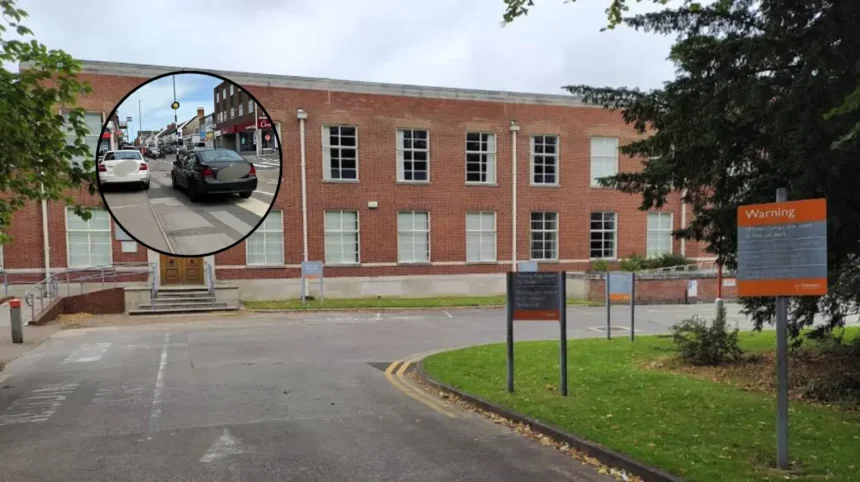
- Focus on Local Infrastructure: The approved motion directs municipal highways officers to take concrete steps and review safety and parking arrangements on a heavily congested thoroughfare in Swindon following persistent complaints from local residents.
- Cross-Party Support: The motion secured broad support across the council chamber, reflecting growing local concern over road safety, access for emergency vehicles, and residential parking congestion.
- Mandate for Action: Council officers are now instructed to assess potential solutions, which may include revised parking restrictions, Traffic Regulation Orders (TROs), or designated parking bays.
- Significance for Reform UK: The motion marks the political party’s transition from an electoral pressure group to an active force shaping local authority policy on community issues.
Reform UK (West London News) August 10, 2026 – Reform UK has achieved a major political milestone in Wiltshire after successfully securing the passage of its first ever motion before the Full Council of Swindon Borough Council. The historic vote mandates local authority officers to take immediate action to address severe parking congestion and road safety hazards along a busy Swindon thoroughfare following months of escalating complaints from local residents.
- Key Points
- How Did Reform UK Win Support for Its First Full Council Motion?
- What Specific Changes Are Proposed for the Busy Swindon Thoroughfare?
- How Have Local Residents and Community Groups Reacted to the Decision?
- Background to the Development
- Prediction: How Will This Development Affect the Local Audience?
The motion, brought forward by Reform UK representatives, focused squarely on grassroots highway concerns that residents claim have compromised pedestrian safety, restricted access for public services, and caused daily traffic gridlock. During a debate in the council chamber, elected members voted in favour of requiring municipal highways teams to formally evaluate the road network and draw up viable solutions to ease parking pressures.
The approval represents a significant moment for Reform UK, marking its first formal legislative success inside Swindon Borough Council since securing representation. Local residents living along the affected route have long campaigned for intervention, citing instances where double-parking and narrow carriageways prevented waste collection vehicles and emergency service responders from navigating the street safely.
How Did Reform UK Win Support for Its First Full Council Motion?
The passage of the motion depended on framing local traffic management not as a partisan debate, but as an urgent matter of public safety and residential amenity. Reform UK councillors presented evidence gathered directly from door-to-door constituent surveys and public meetings, detailing daily disruption caused by unregulated parking along the busy corridor.
In the chamber, Reform UK representatives argued that existing parking measures were no longer fit for purpose given the volume of traffic using the route. Party spokespersons highlighted that vehicle density on the road had reached a tipping point, creating hazardous blind spots for motorists pulling out of side streets and making it dangerous for pedestrians to cross.
By focusing strictly on actionable highways solutions rather than wider political arguments, the motion garnered cross-party backing from elected members across the chamber. Councillors acknowledged that the safety of local residents and the operational efficiency of the road network superseded political divides, allowing the proposal to pass with a decisive majority.
What Specific Changes Are Proposed for the Busy Swindon Thoroughfare?
Following the successful vote, Swindon Borough Council’s highways department has been directed to initiate a formal review of the affected road. The motion instructs officers to consider a range of traffic management tools to restore order and improve overall visibility.
Potential interventions under technical review include:
- Traffic Regulation Orders (TROs): Implementation of formal statutory restrictions, such as double or single yellow lines at dangerous junctions and narrow bends to preserve sightlines.
- Designated Resident Parking Bays: Consideration of structured parking zones to prioritize space for local householders over long-stay commuter vehicles.
- Time-Restricted Parking Controls: Introducing limited-stay enforcement during peak morning and evening traffic periods to maintain smooth traffic flow.
- Safety Markings and Signage: Upgrading street signage and road paint to deter anti-social or obstructional parking near pedestrian crossings.
Highways officers will conduct traffic volume counts, monitor peak-hour parking density, and consult directly with emergency service authorities—including the police, fire, and ambulance services—to establish where access is most constrained.
How Have Local Residents and Community Groups Reacted to the Decision?
Local residents living along the affected road have expressed widespread relief at the decision, having raised concerns about parking chaos for several years. Neighborhood action groups noted that previous requests for council intervention had stalled due to budgetary limitations and competing regional priorities.
Community members reported that heavy parking along both sides of the carriageway frequently reduced two-way streets to a single narrow lane. On several occasions, municipal refuse trucks were forced to turn back due to parked vehicles blocking the road, leaving household bins uncollected for days at a time.
With the motion officially passed, residents now expect swift progress from municipal officers. However, representatives from nearby streets have urged the council to ensure that any new parking restrictions do not simply displace parked vehicles into adjacent residential avenues, creating secondary traffic problems elsewhere.
Background to the Development
The challenge of residential and arterial parking in Swindon has grown steadily over the past decade, driven by rising vehicle ownership, historical urban layouts, and increased commuter traffic across the borough. Swindon Borough Council operates under strict guidelines governed by the Traffic Management Act 2004, which regulates how local authorities can impose restrictions and enforce parking violations.
Under standard administrative procedures, minor highway improvements and Traffic Regulation Orders require extensive public consultation, legal notices, and technical evaluations before implementation. Because introducing statutory restrictions incurs significant procedural and capital costs, councils often face strict prioritization criteria, prioritizing locations with documented safety hazards or high accident statistics over general convenience claims.
For Reform UK, entering local government chambers following recent local election cycles required establishing a distinct legislative footprint. Prior to this vote, critics had questioned whether the party’s representatives could translate national political momentum into practical, hyper-local governance. Delivering a successful motion on an essential infrastructure issue represents a strategic shift toward establishing a working policy record within municipal government.
Prediction: How Will This Development Affect the Local Audience?
The passage of Reform UK’s parking motion is expected to have direct operational, economic, and political consequences for various groups across the Swindon borough:
1. Local Residents and Drivers
In the immediate to medium term, residents living on and around the affected road will experience formal consultations as council officers draft proposed parking regulations. If implemented, controlled parking measures will improve road safety, widen sightlines at junctions, and guarantee that emergency vehicles and municipal services can navigate the area unimpeded. However, drivers who routinely park on the road without permits or during restricted hours may face stricter civil enforcement, leading to Potential Penalty Charge Notices (PCNs) for non-compliance.
2. Business Owners and Nearby Commuters
Local traders and commercial motorists who rely on unrestricted roadside parking along the thoroughfare may face temporary disruption as space is reallocated or restricted. Commuters using the route as a drop-off point or free parking area will likely need to adjust their routines, migrating toward public transport hubs or off-street car parks.
3. The Wider Political Landscape in Swindon
Politically, this development establishes a practical precedent for Reform UK within Swindon Borough Council. By successfully passing a motion through Full Council, the party has demonstrated an ability to work within established council standing orders and secure cross-party consensus on community matters. This success is likely to encourage Reform UK representatives to submit further motions on local infrastructure, council spending, and public services, fundamentally altering debate dynamics inside the chamber ahead of future municipal elections.