The best day trips from West London accessible within two hours include Windsor, Oxford, Kew, Richmond, the Cotswolds, Hampton Court, and Henley-on-Thames. These destinations offer direct rail connections via Paddington or Waterloo stations and proximity to the M4, M40, and A40 roads.
- How Does Windsor Serve as a Historic Day Trip Destination from West London?
- What Makes Oxford a Top Cultural Day Trip from West London?
- What Cultural Institutions Define the Oxford Experience?
- What Transport Options Connect West London to Oxford?
- Why Is Kew Gardens an Essential Day Trip within West London?
- How Does Hampton Court Palace Offer a Tudor and Baroque Cultural Experience?
- What Historical Divisions Define Hampton Court Palace?
- What Transport Routes Connect West London to Hampton Court?
- Why Is Richmond an Ideal Riverside Escape from Central and West London?
- What Features Define the Landscape and Built Heritage of Richmond?
- How Is Richmond Accessed from Surrounding West London Areas?
- How Can Travelers Visit the Cotswolds as a Day Trip from West London?
- What Historic Towns and Geological Features Define the Cotswolds?
- What Are the Logistics for a Day Trip to the Cotswolds from West London?
- What Does Henley-on-Thames Offer for a River-Focused Day Trip?
- What Attractions Define Henley-on-Thames?
- How Do Visitors Travel to Henley-on-Thames from West London?
- What Practical Travel Strategies Optimize Day Trips Departing West London?
West London serves as an optimal geographic starting point for day travel due to its strategic position along major transport corridors heading west and northwest from Greater London. Travel times from West London hubs such as Ealing, hounslow/chiswick/">Chiswick, fulham/hammersmith/">Hammersmith, Paddington, and Heathrow are significantly shorter than from central or east London when traveling to the home counties.
Transit infrastructure provides direct access via Great Western Railway (GWR) services out of London Paddington, South Western Railway (SWR) services out of London Waterloo, and road networks including the M4 motorway, M40 motorway, A40 trunk road, and the M25 orbital motorway.
The selection of destinations covers various categories of attraction, including royal estates, botanical gardens, ancient universities, river towns, and designated Areas of Outstanding Natural Beauty (AONB), now classified as National Landscapes.
How Does Windsor Serve as a Historic Day Trip Destination from West London?
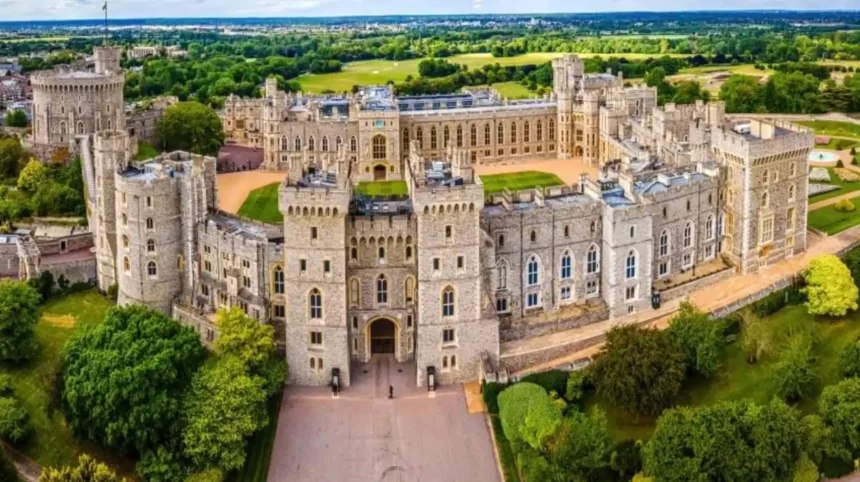
Windsor serves as a historic day trip destination through its status as the oldest and largest occupied castle in the world, founded by William the Conqueror in the 11th century, located 22 miles west of central London in Berkshire.
Windsor occupies a location on the south bank of the River Thames in the county of Berkshire. The town is situated 22 miles (35 kilometers) west of Charing Cross and approximately 15 miles (24 kilometers) west of West London districts such as Hounslow and Uxbridge.
Windsor Castle covers an area of approximately 13 acres (5.2 hectares) and combines the features of a fortification, a royal palace, and a small town. William the Conqueror established the original earthwork motte-and-bailey castle in 1070 to secure the western approach to London.
King Henry II replaced the wooden stockades with stone walls in the late 12th century. King Edward III transformed the fortress into a Gothic palace in the 14th century, spending £50,000 on the reconstruction, which was the largest expenditure by any English medieval monarch on a single building.
The State Apartments display artwork from the Royal Collection, including paintings by Peter Paul Rubens, Rembrandt van Rijn, and Anthony van Dyck. St George’s Chapel, situated in the Lower Ward of the castle, represents an example of Perpendicular Gothic architecture.
Construction of St George’s Chapel began in 1475 under King Edward IV and completed under King Henry VIII in 1528. The chapel serves as the burial site for 11 British monarchs, including Henry VIII, Charles I, and Queen Elizabeth II.
How Do Visitors Access Windsor from West London?
Rail transport from West London to Windsor operates via two primary routes:
- Great Western Railway (GWR): Direct trains depart from London Paddington and stop at West London stations including Ealing Broadway, Southall, and Hayes & Harlington, requiring a transfer at Slough to the Windsor & Eton Central branch line. Total journey time from Ealing Broadway is 25 to 35 minutes.
- South Western Railway (SWR): Direct trains run from London Waterloo, stopping at West London hubs such as Clapham Junction, Richmond, and Feltham, terminating at Windsor & Eton Riverside station. Total journey time from Richmond is 38 minutes.
Road travel follows the M4 motorway westbound to Junction 6, connecting to the A332 dual carriageway directly into Windsor town centre.
What Makes Oxford a Top Cultural Day Trip from West London?
Oxford makes a top cultural day trip due to its concentration of 39 constituent university colleges, historic libraries, world-class museums, and 1,000 years of continuous academic history, located 56 miles northwest of West London.
Oxford is the county town of Oxfordshire, situated along the River Thames and River Cherwell. It lies 56 miles (90 kilometers) northwest of central London and is accessed directly from West London via the M40 corridor and the Chiltern Main Line or Great Western Main Line.
What Cultural Institutions Define the Oxford Experience?
The University of Oxford is the oldest university in the English-speaking world, with evidence of teaching dating to 1096. The urban layout contains examples of major English architectural styles since the late Anglo-Saxon period.
Key architectural and cultural landmarks include:
- The Bodleian Library: Founded in 1602 by Sir Thomas Bodley, it operates as one of six legal deposit libraries in the United Kingdom, holding over 13 million printed items across 117 miles (188 kilometers) of shelving.
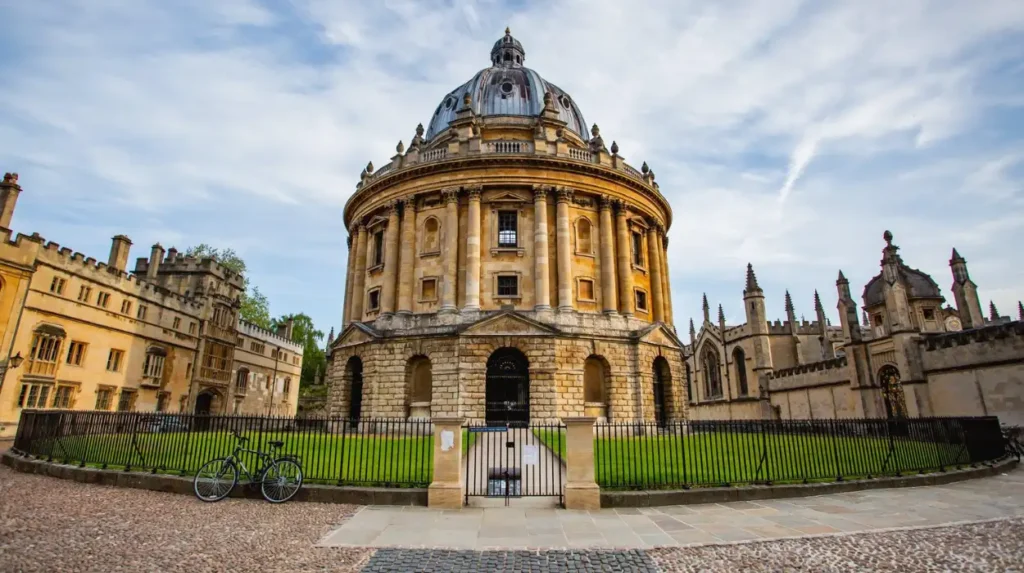
- The Radcliffe Camera: Built between 1737 and 1749 to a Neo-Classical design by James Gibbs, it serves as a reading room for the Bodleian Library.
- The Ashmolean Museum: Established in 1683, it is the world’s first university museum, housing collection items such as the Alfred Jewel, Egyptian antiquities, and drawings by Michelangelo and Raphael.
- Christ Church College: Founded in 1546 by King Henry VIII, it features the Great Hall, a 16th-century timber-roofed dining space, and Tom Tower, designed by Sir Christopher Wren in 1681.
What Transport Options Connect West London to Oxford?
Direct train services operate from London Paddington to Oxford Station via Great Western Railway. Trains call at key West London interchanges, covering the 63-rail-mile distance in 50 to 60 minutes on fast services.
Road connections proceed via the A40 trunk road through Acton and Shepherd’s Bush, transitioning into the M40 motorway at Junction 1 (Denham). Driving distance from West London to Oxford via the M40 is approximately 50 miles, taking 65 to 85 minutes outside peak traffic hours.
Coach operators run dedicated services, such as the Oxford Tube, which pick up passenger traffic at West London stops including Hillingdon Underground Station and White City.
Why Is Kew Gardens an Essential Day Trip within West London?
Kew Gardens is an essential day trip because it is a UNESCO World Heritage Site containing the largest and most diverse botanical and mycological collections in the world, spanning 326 acres along the Thames in Richmond upon Thames.
The Royal Botanic Gardens, Kew, is located in the London Borough of Richmond upon Thames in southwestern West London. Established in 1759 by Princess Augusta, the mother of King George III, Kew transitioned into a national botanical institute in 1840. UNESCO designated Kew Gardens as a World Heritage Site in 2003 under UNESCO Criteria (ii), (iii), and (iv) for its contributions to botanical science and landscape architecture.
What Botanical and Architectural Structures Exist at Kew?
Kew Gardens houses more than 50,000 living plant species and over 8.5 million preserved plant and fungal specimens in its herbarium.
Major historic structures inside the gardens include:
- The Palm House: Constructed between 1844 and 1848 by architect Decimus Burton and ironmaster Richard Turner, it was the first large-scale structural use of wrought iron in architectural history.
- The Temperate House: Opened in 1863, it is the world’s largest surviving Victorian glasshouse, measuring 4,880 square meters (52,500 square feet) and housing 10,000 individual plants from temperate regions.
- The Princess of Wales Conservatory: Opened in 1987 by Princess Diana, it contains ten computer-controlled microclimates featuring tropical species, orchids, and carnivorous plants.
- The Great Pagoda: Designed by Sir William Chambers and completed in 1762, this Chinoiserie structure stands 50 meters (163 feet) high with ten octagonal stories.
How Do Visitors Reach Kew Gardens?
Kew Gardens is accessible via public transit networks operating throughout West London:
- London Underground: District line services stop at Kew Gardens Station (Zone 3/4 boundary), situated a 500-meter walk from the Victoria Gate entrance.
- London Overground: Direct trains from Richmond, Willesden Junction, and West Hampstead run to Kew Gardens Station.
- National Rail: South Western Railway operates services from London Waterloo to Kew Bridge Station, located north of the river, requiring a cross-bridge walk to the Elizabeth Gate entrance.
- River Bus: Thames River Boats run seasonal water transport services from Westminster Pier to Kew Pier.
How Does Hampton Court Palace Offer a Tudor and Baroque Cultural Experience?
Hampton Court Palace offers a dual cultural experience through its intact 16th-century Tudor architecture built by Cardinal Wolsey and King Henry VIII, alongside 17th-century Baroque additions commissioned by King William III and Queen Mary II.
Hampton Court Palace is situated in East Molesey, Surrey, on the south bank of the River Thames, directly adjacent to the southwestern border of West London near Bushy Park and Kingston upon Thames.
What Historical Divisions Define Hampton Court Palace?
The palace grounds cover 60 acres of formal gardens and 750 acres of royal parkland.
The site is split into two primary architectural phases:
- The Tudor Palace: Constructed starting in 1514 for Cardinal Thomas Wolsey and expanded by King Henry VIII after 1528. It includes the Great Hall, featuring a hammerbeam roof constructed between 1532 and 1535, and the Tudor Kitchens, which were designed to produce 1,200 meals daily for the Royal Court.
- The Baroque Palace: Designed by Sir Christopher Wren between 1689 and 1700 to replace portions of the Tudor structure for William III and Mary II. This section features the King’s State Apartments, the Fountain Court, and symmetrical formal garden layouts modeled on the Palace of Versailles.
Notable landscape features include the Hampton Court Maze, planted around 1700 by George London and Henry Wise, covering a third of an acre with trapezoidal hedge paths, and the Great Vine, planted in 1768, which is the world’s largest known black Hamburg grapevine.
What Transport Routes Connect West London to Hampton Court?
Transit connections operate via multiple travel modes:
- Rail: South Western Railway provides direct service from London Waterloo to Hampton Court Station, calling at West London interchange stations such as Clapham Junction and Wimbledon. Journey times from Wimbledon take approximately 20 minutes.
- Bus Services: Transport for London (TfL) bus routes 111, 216, 411, and R68 run connecting routes from West London locations including Hounslow, Kingston, and Richmond.
- Road: Access follows the A308 road from Kingston or the A309 road from the A3 Hook Expressway. Parking is available on-site at the palace grounds.
Why Is Richmond an Ideal Riverside Escape from Central and West London?
Richmond is an ideal riverside escape because it combines 2,500 acres of protected royal parkland, historic 18th-century architecture, protected river viewpoints, and direct access to the Thames Path within London Zone 4.
Richmond is located 8.2 miles (13.2 kilometers) west-southwest of Charing Cross. It expanded following the construction of Richmond Palace by King Henry VII in 1501, taking its name from Henry’s title as Earl of Richmond (North Yorkshire).
What Features Define the Landscape and Built Heritage of Richmond?
Richmond contains open conservation landscapes, cultural estates, and historical architecture:
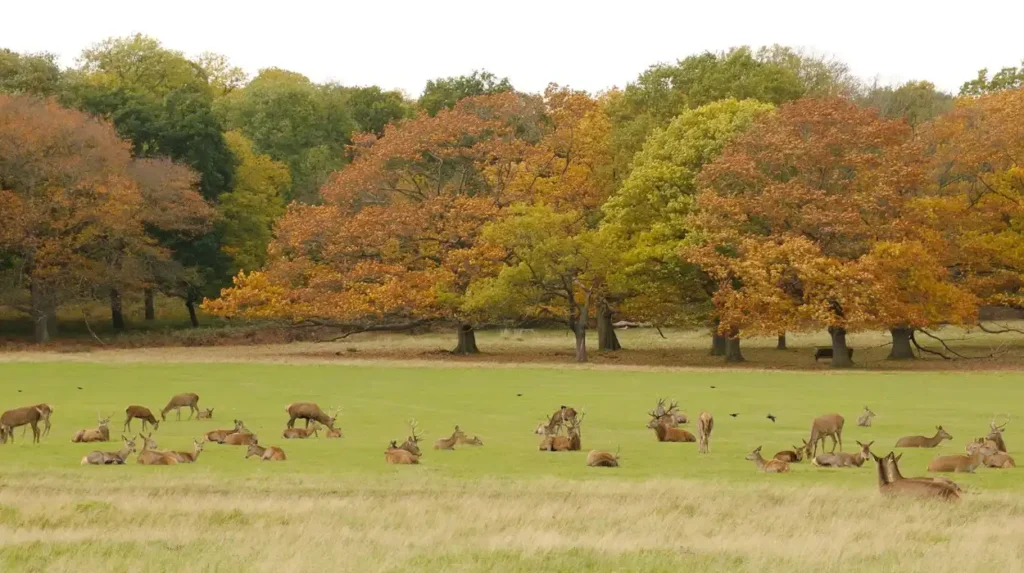
- Richmond Park: Spanning 2,360 acres (955 hectares), it is the largest of London’s Royal Parks and a Site of Special Scientific Interest (SSSI). King Charles I enclosed the park in 1637 as a deer park; today, it supports a population of 630 free-roaming Red and Fallow deer.
- Richmond Hill View: The view from the top of Richmond Hill overlooking the Thames Bend is protected by an Act of Parliament (the Richmond Petersham and Ham Open Spaces Act 1902), preventing development from obstructing the panoramic vista.
- Ham House and Garden: Located on the banks of the Thames, this 17th-century Stuart mansion was completed in 1610 and expanded in the 1670s. It retains an intact interior collection of textiles, furniture, and paintings from the Restoration period.
- Richmond Bridge: Constructed between 1774 and 1777 to a design by Edward Stevens and James Paine, this stone arch bridge is the oldest surviving Thames bridge crossing in Greater London.
How Is Richmond Accessed from Surrounding West London Areas?
Richmond serves as a major transport hub for West London transit networks:
- Rail and Underground: Richmond Station provides direct connections to the District line, the London Overground North London Line (connecting to Acton and Willesden), and SWR mainline trains running from Waterloo to Reading.
- Pedestrian and Cycle Routes: The Thames Path National Trail passes directly through Richmond, offering continuous off-road pedestrian links north to Kew and south to Kingston upon Thames.
How Can Travelers Visit the Cotswolds as a Day Trip from West London?
Travelers can visit the Cotswolds as a day trip by taking high-speed train routes from London Paddington directly to gateway stations such as Moreton-in-Marsh, or driving via the M40 and A40 roads in under 90 minutes.
The Cotswolds is an Area of Outstanding Natural Beauty (National Landscape) covering 787 square miles (2,038 square kilometers) across six counties, predominantly Gloucestershire and Oxfordshire. The southeastern boundary of the Cotswolds begins 70 miles (112 kilometers) northwest of West London.
What Historic Towns and Geological Features Define the Cotswolds?
The region is characterized by rolling hills, known as wolds, and villages built using golden-hued Cotswold stone, an oolitic limestone quarried from Jurassic rock formations.
Key destinations within single-day travel distance include:
- Moreton-in-Marsh: A market town situated on the Fosse Way, an ancient Roman road. It features an intact high street lined with 17th-century and 18th-century coaching inns.
- Bourton-on-the-Water: Located along the River Windrush, it is known for its low stone arch bridges and stone cottages dating to the 16th century.
- Burford: Situated on the River Windrush 18 miles west of Oxford, it features a 15th-century parish church and a steep high street framed by medieval and Tudor timber-framed structures.
- Chipping Campden: The historic center of the Cotswold wool trade during the Middle Ages, featuring the Market Hall constructed in 1627.
What Are the Logistics for a Day Trip to the Cotswolds from West London?
Travelers must utilize targeted transport routes due to the geographic scale of the region:
- Rail Travel: Great Western Railway operates direct hourly services from London Paddington to Moreton-in-Marsh, calling at Ealing Broadway on select schedules. Total rail transit time ranges from 80 to 90 minutes. Local bus services, such as Pulhams Coaches routes 801 and 802, connect Moreton-in-Marsh station to Bourton-on-the-Water and Stow-on-the-Wold.
- Automobile Travel: The most efficient road route from West London proceeds along the A40 through Uxbridge, joining the M40 motorway to Junction 8 (Oxford), then continuing west along the A40 toward Burford. Driving time from West London to Burford is approximately 75 to 90 minutes.
What Does Henley-on-Thames Offer for a River-Focused Day Trip?
Henley-on-Thames offers a river-focused day trip through its heritage as the historic home of international rowing, featuring the Royal Regatta, the River & Rowing Museum, and riverside access to the Chiltern Hills.
Henley-on-Thames is a historic town in Oxfordshire situated on the west bank of the River Thames, 37 miles (60 kilometers) west of West London, below the Chiltern Hills.
What Attractions Define Henley-on-Thames?
The culture and built environment of Henley-on-Thames revolve around its historic waterway:
- Henley Royal Regatta: Established in 1839, this rowing event takes place over a 1-mile 550-yard (2,112-meter) course along the Henley Reach of the River Thames. It operates under the patronage of the reigning monarch and attracts international athletes across 26 competition events.
- River & Rowing Museum: Housed in a building designed by architect Sir David Chipperfield and opened in 1998, the museum features four permanent galleries dedicated to the history of rowing, the River Thames, the town of Henley, and the artwork of author Kenneth Grahame (The Wind in the Willows).
- Henley Bridge: A five-arch stone bridge built in 1786 across the Thames, featuring carved keystones depicting the river gods Thamesis and Isis created by sculptor Anne Seymour Damer.
- Temple Island: Located downstream from the town, this island marks the start of the Regatta course and features a 1771 Neo-Classical folly building designed by James Wyatt.
How Do Visitors Travel to Henley-on-Thames from West London?
Transit logistics for Henley-on-Thames include:
- By Train: Great Western Railway operates direct services from London Paddington along the Great Western Main Line to Twyford, where passengers cross to the Henley Branch Line. The branch train stops at Shiplake and terminates at Henley-on-Thames station, located 200 meters from the riverfront. Total travel time from Ealing Broadway or Paddington is 45 to 60 minutes.
- By Car: Driving routes exit West London via the M4 motorway westbound to Junction 8/9 (Maidenhead), then follow the A404(M) dual carriageway and the A4130 directly into Henley. Total driving time from areas such as Chiswick or Hounslow is 45 to 50 minutes.
Explore More Area Guide
Best Outdoor Activities, Richmond Park & Thames Walks West London 2026
Rainy Day Activities in West London: Indoor Ideas for Families and Adults
What Practical Travel Strategies Optimize Day Trips Departing West London?
Practical travel strategies include using off-peak rail ticketing, leveraging West London rail interchanges to avoid central terminals, departing before 08:30 for road journeys, and scheduling visits using regional transit cards.
Maximizing travel efficiency from West London requires targeted choices regarding departure hubs, ticket types, and transit schedules.
Rail passengers do not need to travel eastward into London Paddington or Waterloo terminals to begin their journeys.
Travelers can access regional lines directly via West London interchanges:
- Ealing Broadway Station: Serves as a major interchange connecting the Elizabeth Line, Central Line, District Line, and GWR mainline services. Passengers heading to Windsor, Reading, Henley, or Oxford can board GWR trains directly without entering Zone 1.
- Richmond Station: Connects the District Line, London Overground, and SWR mainline trains. Passengers can travel directly south to Hampton Court or west to Windsor.
- Clapham Junction Station: Functions as a rail interchange for SWR services heading south and southwest toward Surrey, Hampshire, and Berkshire.
Rail travel costs drop when using off-peak pricing windows:
- Off-Peak Windows: Off-Peak fare structures generally apply to trains arriving at London terminals after 10:00 on weekdays, and all day on weekends and public holidays. Evening peak restrictions apply outbound from London terminals between 16:30 and 19:00 on weekdays.
- Pay As You Go (PAYG): Contactless payment cards and Oyster cards are accepted for travel on National Rail services to destinations including Kew, Richmond, Hampton Court, and Windsor & Eton Central. Pay-as-you-go boundaries do not extend to Oxford, Henley-on-Thames, or Moreton-in-Marsh, which require paper or digital National Rail tickets purchased in advance.
Road users leaving West London encounter localized traffic corridors that vary by departure time:
- A40 / M40 Corridor: Prone to delays inbound between 07:30 and 09:30. Outbound travel toward Oxford and the Cotswolds flows smoothly when passing through the Hillingdon/Denham interchange before 08:00 or after 10:00.
- M4 Corridor: Peak congestion occurs around Junction 3 (Heston/Hayes) and Junction 4 (Heathrow Spur). Driving to Windsor or Henley requires monitoring Heathrow airport traffic updates to select between the M4 motorway and the lower-speed A4 trunk road.
- Ultra Low Emission Zone (ULEZ): The Greater London ULEZ covers all areas within the London orbital boundaries up to the M25. Vehicles driving through West London to regional destinations must comply with ULEZ emissions standards or pay the daily £12.50 charge.
What are the best day trips from West London in 2026?
The best day trips from West London include Windsor, Oxford, the Cotswolds, Kew Gardens, Richmond, Hampton Court Palace, and Henley-on-Thames. These destinations are accessible within two hours by train or car and offer attractions ranging from royal castles and historic universities to countryside landscapes and riverside walks.