West London is one of London’s strongest destinations for luxury shopping, combining historic department stores, international fashion houses, fine jewellery, watches, beauty, premium food and independent boutiques. The area’s luxury retail core centres on Knightsbridge, Sloane Street, Chelsea and selected parts of Kensington, while Westfield London adds a major modern shopping destination in fulham/white-city/">White City.
- What is luxury shopping in West London?
- Why is Knightsbridge one of the best luxury shopping areas in West London?
- What can shoppers buy at Harrods in West London?
- How does Sloane Street compare with Knightsbridge luxury shopping?
- What makes Chelsea important for luxury shopping in West London?
- What luxury brands are available at Westfield London?
- How should you plan a luxury shopping trip in West London?
- Which luxury shopping areas are best for fashion, jewellery and beauty?
- How does luxury shopping connect with West London’s wider visitor economy?
- What is the historical importance of luxury retail in West London?
- What is the future of luxury shopping in West London?
Luxury shopping in West London is defined by a combination of established retail institutions and concentrated designer districts. Knightsbridge provides internationally recognised department stores. Chelsea provides specialist boutiques and luxury flagships. Sloane Street connects these areas through a prominent designer corridor. Westfield London provides a large enclosed retail environment with dedicated luxury stores.
The area also benefits from strong transport connections, historic architecture, hotels, restaurants, cultural attractions and public spaces. Kensington Gardens, for example, covers approximately 265 acres and forms part of the wider landscape surrounding Kensington and Knightsbridge.
What is luxury shopping in West London?
Luxury shopping in West London is a premium retail experience centred on designer fashion, jewellery, watches, beauty, accessories, gourmet products and specialist services across Knightsbridge, Chelsea, Kensington and White City.
The term covers more than expensive clothing. Luxury retail includes products with premium materials, specialist craftsmanship, recognised designer labels, exclusive collections, personal service and high-end presentation.
West London contains several different luxury-shopping formats. Traditional department stores provide multiple categories under one roof. Designer streets concentrate individual flagship boutiques. Shopping centres provide a controlled indoor environment with international brands. Independent Chelsea retailers provide more specialised products.
This variety makes the area relevant to different shopping purposes. A visitor searching for designer clothing can focus on Sloane Street. A customer seeking jewellery or watches can explore Knightsbridge. A shopper seeking multiple luxury brands in one modern centre can visit Westfield London.
The area also combines shopping with hospitality. Restaurants, cafés, hotels and cultural attractions surround the principal retail districts. This creates a wider commercial ecosystem rather than an isolated shopping zone.
Cadogan describes Chelsea and Knightsbridge as destinations combining luxury flagships, independent shops, arts, restaurants, hotels and historic architecture. Its estate includes major retail areas around Sloane Street, Duke of York Square and the King’s Road.
Why is Knightsbridge one of the best luxury shopping areas in West London?
Knightsbridge is a leading luxury shopping district because it combines Harrods, Harvey Nichols, designer boutiques and premium hospitality within a compact area served directly by Knightsbridge Underground station.
Knightsbridge is the central luxury retail district for shoppers seeking established international brands and major department stores.
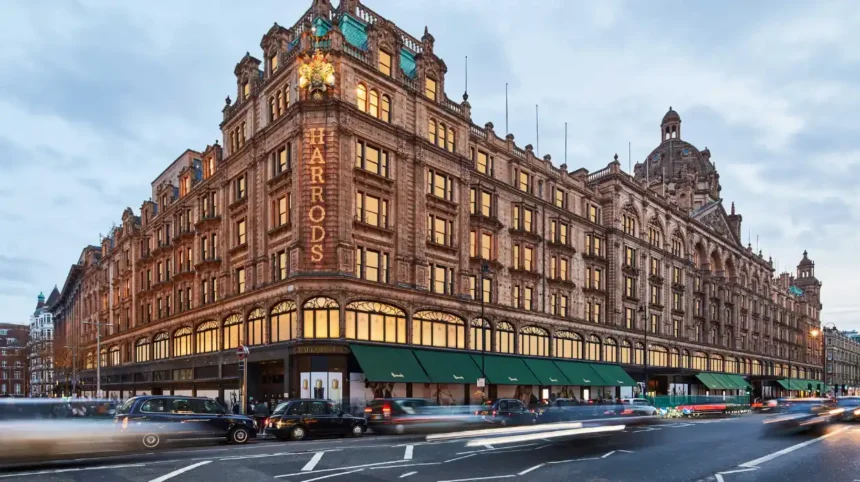
Harrods is the district’s most internationally recognised retail institution. Its Knightsbridge store opened in 1849 under Charles Henry Harrod as a general store and tea supplier. Harrods subsequently expanded into fashion, dining and broader luxury retail.
Today, Harrods provides fashion, accessories, beauty, jewellery, watches, home products and food. Visit London identifies the store at 87–135 Brompton Road and lists Knightsbridge Underground station on the Piccadilly line as the nearest Tube connection.
Harvey Nichols provides a second major luxury department-store option. The Knightsbridge store is at 109–125 Knightsbridge. Its history in the area dates to 1831. Its offer includes fashion, accessories, beauty, lifestyle products and food.
The proximity of these two department stores allows shoppers to compare collections, brands, beauty products and services without travelling across London.
Knightsbridge also connects naturally with Belgravia and Sloane Street. This creates a larger luxury-shopping circuit extending south and west from the department stores.
What can shoppers buy at Harrods in West London?
Harrods offers luxury fashion, designer accessories, jewellery, watches, beauty products, homeware and premium food, making its Knightsbridge flagship a comprehensive destination for high-end shopping and specialist retail services.
Harrods operates as a department store rather than a single-category boutique. Its product structure allows customers to browse several luxury categories within one building.
Fashion forms a major part of the offer. Designer clothing, footwear, handbags and accessories occupy prominent retail areas. International luxury houses are represented alongside specialist collections.
Beauty is another important category. Premium skincare, cosmetics and fragrance provide products across established and specialist brands. The store also contains dedicated beauty experiences.
Jewellery and watches represent another major component. High-value purchases require different levels of customer service from ordinary fashion retail. Specialist departments provide product expertise and a more controlled purchasing environment.
Food is also central to the Harrods identity. The store developed from a food-oriented business and later expanded into fashion and other luxury categories. Its historical development demonstrates how the traditional department-store model evolved from specialist provisions into a broad premium retail destination.
Harrods also provides dining opportunities. Visit London highlights its food halls and restaurants as part of the overall visitor experience.
The store’s historical importance also contributes to its retail identity. Its Knightsbridge location has operated since 1849, giving the institution more than 175 years of retail history by 2026.
For shoppers, the practical advantage is concentration. Fashion, beauty, accessories, food and specialist luxury categories are available within one established destination.
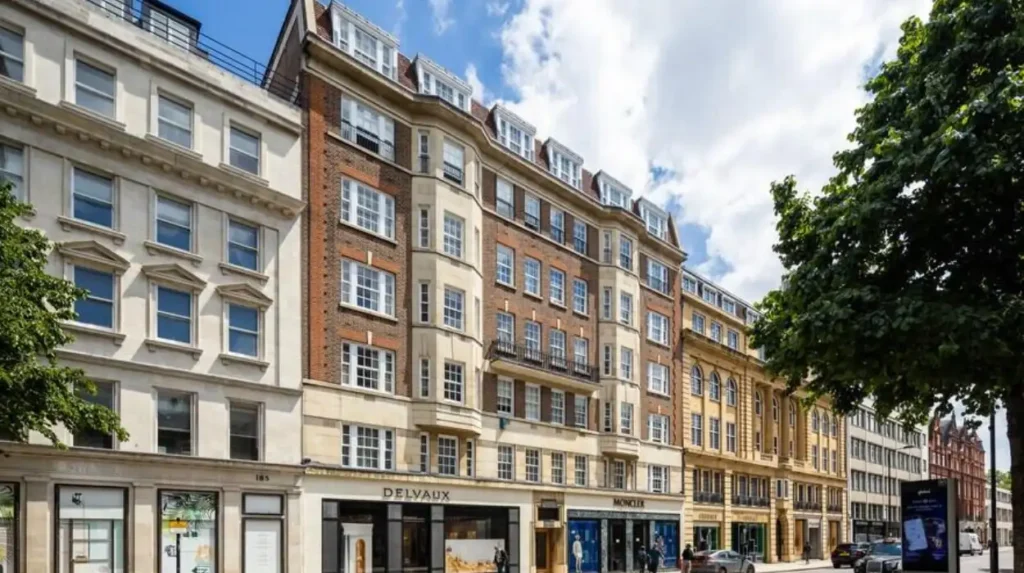
How does Sloane Street compare with Knightsbridge luxury shopping?
Sloane Street provides a concentrated designer-shopping corridor linking Knightsbridge with Sloane Square, with luxury fashion houses, jewellery retailers and specialist boutiques positioned along an established Chelsea and Knightsbridge route.
Sloane Street is one of the defining luxury retail streets in West London. Cadogan describes it as an exclusive shopping destination extending from the Knightsbridge end towards Sloane Square.
The street provides a different retail format from a department store. Individual boutiques represent specific fashion houses or specialist brands. Customers therefore move between separate stores rather than exploring many departments inside one building.
The northern section connects directly with Knightsbridge. This places shoppers close to Harrods and Harvey Nichols. The southern section approaches Sloane Square and Chelsea.
Luxury fashion is a major component of Sloane Street. Jewellery, watches, accessories and specialist luxury goods also contribute to the retail mix.
The street’s development is connected with the Cadogan estate. Cadogan states that Sloane Street was established through the development associated with the 1st Earl Cadogan in the 18th century.
This historical foundation matters because luxury retail developed within an existing urban neighbourhood rather than inside a purpose-built shopping centre.
Sloane Street also benefits from its streetscape. The boulevard contains landscaped elements, historic buildings and established commercial properties. The result is a shopping environment integrated into the wider urban fabric.
For shoppers seeking flagship stores, Sloane Street is particularly relevant. For shoppers seeking a broad selection of unrelated categories in one building, Harrods or Westfield London provides a more concentrated format.
What makes Chelsea important for luxury shopping in West London?
Chelsea adds independent boutiques, designer stores, galleries, premium food shops and specialist retailers to West London’s luxury offer, particularly around the King’s Road, Sloane Square, Duke of York Square and Pavilion Road.
Chelsea extends the luxury-shopping experience beyond Knightsbridge and Sloane Street.
The King’s Road is one of Chelsea’s best-known commercial streets. Its retail environment includes fashion, lifestyle, beauty, home products, restaurants and independent businesses. The broader Chelsea district therefore combines luxury shopping with local retail.
Duke of York Square provides another important destination. Cadogan describes the square as a refined fashion, food and culture district anchored by the Saatchi Gallery. It contains 33 curated boutiques, seven restaurants and a Saturday food market according to Cadogan’s destination information.
This mix demonstrates an important feature of luxury retail in Chelsea. High-end shopping operates alongside food, culture and independent commerce.
Pavilion Road provides a smaller-scale retail environment. Cadogan’s historical retail reporting describes the street as containing independent food businesses, including a butcher, wine merchant, bakery, greengrocer and cheese specialist.
Chelsea therefore suits shoppers who want premium retail combined with neighbourhood-scale businesses.
The area also benefits from proximity to cultural institutions. Saatchi Gallery at Duke of York Square adds an arts component to the shopping environment. Restaurants and cafés provide additional destinations between retail visits.
Chelsea’s luxury identity is consequently broader than designer fashion. It includes premium food, jewellery, interiors, beauty, art and specialist services.
What luxury brands are available at Westfield London?
Westfield London provides a modern luxury-shopping environment in White City with dedicated stores from brands including Louis Vuitton, Gucci, Prada, Tiffany & Co., Omega, Bucherer, Breitling and Longchamp.
Westfield operates Westfield London in White City. Its current luxury directory lists 21 luxury shops and identifies a dedicated luxury category within the centre.
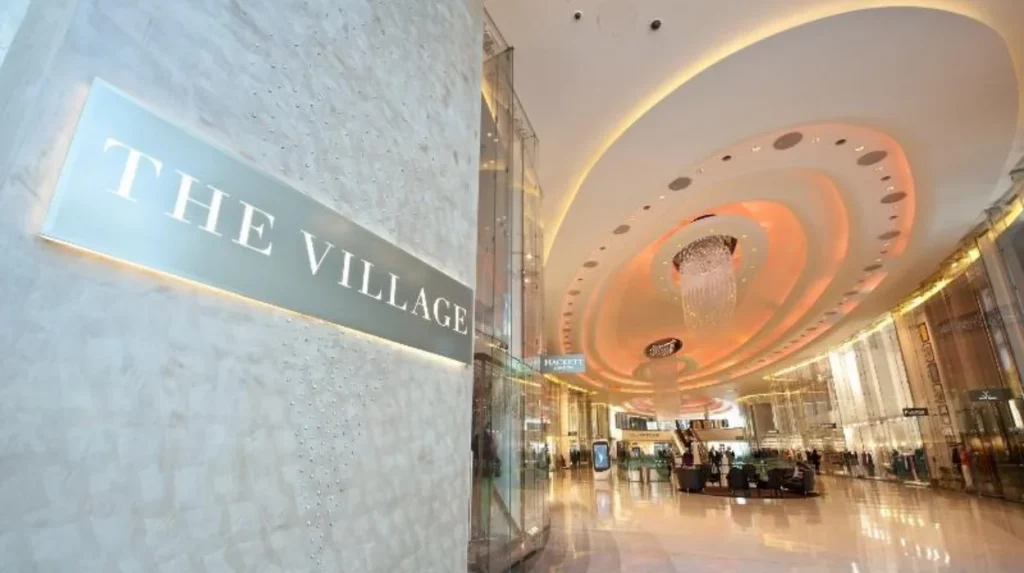
The Village is Westfield London’s dedicated luxury retail area. Westfield describes it as a curated destination for luxury fashion and identifies Louis Vuitton, Gucci, Tiffany & Co. and Prada among its stores. The centre also lists Omega and Bucherer within its luxury offer.
The current directory also includes brands such as Breitling, Browns Diamonds, Longines, Michael Kors and Polo Ralph Lauren.
Westfield differs structurally from Knightsbridge. It is a large modern shopping centre containing hundreds of retailers across fashion, beauty, food, homeware, services and entertainment. Its current directory lists more than 300 shops overall.
This makes Westfield useful for mixed shopping trips. A customer can combine luxury fashion with mainstream fashion, beauty, electronics, restaurants and other services without changing location.
The Village specifically targets luxury customers. Its design, store positioning and brand mix distinguish it from the centre’s wider retail offer.
For visitors staying in West London, Westfield London also provides a practical alternative to central luxury-shopping districts. Its White City location makes it particularly relevant to shoppers in hammersmith-and-fulham/shepherds-bush/">Shepherd’s Bush, Hammersmith, Kensington and nearby areas.
How should you plan a luxury shopping trip in West London?
A successful West London luxury-shopping trip starts by choosing a retail district, identifying priority brands, checking store services and opening times, and combining shopping with nearby dining, culture or public-space visits.
Planning matters because West London’s luxury retail is distributed across several districts.
A Knightsbridge-focused itinerary works well for shoppers prioritising department stores. Harrods and Harvey Nichols are located close together, while Sloane Street extends the route towards Chelsea.
A Chelsea-focused itinerary works better for customers seeking boutiques, designer stores, Duke of York Square, the King’s Road and specialist businesses.
A Westfield-focused itinerary provides a single enclosed destination. This format is suitable for shoppers who want luxury brands alongside other retail categories.
Opening hours vary by retailer. Visit London currently lists Harrods as operating from 10am to 9pm Monday to Saturday and from 11.30am to 6pm on Sunday. Harvey Nichols is listed from 10am to 8pm Monday to Saturday and 11.30am to 6pm Sunday. Individual retailers can operate different schedules.
Transport also influences the best route. Knightsbridge Underground station on the Piccadilly line provides direct access to the Knightsbridge shopping district. Sloane Square station on the Circle and District lines provides convenient access to Chelsea and Sloane Street.
Visitors should check individual retailer information before travelling because opening hours, services and stock change over time.
A practical route can begin at Knightsbridge, continue along Sloane Street and finish around Sloane Square or Duke of York Square. This route links major department stores with designer boutiques and Chelsea retail.
Which luxury shopping areas are best for fashion, jewellery and beauty?
Knightsbridge is strongest for major luxury department stores, Sloane Street for designer flagships, Chelsea for specialist boutiques, and Westfield London for a broad modern luxury selection covering fashion, jewellery, watches, beauty and accessories.
Different shopping objectives suit different parts of West London.
For luxury fashion, Sloane Street provides a strong concentration of designer boutiques. The area connects directly with Knightsbridge and Chelsea, creating a continuous premium retail corridor.
For department-store shopping, Knightsbridge provides Harrods and Harvey Nichols. Both offer fashion, accessories and beauty, while Harrods adds extensive food and specialist departments.
For jewellery and watches, shoppers can focus on Knightsbridge, Sloane Street and Westfield London. Westfield’s luxury directory currently includes Tiffany & Co., Omega, Bucherer, Breitling and Longines.
For beauty, Knightsbridge department stores provide extensive premium selections. Westfield also includes dedicated beauty retailers alongside its luxury fashion offer.
For independent retail, Chelsea provides a stronger neighbourhood environment. The King’s Road, Duke of York Square and Pavilion Road combine specialist businesses with established brands.
The choice therefore depends on the shopping objective rather than a single definition of the “best” destination.
How does luxury shopping connect with West London’s wider visitor economy?
Luxury shopping supports a wider West London visitor economy that includes hotels, restaurants, cultural attractions, transport, public spaces and entertainment, making retail districts important components of the area’s broader visitor infrastructure.
Luxury retail operates within a wider network of services.
Knightsbridge is surrounded by premium hotels, restaurants and cultural destinations. Its location near Hyde Park and Kensington Gardens provides access to major public spaces after shopping.
Kensington Gardens covers approximately 107 hectares, equivalent to 265 acres, and has a history connected with Kensington Palace, William III, Mary II and later Queen Victoria.
Chelsea provides a similar combination of commerce and culture. Duke of York Square is anchored by Saatchi Gallery, while its retail environment includes boutiques, restaurants and a food market.
Westfield London provides another model. Its large retail complex combines luxury stores with restaurants, cafés, entertainment and other services. The centre’s directory covers categories including fashion, jewellery, footwear, beauty, homeware and dining.
This integration is important for visitors because shopping does not need to operate as a standalone activity.
The wider environment also increases the practical value of district-based shopping. Visitors can combine retail with museums, galleries, parks, dining and architectural attractions.
Explore More Area Guide
Local Businesses, Shops & Services in West London 2026
Best Independent Shops and High Streets in West London 2026
What is the historical importance of luxury retail in West London?
West London’s luxury retail developed through long-established department stores, historic estates and fashionable residential districts, creating a commercial landscape where heritage institutions and modern international brands operate within the same neighbourhoods.
The history of luxury shopping in West London is closely connected with Knightsbridge and Chelsea.
Harrods opened its Knightsbridge location in 1849. Charles Henry Harrod initially operated the business as a general store and tea supplier. The company later developed into a major department store, adding fashion and dining during its expansion.
Harvey Nichols has an even earlier retail history in Knightsbridge. Visit London records its presence in the area from 1831 and identifies its current store at 109–125 Knightsbridge.
Sloane Street has a separate historical foundation. Cadogan states that its development dates back to the 18th century and associates the street with the 1st Earl Cadogan.
This long chronology explains why West London’s luxury retail landscape contains historic department stores alongside contemporary flagship boutiques.
Chelsea also developed a distinctive neighbourhood identity. Its streets combine residential architecture, independent businesses, restaurants, galleries and established fashion retailers.
Westfield London represents a more recent retail model. Its large-scale shopping-centre structure provides international luxury brands within a purpose-built contemporary environment.
The result is a layered retail geography. Knightsbridge represents historic department-store luxury. Sloane Street represents concentrated designer retail. Chelsea represents neighbourhood luxury and specialist commerce. Westfield London represents modern multi-brand retail.
What is the future of luxury shopping in West London?
The future of luxury shopping in West London centres on strong physical retail districts, premium customer service, international designer brands, independent businesses, accessible public spaces and adaptable high streets that integrate shopping with wider urban experiences.
Luxury retail continues to depend on physical stores because high-value products require product inspection, fitting, specialist advice and customer service.
West London’s established districts provide infrastructure for this model. Sloane Street already operates as a concentrated luxury corridor. Knightsbridge provides globally recognised department stores. Chelsea combines independent retail with premium brands. Westfield London provides modern luxury stores within a large commercial centre.
Retail districts also face changing consumer expectations. The Royal Borough of Kensington and Chelsea states that its high-street principles focus on places that encourage people to visit and spend time, adapt to future needs, provide accessible facilities and combine retail with hospitality and essential services.
This approach is particularly relevant to luxury shopping. Premium retail depends on the quality of the surrounding environment as well as the individual store.
The future therefore involves more than adding luxury brands. Successful districts require attractive public spaces, convenient transport, hospitality, cultural activity, accessibility and strong independent businesses.
West London has a substantial advantage because these elements already exist across its principal luxury-shopping areas.
Luxury shopping in West London is a geographically connected but commercially diverse experience. Knightsbridge is the core for Harrods and Harvey Nichols.
Sloane Street provides a concentrated designer corridor. Chelsea adds boutiques, culture and independent premium retail. Westfield London provides a modern luxury-shopping centre with international brands.
Together, these destinations create one of London’s most significant luxury-shopping areas. Their combination of heritage, designer fashion, jewellery, watches, beauty, food, hospitality and cultural attractions gives West London a broad retail offer for visitors and residents.
For a traditional luxury department-store experience, Knightsbridge is the natural starting point. For designer flagships, Sloane Street is central. For boutique-led shopping, Chelsea provides a strong destination. For a modern multi-brand environment, Westfield London offers a dedicated luxury zone.
The strongest luxury-shopping itineraries use these districts according to the shopper’s purpose rather than treating West London as a single retail location.
Where is the best luxury shopping area in West London?
Knightsbridge is one of the leading luxury shopping areas in West London. It includes Harrods and Harvey Nichols, while nearby Sloane Street provides designer boutiques and international luxury fashion brands.