West London is one of the most established filming regions in the capital. Its combination of historic houses, royal landscapes, Georgian streets, riverside settings, gardens, sports venues and urban neighbourhoods gives film and television productions a wide range of visual environments within a relatively compact area.
- Why is West London such an important film location area?
- Which West London film locations are most important for visitors?
- What films and television productions have been filmed in Richmond upon Thames?
- How has Kew Gardens been used as a filming location?
- Which films were filmed at Chiswick House and Gardens?
- What makes Osterley Park and House a major West London filming location?
- Where can visitors find film locations around Richmond, Ham and Twickenham?
- How is Richmond Park used in film and television?
- Why is Hampton Court Palace important to film locations near West London?
- How does film production work at West London heritage locations?
- How can visitors plan a West London film location walk?
- What is the future of film locations in West London?
- What should visitors remember about film locations in West London?
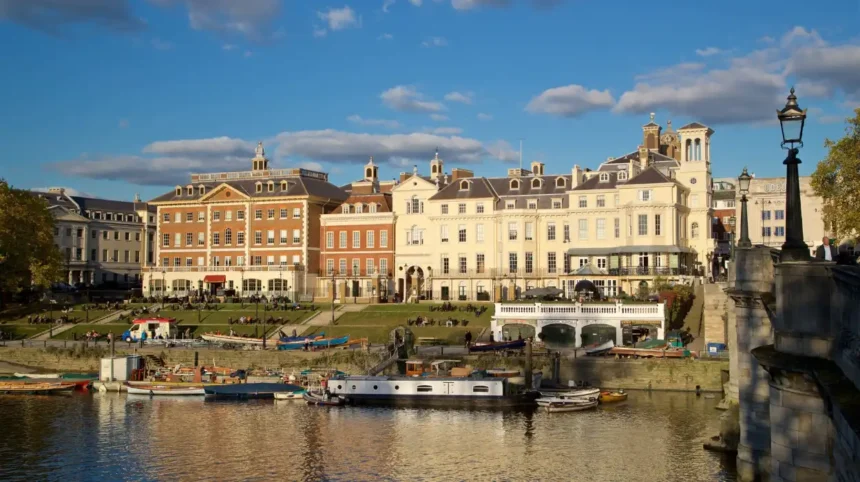
The region includes locations in hounslow/chiswick/">Chiswick, Kew, Richmond, Twickenham, Barnes, Ham, Osterley, Brentford, fulham/hammersmith/">Hammersmith, Fulham and surrounding districts. The London Borough of Richmond upon Thames alone identifies rural and river landscapes, historic houses, theatres, schools, libraries, galleries, town centres and private properties within its filming portfolio. The borough states that the River Thames runs for 21 miles through the area, connecting Hampton Court Palace, Richmond, Kew and central London.
Film locations are physical places used by productions to create scenes. A location can represent itself or stand in for another place, period or fictional setting. West London is particularly valuable because historic architecture can represent different centuries while modern streets, parks and commercial areas provide contemporary settings.
The area also has an established production infrastructure. Twickenham Studios in St Margarets provides production and post-production services, while film offices such as filmrichmond coordinate commercial filming applications and location information.
For visitors, film locations provide another way to explore West London. A location-based itinerary can combine cinema history with gardens, heritage buildings, riverside walks and neighbourhoods. Some locations are publicly accessible attractions. Others are private properties or operational sites where filming access is restricted.
Why is West London such an important film location area?
West London combines historic architecture, parks, gardens, riverside scenery, residential streets and professional production facilities, giving filmmakers diverse settings within short travelling distances across several connected London neighbourhoods.
The geographical diversity of West London is a major filming advantage. The River Thames creates a continuous visual corridor through several districts. Richmond upon Thames alone promotes locations ranging from rural landscapes and riverside settings to office blocks and retail parks.
Historic architecture adds another important layer. Chiswick House is a Grade I-listed Palladian villa, while Osterley Park and House is a Georgian estate with extensive grounds. Hampton Court Palace provides Tudor and Baroque architectural environments.
Parks create another category of location. Richmond Park offers woodland, open grassland and historic landscapes. Kew Gardens combines formal gardens, glasshouses, historic structures and botanical landscapes. These settings allow productions to create visually distinct scenes without travelling far outside London.
West London’s existing residential neighbourhoods are equally useful. Richmond, Barnes, Ham, Teddington and Twickenham contain streets, shops, houses, riverside areas and community buildings that provide realistic contemporary settings.
The region therefore functions as a collection of filming environments rather than a single film district. Its strength comes from the concentration of different location types.
Which West London film locations are most important for visitors?
The leading visitor-focused locations include Kew Gardens, Chiswick House, Osterley Park and House, Richmond Park, Richmond Riverside, Ham and Hampton Court Palace, each providing distinct architectural, historical or landscape settings.
Kew Gardens is one of the most recognisable locations in the area. The Royal Botanic Gardens, Kew describes its site as suitable for commercial filming and photography throughout the year. Its filming portfolio includes glasshouses, historic buildings, temples, gardens, natural landscapes and wild areas.
Chiswick House and Gardens is another major location. The Grade I-listed Palladian villa and its surrounding gardens provide classical architecture and landscaped scenery. The venue confirms appearances in productions including Bridgerton, The Sandman, The Great and You.
Osterley Park and House provides another major period-drama environment. The National Trust records its use in productions including The Dark Knight Rises, Vanity Fair, The Secret Garden and Bridgerton.
Richmond offers a much wider collection of locations. The council’s official filming library includes parks, commons, gardens, riverside areas, schools, libraries, theatres, shops, hotels, town centres and private properties.
Hampton Court Palace provides one of the area’s strongest historical settings. Historic Royal Palaces states that Hampton Court’s kitchens and Baroque State Apartments have hosted major period productions, including The Favourite.
These locations differ significantly in character. Kew focuses on botanical and architectural landscapes. Chiswick combines Palladian architecture and gardens. Osterley provides an estate setting. Richmond offers urban and natural environments. Hampton Court supplies royal historic architecture.
What films and television productions have been filmed in Richmond upon Thames?
Richmond upon Thames has hosted films and television productions including Bridget Jones, Peter Rabbit 2, The Great Escaper, Anna Karenina, Bridgerton, Ted Lasso, Call the Midwife and Slow Horses.
Richmond upon Thames has an unusually extensive documented production history. The council’s current list includes feature films such as Back in Action, Bridget Jones: Mad About the Boy, The Boys in the Boat, The Great Escaper, Peter Rabbit 2, Victoria and Abdul, Anna Karenina, Nanny McPhee Returns, Hot Fuzz, Young Victoria, Bend It Like Beckham and Shakespeare in Love.
Television production has also been extensive. The council lists Bridgerton, Black Doves, SAS Rogue Heroes, A Thousand Blows, The Diplomat, The Gold, Ludwig, Malice, The Night Manager, Ted Lasso, Heartstopper, Killing Eve, Slow Horses, Trigger Point, Silent Witness and Black Mirror among productions filmed in the borough.
Recent productions demonstrate that Richmond remains an active filming area rather than simply a historic filming location. In 2026, the council reported filming for Heartstopper Forever, Alice and Steve, Ludwig series two and Bait.
The borough also documents recent filming for Goodbye June, Malice and A Thousand Blows. Goodbye June used locations including St Richard Reynolds School in Twickenham, Elleray Hall in Teddington, St Mary’s University and Richmond Green.
This production history demonstrates the flexibility of West London locations. The same geographical area supports historical drama, contemporary comedy, crime drama, romance, family productions and streaming series.
How has Kew Gardens been used as a filming location?
Kew Gardens provides filmable glasshouses, historic buildings, formal gardens, woodland, lawns and botanical collections, making the UNESCO World Heritage Site suitable for natural-history programmes, dramas, commercials, documentaries and visual productions.
The Royal Botanic Gardens, Kew officially offers commercial filming and photography services. Its location portfolio includes the Palm House, Nash Conservatory, Temperate House, Princess of Wales Conservatory, Davies Alpine House, The Hive, the lake and surrounding landscapes.
The Palm House provides Victorian glass architecture combined with tropical planting. The Temperate House offers large-scale Victorian architectural space. The Princess of Wales Conservatory contains ten distinct climatic zones, creating visually different environments within one building.
Kew also has a strong television history. Kew Gardens: A Year in Bloom was filmed at Kew Gardens and Wakehurst for Channel 5. The series documented horticulture, plant collections, scientific research and the work of Kew staff.
The gardens are also used for outdoor cinema events. Kew’s 2026 programme included screenings of Wicked for Good, Dirty Dancing, Encanto, Mamma Mia!, The Gruffalo, Pride and Prejudice and Jurassic Park. These screenings are visitor events rather than evidence that the listed films were filmed at Kew.
This distinction is important when researching film locations. A venue hosting a film screening is not automatically a filming location for that film.
Which films were filmed at Chiswick House and Gardens?
Chiswick House and Gardens has appeared in productions including The Duchess, Bridgerton, The Sandman, The Great, Pennyworth, Red, White & Royal Blue and You, alongside historic Beatles promotional films.
Chiswick House is one of West London’s strongest architectural filming environments. Historic England lists the house as Grade I and records its Palladian design and historical development. Lord Burlington lived at the house from 1729, and the site became an important example of eighteenth-century architectural and landscape design.
The gardens expand the site’s filming potential. Historic England describes pleasure grounds, walled gardens and parkland across the site. The combination provides formal architecture, landscaped avenues, garden structures and open spaces.
The location has a significant music-film history as well. In May 1966, The Beatles filmed promotional films for “Paperback Writer” and “Rain” at Chiswick House. The site’s own historical record describes these productions as important early examples of conceptual promotional films shot on location.
Modern screen productions have continued this location tradition. Chiswick House and Gardens lists Bridgerton, The Sandman, The Great and You among recent screen appearances. It also identifies The Duchess, Killing Eve, Horrible Histories and other productions.
Commercial filming generates income for the organisation, which states that filming revenue supports maintenance of the grounds and community outreach. Commercial filming requires an approved permit.
What makes Osterley Park and House a major West London filming location?
Osterley Park and House combines a Georgian mansion, landscaped parkland, courtyards, interiors and service buildings, creating a flexible setting for period dramas, contemporary productions and fictional estates.
Osterley Park and House is operated by the National Trust. Its cinematic importance comes from the ability of the estate to provide multiple visual environments within one property.
The National Trust records Osterley’s use in The Grass Is Greener, The Dark Knight Rises, Vanity Fair, The Secret Garden and Bridgerton. The mansion, parkland and interiors have represented different periods and fictional places.
The 2018 ITV adaptation of Vanity Fair used several parts of Osterley. National Trust records describe filming involving the house and estate, while staff and volunteers worked to balance production requirements with conservation responsibilities.
Osterley also appeared in Bridgerton series three. The estate represented the location of the Full Moon Ball. The production used the courtyard and architectural setting, with specialist lighting equipment creating the required nighttime appearance.
The location demonstrates why historic estates remain valuable to modern productions. A single property can provide interiors, exterior architecture, landscaped grounds, service buildings and controlled production areas.
Where can visitors find film locations around Richmond, Ham and Twickenham?
Visitors can explore film-related settings around Richmond Green, Richmond Riverside, Ham, Twickenham, Teddington, Barnes and Kew, where official location libraries document streets, parks, riverside areas, buildings and public spaces.
Richmond’s official filming library provides a useful framework for exploring the wider area. Its categories include Barnes Pond, Kew Gardens, parks, commons, gardens, pubs, riverside locations, schools, shops, theatres and town centres.
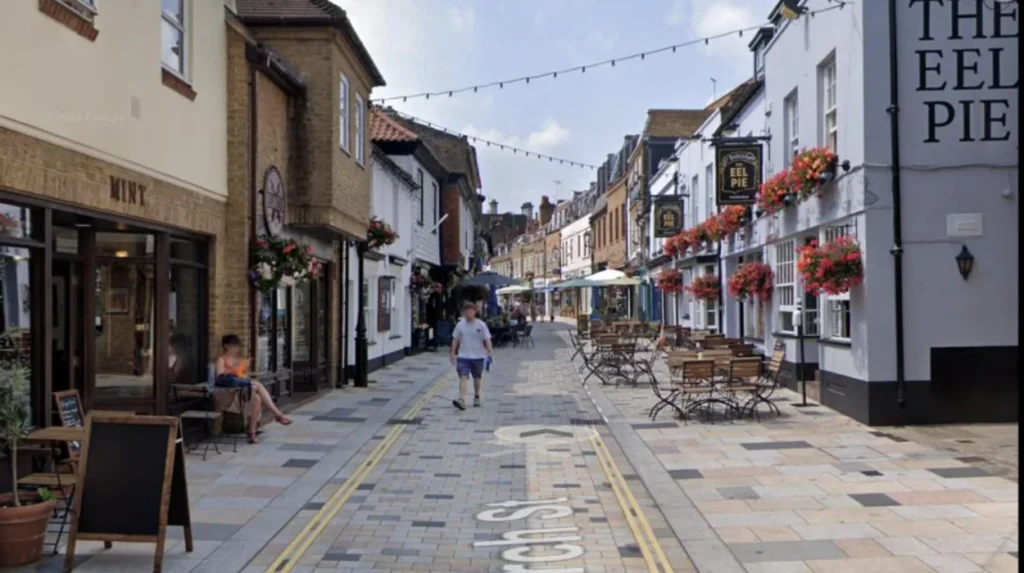
Richmond Green is an important central setting. The council describes Richmond Town and Green as picturesque filming locations. Teddington also offers period streets and independent shops, while Twickenham provides a busier urban environment.
Riverside locations form another important group. Official listings include Barnes Riverside, Ham Riverside, Richmond Riverside, River Lane in Petersham, Teddington Lock and Twickenham Riverside.
Ham Common provides wooded areas, secluded footpaths and open grassland. The council identifies Ham Common and Pond as a popular location surrounded by residential properties and close to Richmond Park.
Recent filming demonstrates the continuing importance of these locations. The Night Manager series two featured Richmond Riverside, Richmond Bridge and the surrounding riverside environment.
Visitors should distinguish between publicly accessible streets and managed properties. A location appearing in a production does not automatically grant access to private buildings, gardens, schools or operational sites.
How is Richmond Park used in film and television?
Richmond Park provides large-scale natural scenery through woodland, grassland, historic landscapes and open vistas, making it suitable for productions requiring rural-looking environments within the Greater London boundary.
Richmond Park is one of the Royal Parks and is managed by The Royal Parks charity. Its landscape gives productions access to natural environments that contrast with the built-up character of central London.
The Royal Parks states that its locations combine historic vistas, woodlands, meadows, lakes, ornamental gardens and historic monuments. Richmond Park is specifically identified among the parks available for filming and photography.
Richmond Park has also appeared in major screen productions. A Royal Parks annual report recorded Richmond Park as a filming location for Netflix’s The Crown.
Filming in the park is controlled. Personal mobile-phone filming for purely personal use does not require a permit, but other filming and photography purposes require permission from The Royal Parks.
Production logistics are also regulated. The Royal Parks’ 2026 rates list filming-related tech parking at Sheen Gate, Roehampton Car Park and Broomfield Hill, with different rates applying to each location. The organisation states that availability and site restrictions must be checked before applications.
This controlled approach protects public parks while allowing professional productions to use their landscapes.
Why is Hampton Court Palace important to film locations near West London?
Hampton Court Palace provides Tudor and Baroque interiors, historic kitchens, courtyards and gardens that support period productions requiring authentic royal architecture and carefully managed heritage environments.
Hampton Court Palace stands on the River Thames near the western edge of Greater London. It is managed by Historic Royal Palaces, an independent charity responsible for several historic royal sites.
The palace contains architecture from different phases of English royal history. This layered character makes it particularly valuable for historical filmmaking.
Historic Royal Palaces states that Hampton Court Palace has hosted major filming projects. Its Henry VIII kitchens and Baroque State Apartments provide settings for period dramas, including The Favourite.
The palace has also accommodated substantial production activity. Historic Royal Palaces reported that three major feature films spent 36 days filming at Hampton Court during one reporting year, using courtyards, interior rooms and gardens.
Filming within a historic palace requires specialist management. Productions need to protect floors, walls, decorative surfaces, furniture and collections while maintaining visitor operations.
For visitors, Hampton Court demonstrates the relationship between heritage conservation and screen production. Film activity generates income while also increasing public awareness of historic sites.
How does film production work at West London heritage locations?
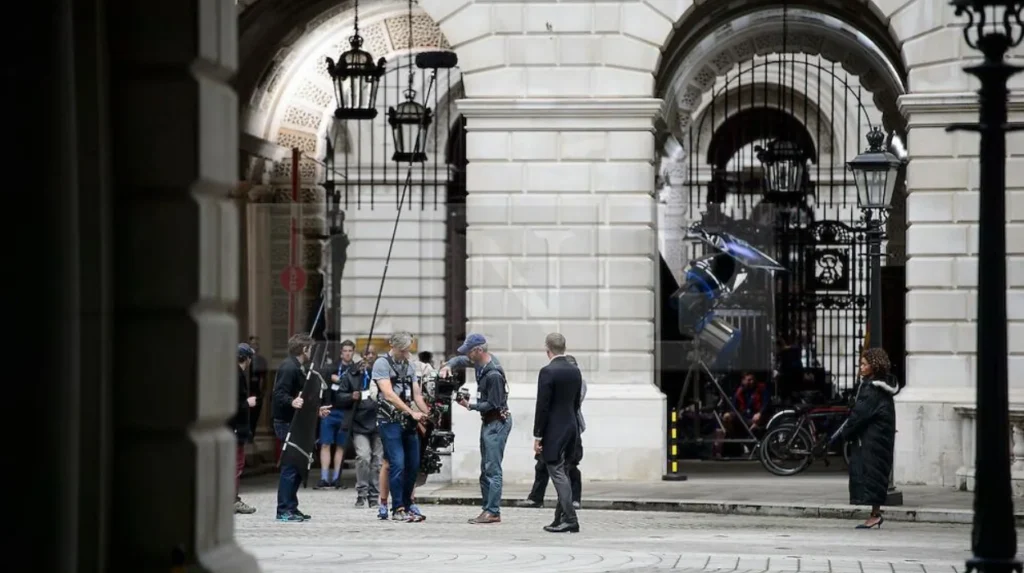
Professional filming normally requires location approval, permits, insurance, risk assessments, production information and operational coordination because historic buildings, public parks and visitor attractions require protection during commercial filming.
Film production at heritage locations follows a controlled process. Production companies first identify suitable locations. Location managers then conduct recce visits, assess access and determine whether the site meets creative and logistical requirements.
Kew requires detailed information about production type, shoot dates, timings, budget, cast and crew, locations, equipment, vehicles and proposed scene content. Its application process also asks productions to identify activities such as stunts, special effects, pyrotechnics, smoke effects, crowd control and security.
Kew also requires public liability insurance and location-specific planning. Its guidelines state that staff support the filming process and that commercial filming applications are subject to approval.
The Royal Parks requires a site plan and site-specific risk assessment for commercial filming. It also requires public liability insurance of at least £5 million.
Richmond’s film office currently requires two weeks’ notice for filming applications, with some projects requiring longer notice.
These requirements exist because professional filming introduces additional vehicles, equipment, lighting, personnel and operational activity into public or protected environments.
How can visitors plan a West London film location walk?
A West London film-location walk works best when visitors group nearby locations by neighbourhood, use public transport between districts and check current access rules before visiting managed gardens, historic houses, parks or private filming sites.
A practical itinerary can begin in Chiswick. Chiswick House and Gardens combines architectural heritage, gardens and documented screen history in one visitor attraction.
The route can then continue towards Kew. Kew Gardens provides extensive gardens, glasshouses and historic structures, although visitors should check current admission arrangements and filming restrictions.
Richmond provides another concentrated group of locations. Richmond Green, Richmond Riverside, the town centre and nearby streets offer publicly accessible environments documented by the borough’s filming office.
A longer route can continue towards Ham and Twickenham. Ham Common, Richmond Park, Twickenham Riverside and Teddington provide different landscape and urban environments.
Visitors interested in period drama can include Osterley Park and House or Hampton Court Palace as separate excursions. These locations require more journey planning because they operate as managed heritage attractions.
The most reliable approach is to distinguish between three categories: public spaces, visitor attractions and private or restricted locations. Public spaces include streets and certain riverside areas. Visitor attractions include Kew Gardens, Chiswick House and Osterley Park. Restricted locations include private homes, schools and operational buildings.
A film-location visit therefore works best as a heritage and neighbourhood exploration rather than an attempt to enter every building seen on screen.
Explore More Area Guide
Literary Attractions in West London: Historic Writers
Historic Landmarks in West London: Heritage Guide 2026
What is the future of film locations in West London?
West London’s established heritage sites, active film offices, production facilities and diverse landscapes support continued screen production while conservation rules, public access requirements and commercial filming controls remain central to location management.
West London has the infrastructure required for continuing production activity. Richmond’s film office actively promotes location services and maintains an extensive location library.
The borough’s recent production records demonstrate continuing demand. Productions including Ted Lasso, Heartstopper Forever, Alice and Steve, Ludwig and Bait show that West London continues to attract major television and streaming projects.
Heritage locations also continue to invest in filming services. Chiswick House and Gardens works with FilmFixer to coordinate bookings and states that filming income supports maintenance and community outreach.
Kew similarly directs filming revenue towards conservation and research. The organisation states that its commercial filming income supports its work as a World Heritage Site and registered charity.
This creates a direct connection between screen production and heritage management. Productions gain access to distinctive locations. Historic organisations gain an additional income stream. Visitors gain opportunities to explore places recognised from film and television.
The strongest long-term value of West London’s film locations comes from this combination of cultural heritage, professional production infrastructure and accessible public landscapes.
What should visitors remember about film locations in West London?
West London offers a concentrated network of film locations spanning historic palaces, Georgian estates, botanical gardens, royal parks, riverside districts and residential streets, with official records confirming extensive film and television production across the region.
The area’s filming identity is broader than any single famous location. Kew Gardens supplies botanical architecture and landscapes. Chiswick House provides Palladian heritage. Osterley supplies an estate environment. Richmond provides riverside, urban and natural locations. Richmond Park provides large-scale countryside scenery. Hampton Court supplies royal historic architecture.
Official sources provide the strongest evidence for researching these locations. Richmond Council maintains production and location records. Kew documents commercial filming activity. The National Trust records productions at Osterley. Chiswick House and Gardens documents screen appearances. Historic Royal Palaces records filming at Hampton Court. The Royal Parks provides filming information for Richmond Park.
Visitors should also respect access restrictions. A location featured in a film is not necessarily open to the public at all times. Commercial productions require permits, insurance and operational approval at many managed sites.
For anyone interested in cinema, television, architecture or West London’s history, these locations provide a practical way to connect screen production with the physical geography of the area.
What are the most famous film locations in West London?
The most famous film locations in West London include Kew Gardens, Chiswick House and Gardens, Osterley Park and House, Richmond Park, Hampton Court Palace and Richmond Riverside. These locations are recognised for historic architecture, royal landscapes, gardens and riverside scenery used in films and television productions.