Choosing among the best primary schools in West London requires more than comparing examination results. West London contains a large and diverse primary education sector across Ealing, fulham/hammersmith/">hammersmith-and-fulham/">Hammersmith and Fulham, Hounslow, Hillingdon, Kensington and Chelsea, and Richmond upon Thames.
- What are the best primary schools in West London?
- Which West London boroughs have the strongest primary school options?
- Which primary schools in Ealing are worth comparing?
- Which primary schools in Richmond upon Thames have strong results?
- Which primary schools in Hillingdon should parents compare?
- Which primary schools in Hammersmith and Fulham are worth considering?
- How do Ofsted inspections affect the choice of a West London primary school?
- How does primary school admissions work in West London?
- What should parents check before choosing a West London primary school?
- What happens if a child is refused a preferred West London primary school?
- How can families create a shortlist of the best primary schools in West London?
The area includes local-authority-maintained schools, academies, Church of England schools, Catholic schools, Sikh schools, other faith schools, and independent preparatory schools. Each school operates within its own admissions arrangements, catchment geography, curriculum structure, and community context.
The Department for Education publishes primary school performance information covering Key Stage 2 results, pupil characteristics, absence and school information. The official comparison service allows families to search schools by location, local authority and school name.
For this guide, “best” means schools that demonstrate strong measurable attainment alongside appropriate inspection evidence, curriculum quality, inclusion, safeguarding, admissions suitability and practical accessibility. A high test result alone does not establish that a school is the right choice for every child.
What are the best primary schools in West London?
West London has strong primary schools across Ealing, Hammersmith and Fulham, Hounslow, Hillingdon, Kensington and Chelsea, and Richmond upon Thames. The strongest choices combine attainment, curriculum quality, inclusion, safeguarding, admissions fit, location, and suitability for each child and family overall.
West London is not a single local education authority. It is a broad geographical area containing several London boroughs with separate admission authorities and school policies. This distinction is important because school places are normally allocated according to each school’s published admission arrangements.
The Department for Education’s performance service provides a consistent starting point. It publishes Key Stage 2 results for state-funded primary schools, including reading, writing, grammar, punctuation and spelling, and mathematics. The 2025 primary performance publication covers state-funded schools in England.
The latest published results also demonstrate substantial variation between West London boroughs. Richmond upon Thames recorded 78% of pupils meeting the expected Key Stage 2 standard in 2025, compared with 69% in Hounslow. Richmond also recorded 21% achieving the higher standard.
These figures describe borough-level attainment rather than individual school quality. Families should therefore examine individual school records before making an application.
How should “best” be defined?
A strong primary school normally demonstrates effective teaching, a coherent curriculum, positive behaviour, safeguarding, inclusive practice and appropriate support for pupils with additional needs.
Performance data adds another measurable dimension. A school with consistently strong reading and mathematics results provides evidence about academic attainment. However, results should be considered alongside pupil characteristics and the size of the Year 6 cohort.
Small cohorts require particular care. A school with 20 to 30 pupils completing Key Stage 2 can show large percentage changes from a small number of pupils. Larger cohorts provide a broader statistical base.
Which West London boroughs have the strongest primary school options?
Parents should compare Key Stage 2 attainment, Ofsted report-card evidence, admissions criteria, school culture, SEND support, faith requirements, travel distance, wraparound care, and published policies. No single ranking identifies the best school for every child or household in West London.
West London’s primary education landscape differs substantially between boroughs. Ealing has a large state-funded primary sector. Hillingdon has a similarly broad network extending across suburban communities and areas close to Heathrow. Richmond upon Thames records particularly strong borough-level attainment.
Hounslow also performs above the national state-funded average in its latest published data. In 2025, 69% of Hounslow pupils met the expected Key Stage 2 standard, compared with 62% across England’s state-funded schools. Hounslow pupils recorded average reading and mathematics scaled scores of 107.
Richmond upon Thames recorded an even higher borough-level result in 2025. Seventy-eight percent of pupils met the expected Key Stage 2 standard and 21% achieved the higher standard. Average reading and mathematics scores were both 109.
Ealing
Ealing contains a large concentration of established primary schools. The Department for Education’s 2024 data includes Fielding Primary School, Christ the Saviour Church of England Primary School, Gifford Primary School, North Ealing Primary School, Montpelier Primary School and Little Ealing Primary School among schools with strong reported Key Stage 2 results.
Richmond upon Thames
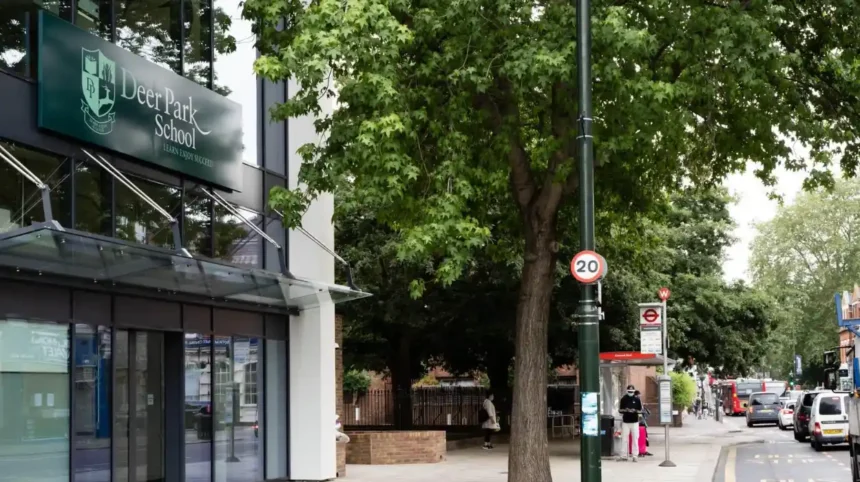
Richmond provides one of West London’s strongest borough-level attainment profiles. Deer Park School recorded 97% of pupils meeting the expected Key Stage 2 standard in 2025. Barnes Primary School recorded 96%, while St Richard Reynolds Catholic Primary School recorded 90%.
Hillingdon
Hillingdon has a wide primary school network. The 2024 DfE performance data records Deanesfield Primary School, Heathrow Primary School, Guru Nanak Sikh Academy, Newnham Junior School and Whiteheath Junior School among schools with strong published Key Stage 2 measures.
Which primary schools in Ealing are worth comparing?
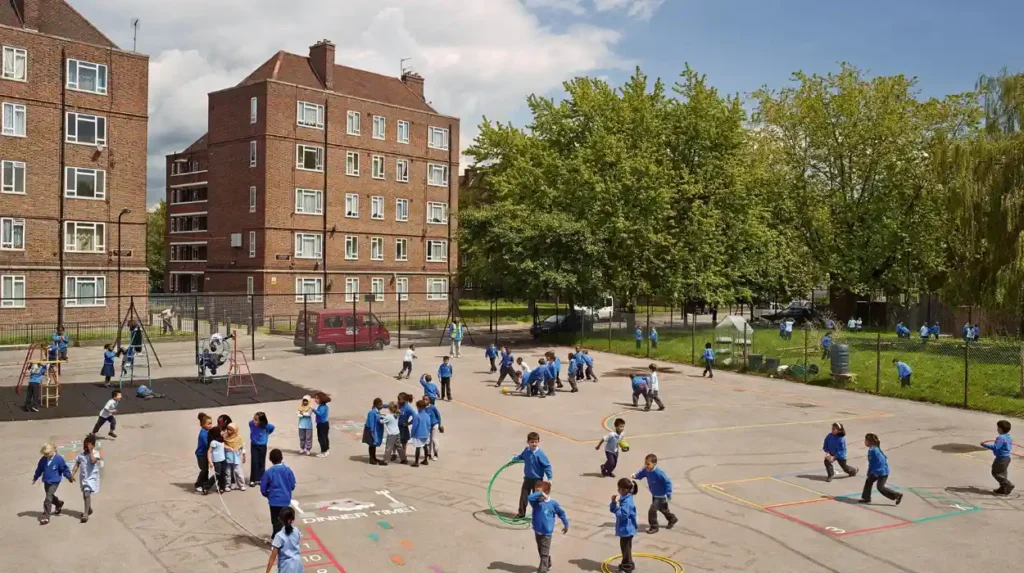
Fielding Primary School, North Ealing Primary School, Little Ealing Primary School, Montpelier Primary School, and Christ the Saviour Church of England Primary School are established Ealing options. Recent Department for Education data records strong Key Stage 2 outcomes across these schools.
Ealing is one of the most important primary education areas in West London. Its school network includes community schools, faith schools and academies, creating different admission routes and educational environments.
The borough’s 2024 Key Stage 2 data shows substantial numbers of pupils achieving the expected standard. Little Ealing Primary School recorded 90%, while Montpelier Primary School recorded 83%. Christ the Saviour Church of England Primary School recorded 80%. North Ealing Primary School recorded 78%, and Fielding Primary School recorded 72%.
These percentages should not be treated as a fixed league table. Performance changes annually, cohort characteristics differ, and some schools have relatively small Year 6 groups.
Fielding Primary School
Fielding Primary School is located on Wyndham Road in Ealing. The school appears in the Department for Education’s performance database as a maintained primary school. Its 2024 data recorded 72% of pupils meeting the expected Key Stage 2 standard, with an average reading score of 109 and mathematics score of 107.
North Ealing Primary School
North Ealing Primary School is another established Ealing option. Its 2024 results recorded 78% of pupils meeting the expected Key Stage 2 standard. The school’s average reading score was 110 and average mathematics score was 108 in the published dataset.
Little Ealing and Montpelier
Little Ealing Primary School recorded 90% meeting the expected standard in 2024, while Montpelier Primary School recorded 83%. Their results demonstrate why parents should examine individual schools rather than relying only on borough-wide averages.
Faith schools also form an important part of Ealing’s primary sector. Families considering Church of England or Catholic schools should check religious-practice requirements and priority criteria before applying.
Which primary schools in Richmond upon Thames have strong results?
Richmond upon Thames records particularly strong primary attainment. Deer Park School, Barnes Primary School, St Richard Reynolds Catholic Primary School, St Mary’s Church of England Primary School, and The King’s Church of England Primary School recorded high 2025 Key Stage 2 results.
Richmond upon Thames stands out for its latest borough-level primary attainment. The 2025 data shows 78% of pupils reaching the expected standard, compared with 62% across England’s state-funded schools. Twenty-one percent reached the higher standard.
Individual schools also recorded high attainment.
Deer Park School recorded 97% of pupils meeting the expected standard and 33% reaching the higher standard. Barnes Primary School recorded 96% and 39%, respectively. St Richard Reynolds Catholic Primary School recorded 90% and 40%.
St Mary’s Church of England Primary School recorded 89% meeting the expected standard, while The King’s Church of England Primary School recorded 88%. Marshgate Primary School also recorded 88%.
Deer Park School
Deer Park School is an academy in Richmond upon Thames. Its 2025 Key Stage 2 results were particularly strong, with 97% of pupils meeting the expected standard and an average reading score of 114. The average mathematics score was 113.
Barnes Primary School
Barnes Primary School is a maintained school. In 2025, 96% of its Year 6 pupils met the expected Key Stage 2 standard. Thirty-nine percent achieved the higher standard. Its average reading score was 114 and mathematics score was 112.
St Richard Reynolds Catholic Primary School
St Richard Reynolds Catholic Primary School is an academy with a Catholic religious character. In 2025, 90% of pupils met the expected Key Stage 2 standard and 40% achieved the higher standard. The school’s average reading score was 114 and mathematics score was 112.
These results provide strong academic evidence, but families must still examine admissions requirements, religious criteria and available places.
Which primary schools in Hillingdon should parents compare?
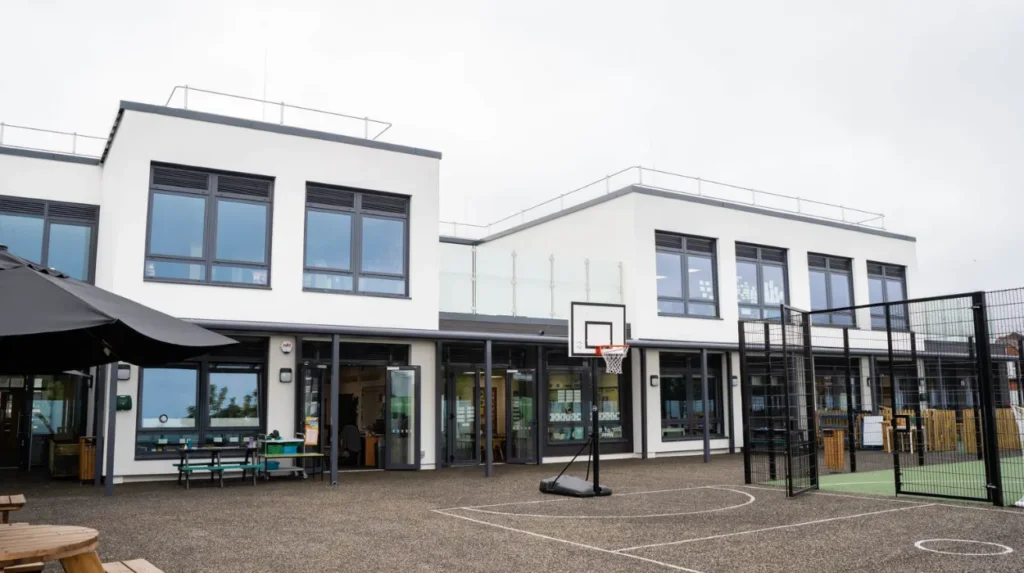
Hillingdon provides several high-attaining state primary options, including Deanesfield Primary School, Heathrow Primary School, Guru Nanak Sikh Academy, Newnham Junior School, and Whiteheath Junior School. Their recent published Key Stage 2 results provide useful evidence for informed comparison.
Hillingdon contains a large and varied primary school network. The borough includes maintained schools and academies, alongside faith schools serving different communities.
The Department for Education’s 2024 data shows strong results at several Hillingdon schools. Deanesfield Primary School recorded 86% meeting the expected standard. Heathrow Primary School recorded 79%. Guru Nanak Sikh Academy recorded 78%, while Newnham Junior School recorded 78%.
Whiteheath Junior School recorded 82% meeting the expected standard. The Breakspear School also recorded 82%.
Deanesfield Primary School
Deanesfield Primary School recorded 86% of pupils meeting the expected Key Stage 2 standard in 2024. Its average reading score was 109 and average mathematics score was 110.
Heathrow Primary School
Heathrow Primary School recorded 79% meeting the expected standard in 2024. The school recorded an average reading score of 109 and mathematics score of 111.
Guru Nanak Sikh Academy
Guru Nanak Sikh Academy is an academy with a Sikh religious character. Its 2024 results recorded 78% of pupils meeting the expected standard, with average reading and mathematics scores of 108 and 110.
Faith schools require additional admissions research. Religious affiliation, practice and evidence requirements can influence priority under published admission arrangements.
Which primary schools in Hammersmith and Fulham are worth considering?
Hammersmith and Fulham includes primary schools such as John Betts Primary School, Brackenbury Primary School, St John’s Walham Green Church of England Primary School, and Addison Primary School. Families should assess each school’s inspection evidence, results, admissions rules, and location.
Hammersmith and Fulham provides another significant West London primary education market. The borough contains community schools, faith schools, academies and independent education providers.
John Betts Primary School is a notable example in the official performance data. The 2024 dataset records 100% of its pupils meeting the expected Key Stage 2 standard, with 36% reaching the higher standard. Its average reading score was 111 and mathematics score was 110.
The result came from a cohort of 28 pupils. This illustrates why percentages must be interpreted alongside cohort size.
John Betts Primary School
John Betts Primary School is located on Paddenswick Road in West London. The official DfE database identifies it as a primary school in Hammersmith and Fulham. Its 2024 published results provide strong evidence of attainment for that particular cohort.
Brackenbury Primary School
Brackenbury Primary School is located on Dalling Road in Hammersmith. It is part of the borough’s state primary school network and provides another local option for families comparing schools around Hammersmith and nearby areas.
St John’s Walham Green and Addison
St John’s Walham Green Church of England Primary School is located on Filmer Road. Addison Primary School is located on Addison Gardens. Both appear in the official DfE school search for the area.
Parents should inspect each school’s current admissions policy rather than assuming geographical proximity guarantees a place.
How do Ofsted inspections affect the choice of a West London primary school?
Ofsted evidence remains important, but parents must understand the current inspection system. Since November 2025, Ofsted uses report cards and a five-point evaluation scale instead of an overall effectiveness grade, making individual evaluation areas more important.
Ofsted is the Office for Standards in Education, Children’s Services and Skills. It inspects state-funded schools in England and evaluates areas such as education, behaviour, inclusion, leadership and safeguarding.
The inspection system changed significantly. From September 2024, state-funded schools no longer received an overall effectiveness judgement under graded inspections. Ofsted then introduced its renewed Education Inspection Framework from 10 November 2025.
The new framework uses report cards and a five-point grading scale for evaluation areas. Ofsted no longer provides an overall effectiveness grade under the renewed framework. Safeguarding is evaluated separately as “met” or “not met”.
This change affects how parents should interpret older school information.
A school with an older “Outstanding” or “Good” overall judgement should not be compared directly with a school inspected under the new report-card framework as though both assessments use the same system.
Ofsted’s provisional statistics for inspections up to 31 March 2026 show that the renewed framework evaluates separate dimensions of school quality. Among schools receiving full inspections during the period, 89% were graded expected standard or better for inclusion, 77% for curriculum and teaching, and 70% for achievement.
Parents should therefore read the complete inspection report rather than relying on a single headline.
How does primary school admissions work in West London?
Reception admission in England normally starts with applications the year before entry. Applications usually open in September and close on 15 January, with primary offers issued on 16 April. Parents should rank several suitable schools and check individual criteria carefully.
State primary admissions in West London follow the national school admissions framework, but individual admission criteria differ between schools.
Parents normally apply through their local council. This applies even when families apply for schools in another council area after moving to England. The Department for Education states that primary applications open in September and close on 15 January. Primary offers are normally issued on 16 April.
Families should list schools in genuine preference order. Listing only one school does not increase the probability of receiving that school’s place.
Catchment areas
A catchment area is a geographical area used by a school or admission authority when applying its oversubscription criteria. Not every school operates a simple fixed catchment boundary.
Distance from home is frequently important. Other criteria can include siblings already attending the school, religious affiliation for faith schools, looked-after children status and other published priority categories.
The Department for Education confirms that admission criteria differ between schools. Common criteria include distance, siblings, faith requirements, feeder-school links and certain priority groups.
Families should therefore check the current admission policy for every preferred school.
Infant class-size rules
Reception, Year 1 and Year 2 classes are subject to the statutory infant class-size limit of 30 pupils per teacher, subject to defined exceptions. This rule also affects the circumstances in which an admission appeal can succeed.
What should parents check before choosing a West London primary school?
School performance data provides evidence rather than a complete definition of quality. Parents should combine attainment, inspection findings, curriculum, inclusion, attendance, safeguarding, pastoral provision, SEND arrangements, facilities, travel time, costs, and admissions probability before choosing a West London primary school.
A school visit remains an important part of the decision process. Parents should examine how the school operates in practice rather than relying only on published rankings.
Academic attainment should be considered first alongside curriculum quality. Key Stage 2 results provide measurable evidence in reading, writing and mathematics, but they represent outcomes at the end of primary education rather than the entire educational experience.
Inclusion is another important factor. Ofsted’s renewed framework gives explicit attention to inclusion, making it relevant when comparing current inspection evidence.
SEND provision is particularly important for families whose children have special educational needs or disabilities. Parents should review the school’s published SEND information report, accessibility arrangements and available specialist support.
Travel time also has practical importance. A school that requires a long daily journey can create additional pressure for children and parents. Local accessibility should therefore be considered alongside academic results.
Independent primary schools
West London also contains independent preparatory schools. These schools are privately funded and operate outside the state admissions system.
Examples include Harrodian in Barnes and King’s House School in Richmond. Harrodian operates Pre-Prep for children aged four to seven and Prep education from age eight. Its published admissions information identifies Reception as a formal entry point with 40 places.
King’s House School is an independent co-educational prep school and nursery in Richmond for children aged two to 13. The school began its transition to co-education in 2024 and expanded co-educational year groups during 2025.
Independent schools involve tuition fees and separate admissions procedures. Harrodian, for example, publishes termly fees and separate entry arrangements.
Families should therefore compare the total financial cost with curriculum, facilities, class structure, pastoral provision and progression arrangements.
Explore More Area Guide
West London Schools Guide: Performance, Types, and Admissions
Film Locations in West London: Iconic Sites and Screen History
What happens if a child is refused a preferred West London primary school?
Parents who are refused a preferred school place can appeal against the decision, subject to the statutory admissions process. Infant-class appeals have additional restrictions because reception, Year 1 and Year 2 classes normally cannot exceed 30 pupils per teacher.
A refusal does not remove a parent’s right to appeal. The admission authority must provide information explaining how the appeal can be submitted.
Parents normally receive at least 20 school days to lodge an appeal after the decision letter. Appeal hearings must follow the statutory School Admission Appeals Code.
The appeal process differs depending on the reason for refusal. Where a school is full, the admission authority explains why another child cannot be admitted.
Infant class-size appeals are more restricted. An appeal panel can uphold an infant appeal in specific circumstances, including where admission would not breach the class-size limit or where admission arrangements were unlawful or improperly applied.
Waiting lists also provide another route. Admission authorities must operate waiting lists for at least the first term of the school year of admission, normally until 31 December.
Families should therefore keep documentation, check deadlines and follow the individual school’s published appeal procedure.
How can families create a shortlist of the best primary schools in West London?
A strong shortlist should combine academic performance, inspection evidence, admissions probability, distance, school type, curriculum, inclusion, safeguarding and family priorities. Comparing several realistic schools creates a more reliable decision than selecting one from a performance ranking.
The first stage is geographical. Families should identify schools within a practical daily journey from home or work. The second stage is academic. The DfE comparison service provides school-level attainment information and other data that can support objective comparison.
The third stage is admissions. Families should read each school’s current admission arrangements, including sibling, distance, faith and other priority criteria.
The fourth stage is inspection evidence. Current Ofsted report cards should be read under the renewed inspection framework, while older reports should be interpreted according to the framework that applied when the inspection occurred.
The fifth stage is the school environment. Visits provide direct evidence about classrooms, behaviour, facilities, communication and the wider school culture.
West London has strong options across multiple boroughs. Ealing provides a broad range of established state schools. Richmond upon Thames has particularly strong recent attainment figures. Hillingdon provides numerous suburban options with varied school types. Hammersmith and Fulham provides a dense network of schools in central West London. Hounslow also records attainment above the England state-funded average in its latest published data.
The best primary school is therefore determined by the interaction between measurable educational quality and the individual family’s circumstances. Performance statistics, inspection evidence and admissions rules provide the factual foundation for making that decision.
Key official sources
The Department for Education’s school performance comparison service provides school-level performance information for England.
The official GOV.UK primary school performance tables provide the latest published national primary performance dataset used in this guide.
For admissions, families should consult GOV.UK school admissions guidance and the relevant West London council or individual school’s current admission arrangements.
For inspection information, parents should use Ofsted’s current inspection framework because the inspection system changed from November 2025.
What are the best primary schools in West London?
Richmond upon Thames, Ealing, Hillingdon, Hounslow, and Hammersmith and Fulham contain many strong primary schools. Schools such as Deer Park School, Barnes Primary School, Little Ealing Primary School, and Deanesfield Primary School have recorded strong recent results.