After-school activities in West London provide children and teenagers with structured opportunities for sport, creative learning, academic enrichment, social development and practical skills. The area includes established programmes through schools, councils, leisure centres, youth services, libraries, community organisations and specialist providers.
- What are after-school activities in West London?
- How does after-school provision work across West London?
- Which sports can children do after school in West London?
- Which creative activities are available after school?
- Where can children find academic and educational activities?
- How do after-school clubs support working families?
- Which West London boroughs have strong after-school options?
- What after-school activities are suitable for teenagers?
- How accessible are after-school activities for children with SEND?
- How should parents choose a safe after-school activity?
- How much physical activity should children get outside school?
- How can families find affordable after-school activities in West London?
- What role will after-school activities play in West London in the future?
West London covers a broad collection of communities, including Ealing, Hounslow, fulham/hammersmith/">hammersmith-and-fulham/">Hammersmith and Fulham, Brent, Richmond upon Thames, Chiswick, Acton, Hanwell, Brentford, Isleworth, Twickenham, Barnes, Hampton and surrounding districts. Families therefore have access to different types of provision depending on age, interests, school location, transport access and childcare requirements.
After-school provision has two connected functions. Some programmes are primarily childcare, keeping children supervised after lessons finish. Others are extracurricular activities, where the main purpose is learning, participation, competition or personal development. A school-based after-school club can combine both functions.
The distinction is important when choosing a programme. England’s wraparound childcare system supports regular before- and after-school provision for primary-aged children, while clubs such as football training, dance classes, music lessons and coding groups operate as extracurricular activities. Government guidance states that wraparound childcare typically operates around 8am to 6pm during term time.
What are after-school activities in West London?
After-school activities are organised programmes children attend outside normal lessons, including sports, arts, music, academic clubs, youth groups and supervised childcare across West London communities after school hours.
The term covers a wide range of provision. A child attending a football session at a sports centre, a pupil joining an art club at school, or a teenager participating in a youth club are all taking part in after-school activities.
Some activities operate directly from schools. Others use council leisure centres, community halls, libraries, sports grounds, dance studios or specialist facilities.
The structure also differs by age. Primary-aged children commonly attend supervised play, sport, swimming, dance, crafts, music and homework sessions. Older pupils have access to competitive sport, performing arts, coding, volunteering, youth clubs, academic societies and vocational activities.
Ealing Council, for example, states that its sports facilities support children and young people through swimming, sports development courses, dance and team sports. Its facilities include swimming pools, athletics tracks, artificial grass pitches, tennis courts, football pitches and multi-use games areas.
How does after-school provision work across West London?
West London after-school provision operates through schools, councils, sports centres, community organisations and independent providers, with schedules, age limits, costs, registration systems and collection arrangements varying between individual programmes.
School-based clubs often begin shortly after the school day finishes. A programme can run for one hour, several hours or a full afternoon depending on its purpose.
Childcare-focused provision normally includes supervised play, refreshments, homework support and structured activities. Activity-focused clubs usually allocate most of the session to a specific discipline such as football, gymnastics, dance, music or coding.
Brent Council describes after-school clubs as afternoon provision that commonly operates between approximately 3.30pm and 6pm. The council also states that many clubs are linked to individual schools, while some operate from community centres and offer school collection services.
The location of the activity affects practical planning. A school club is often easier for younger children because it eliminates an additional journey. An external club provides access to specialist facilities and coaches but requires parents or carers to consider travel time.
West London transport connections also make location important. Families in Chiswick, Brentford, Acton, Ealing, Hammersmith, Richmond and Twickenham can face different journey times even when activities are within the same broad geographical area.
Which sports can children do after school in West London?
Children can access football, swimming, tennis, basketball, athletics, gymnastics, cricket, rugby, cycling, dance and other sports through West London schools, leisure centres, voluntary clubs and organised youth programmes.
Sport is one of the largest categories of after-school activity. Ealing Council identifies swimming, football, rugby, cricket, tennis, athletics, basketball, water-based sports and other activities across its facilities.
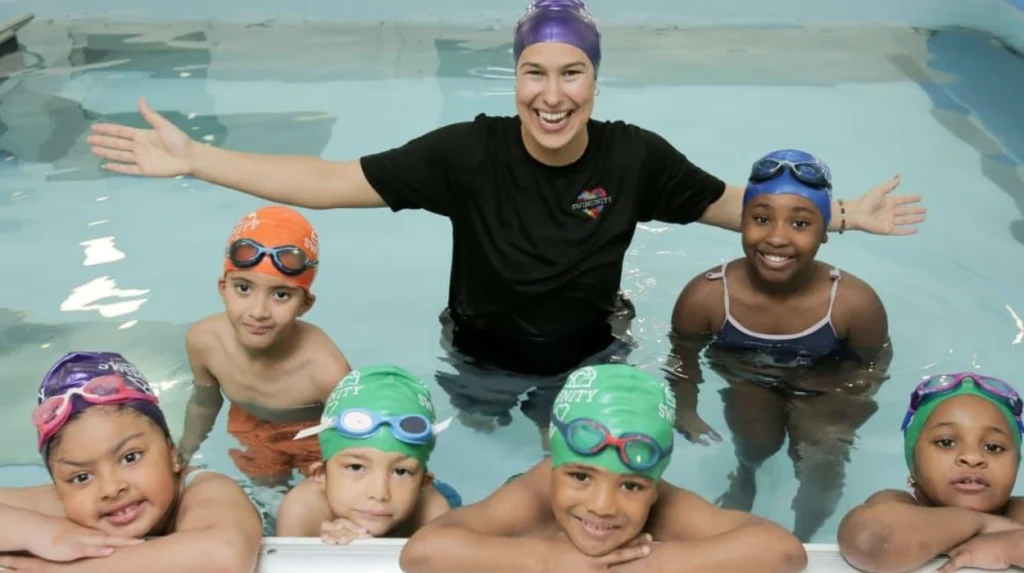
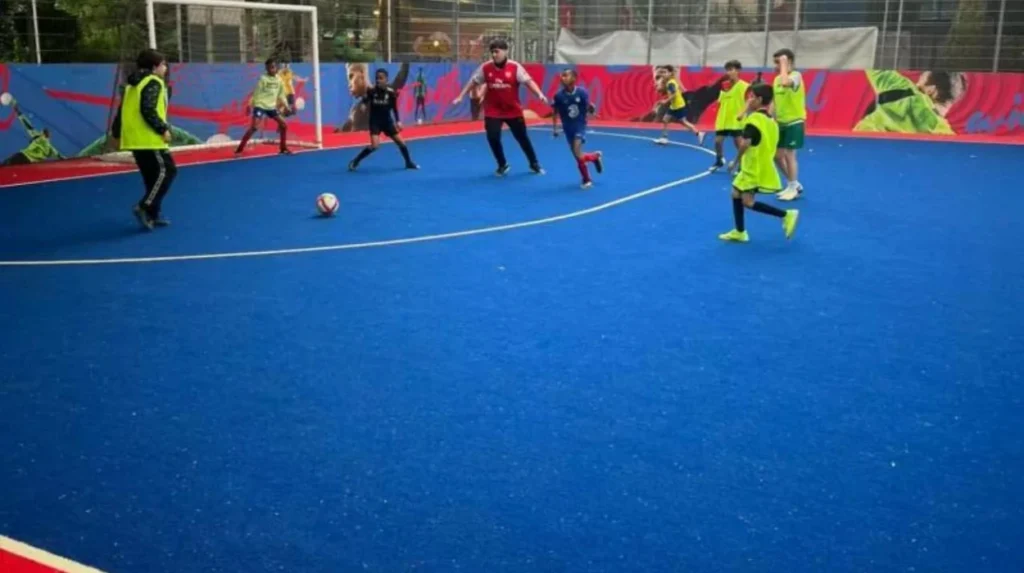
Football remains widely available through school teams, grassroots clubs and community programmes. Swimming provides both recreational and structured learning opportunities. Tennis and athletics offer individual development, while basketball, netball, hockey, rugby and cricket provide team-based participation.
Ealing also connects young people with the London Youth Games, a major London-wide sporting competition. The council states that more than 20,000 young Londoners participate annually across more than 30 sports. Listed sports include athletics, archery, basketball, badminton, BMX, canoeing, cycling, fencing, football, handball, hockey, judo, netball, sailing, squash, swimming, table tennis, tennis, trampolining, volleyball and weightlifting.
The London Youth Games provide a pathway for experienced young athletes who meet the relevant eligibility requirements. Ealing residents or pupils can register interest through the borough’s programme.
The wider national curriculum also supports participation beyond ordinary PE lessons. Government PE guidance encourages schools to connect pupils with competitive sports and activities outside school through community links and sports clubs.
Which creative activities are available after school?
Creative after-school activities include dance, drama, music, visual arts, crafts, media and performance, giving West London children structured opportunities to develop creativity, communication, coordination, confidence and practical artistic skills outside regular classroom lessons.
Creative provision operates in schools, community venues, libraries, specialist studios and youth services.
Dance classes can include ballet, contemporary dance, street dance and other structured forms. Music programmes can involve instruments, singing, ensembles or music production. Drama clubs develop performance, speech and group participation.
Visual arts programmes commonly include drawing, painting, sculpture, crafts and design. Older pupils can access photography, filmmaking, digital media and creative technology.
Hounslow’s current Youth Offer specifically includes Crafts, Arts and Media alongside sports, fitness, education, employment, skills and volunteering. The programme is designed to increase the range of activities available to young people across the borough.
Creative activities also complement statutory education. Art and design and music are part of the national curriculum in England at primary level, while arts subjects remain part of the broader curriculum entitlement at secondary level.
An after-school arts programme therefore provides additional practice rather than replacing classroom education.
Where can children find academic and educational activities?
Academic after-school activities include homework clubs, reading groups, coding, science, mathematics, languages and subject-based societies delivered through schools, libraries, community organisations, tuition providers and specialist educational programmes.
Academic enrichment is particularly relevant for children who need structured study time after lessons or who want to develop a specific interest.
Homework clubs provide supervised time for completing school assignments. Reading groups support literacy and discussion. Mathematics and science clubs provide subject-focused activities. Coding programmes introduce computational thinking and programming.
Language clubs can provide additional exposure to modern foreign languages or community languages. Supplementary education also includes cultural and language programmes outside the mainstream school timetable.
The Department for Education’s national curriculum framework makes clear that the national curriculum forms only one part of the wider school curriculum. Schools have space to provide additional learning experiences beyond statutory curriculum specifications.
Recent government survey data also shows continuing participation in extracurricular learning. In the 2024–25 Parent, Pupil and Learner Voice survey, 14% of secondary pupils reported participating in academic-subject clubs at school and 8% outside school since April 2025.
These figures demonstrate that academic enrichment exists alongside sport, performing arts, volunteering and other extracurricular categories.
How do after-school clubs support working families?
After-school clubs support working families by providing supervised care after lessons, often combining play, homework, sport, creative activities and social time before children return home at a scheduled collection time.
The expansion of wraparound childcare has increased the importance of organised after-school provision.
Since September 2024, England has expanded wraparound childcare places for primary-aged children. The provision typically operates during term time and can run from approximately 8am to 6pm across the full school day.
Wraparound childcare differs from an occasional extracurricular club. Government guidance defines wraparound childcare as regular provision around the school day, while out-of-school activities can be less frequent or operate as individual sessions.
Ealing provides a clear local example. Its council states that after-school clubs are linked to primary schools and provide care and play for children aged 4 to 12 during the school year. It also states that qualified staff provide daily activities.
Brent similarly describes out-of-school care as including breakfast clubs, after-school clubs and holiday playschemes. Activities listed by the council include sports, arts, crafts, cooking and homework support.
Parents should therefore distinguish between a childcare place and a specialist activity when comparing providers.
Which West London boroughs have strong after-school options?
Ealing, Hounslow, Brent and Richmond upon Thames each provide established council-supported pathways for children and young people, including sports, youth clubs, childcare, arts, leisure programmes, SEND provision and family information services.
Ealing
Ealing has a broad sports and leisure infrastructure. Its council lists indoor facilities such as swimming pools, gyms and dance studios, alongside outdoor grounds and specialist sports facilities.
The borough also operates a play service for children aged 0 to 12 and families. Provision includes drop-in activity sessions, after-school clubs and children’s centres.
Hounslow
Hounslow provides directories for clubs, groups and activities across areas including Feltham, Bedfont, Hanworth, Heston, Hounslow, Cranford, Isleworth, Brentford and Chiswick.
Its activity categories include sport, arts, cinema and leisure. The council also provides dedicated information for children and young people with special educational needs and disabilities.
Hounslow’s community sport programme also supports youth participation. Its Satellite Clubs initiative has involved Hounslow Council, London Sport, Brentford Community Sports Trust and community partners, with activities including tennis, youth cycling and youth fitness.
Brent
Brent provides information on school-age childcare, after-school clubs, holiday schemes and family services. Its council states that activities can include sports, arts, crafts, cooking and homework support.
Richmond upon Thames
Richmond upon Thames provides youth clubs and leisure opportunities across the borough. The council lists six youth clubs, including facilities in Barnes, Ham, Hampton, Twickenham, Mortlake and Whitton.
The borough also provides specialist RISE activities for children and young people with special educational needs and disabilities. Activities include junior dance, swimming, football, multi-sports, cycling and canoeing.
What after-school activities are suitable for teenagers?
Teenagers in West London can choose sports, fitness, performing arts, media, volunteering, youth clubs, academic societies, skills programmes and community activities designed around older children’s independence and development.
Teenage provision differs from primary-age childcare. Older young people generally require greater independence, more specialised activities and opportunities to develop leadership or vocational skills.
Hounslow’s Youth Offer includes sports and fitness, arts and media, education, employment, skills and volunteering. It specifically engages young people aged 13 to 17 in its youth development work.
Richmond upon Thames also provides youth services that include youth clubs, the Duke of Edinburgh’s Award and sport and leisure opportunities.
The Duke of Edinburgh’s Award, commonly known as the DofE, is a structured youth development programme built around areas such as volunteering, physical activity and skills, with an expedition component at relevant levels.
Teenagers can also progress through competitive sport. London Youth Games participation provides an organised route into borough-level representation across a large number of sports.
How accessible are after-school activities for children with SEND?
West London provides specialist and inclusive activities for children with special educational needs and disabilities, including adapted sports, dance, cycling, swimming, youth clubs, play sessions and dedicated family support services.
SEND means special educational needs and disabilities. Inclusive provision addresses physical, communication, sensory, developmental and learning requirements through adapted activities or additional support.
Hounslow provides a directory of clubs and activities for children and young people with SEND. Its listed provision includes TAG Youth Club for children and young people aged 8 to 25, alongside other specialist organisations and play programmes.
Richmond’s RISE programme provides weekly activities including Fusion Junior Dance, swimming, football, multi-sports, all-ability cycling and canoeing. The programme is designed specifically for people with special educational needs and disabilities.
Hounslow also operates short-break services for disabled children and young people aged 0 to 18, providing opportunities for activities away from parents and carers.
Accessibility should be checked directly with each provider because support arrangements, staffing, venue access and participation requirements differ between programmes.
How should parents choose a safe after-school activity?
Parents should check provider identity, safeguarding arrangements, staff suitability, registration status where required, collection procedures, emergency contacts, accessibility, insurance, costs, age requirements and the organisation’s policies before enrolling a child.
Safeguarding is a central consideration for any activity outside normal school hours.
The Department for Education’s guidance for parents covers after-school clubs, community activities, holiday clubs, supplementary schools, private tuition, music lessons and sports coaching. It explains the safeguarding arrangements parents should expect from out-of-school settings.
Parents should establish who supervises children, where sessions take place, how attendance is recorded and who is authorised to collect a child.
For childcare provision, registration requirements depend on the type of service. Ealing Council states that clubs caring for children under eight for more than two hours a day and more than five days a year must be registered and checked by Ofsted, subject to applicable exemptions.
Brent also explains that most childcare settings providing out-of-school care are registered with Ofsted, while school-run provision can fall under the school’s existing registration arrangements.
Parents should therefore verify the exact regulatory position of the individual provider rather than assuming every activity requires separate Ofsted registration.
How much physical activity should children get outside school?
Children and young people need regular physical activity beyond school lessons, and after-school sport provides one practical route through which families can build movement, fitness, coordination and active routines into the school week.
Government guidance on school PE connects school provision with national physical activity recommendations. The Department for Education’s 2024 PE and sport guidance highlights access to PE, physical activity and extracurricular school sport.
The guidance also refers to a minimum of two hours of PE per week as part of approaches schools can use to improve physical education and activity.
After-school activities extend opportunities beyond curriculum PE. Football training, swimming lessons, cycling, dance, athletics, gymnastics and active games can all add structured movement to a child’s routine.
Ealing Council has previously highlighted guidance that young children need 60 minutes of vigorous activity at least five times per week and encourages families to combine school-based activity with exercise outside school.
The appropriate activity level depends on age, development, ability and individual circumstances. Parents should use current national health guidance when planning a child’s overall physical activity.
Explore More Area Guide
Children’s Attractions in West London: Family Guide
Family Activities in West London: Best Days Out
How can families find affordable after-school activities in West London?
Families can find affordable activities through schools, council leisure centres, youth services, libraries, community organisations, voluntary sports clubs and funded programmes, with eligibility and fees varying according to provider, age and household circumstances.
School-based clubs are often the simplest starting point because families can obtain information directly from the school office or parent portal.
Council activity directories provide another route. Ealing operates an activity finder covering sports and leisure opportunities. Hounslow provides directories covering clubs, groups and activities. Richmond provides youth-service and leisure information, while Brent provides family and childcare resources.
Families should also investigate childcare support. Tax-Free Childcare and Universal Credit childcare support can apply to eligible families using qualifying childcare arrangements. Government guidance states that wraparound providers set their own fees.
Holiday provision is separate from ordinary term-time after-school activity. The Holiday Activities and Food Programme, known as HAF, supports eligible children during school holidays with food and enriching activities.
Availability changes by term, school year and provider. Checking the current council or school directory is therefore more reliable than relying on an old activity listing.
What role will after-school activities play in West London in the future?
After-school provision will remain an important part of West London’s education, childcare, sport and youth-service landscape as schools and communities expand access to enrichment, physical activity, creative learning, skills development and inclusive opportunities.
The direction of national policy supports broader enrichment.
In June 2026, the UK Government announced the Every Child Can programme, with £132.5 million intended to support enriching activities across arts, sport, nature, civic life and life skills. The programme aims to improve access to activities within schools and communities.
School-age childcare is also receiving continued policy attention. Government guidance published in April 2026 provides schools and academy trusts with guidance on delivering school-age childcare during term time and holidays.
The expansion of wraparound childcare since September 2024 has already increased the availability of before- and after-school places for primary-aged children. More than 121,000 new places had been created across England by June 2026, according to the government’s Best Start in Life programme.
For West London families, this creates a clearer distinction between three connected services: childcare, extracurricular enrichment and youth development.
The strongest local provision combines practical accessibility with meaningful participation. Schools provide convenient settings. Leisure centres provide specialist sports facilities. Youth services provide social and developmental programmes. Community organisations provide targeted activities. Specialist providers address individual interests and SEND requirements.
After-school activities therefore form an important part of the wider educational environment rather than functioning only as childcare. They provide structured opportunities for children to remain active, develop skills, build social connections and explore interests beyond the standard school timetable.
For families searching across West London, the most reliable approach is to begin with the child’s school, then check the relevant borough council’s current childcare, sports, leisure and youth-service directories. This provides the clearest route to current session times, age requirements, costs, eligibility criteria and registration arrangements.
What are the best after-school activities in West London?
Popular after-school activities in West London include football, swimming, tennis, gymnastics, dance, music, drama, arts and crafts, coding, homework clubs, youth groups and volunteering. Ealing, Hounslow, Brent and Richmond upon Thames all provide different local options.