Key Points
- The 60th anniversary of the Notting Hill Carnival is under way in west London, with Bank Holiday Monday marking the official Adults Day.
- Tens of thousands of revellers have gathered in the streets, with the main parade scheduled to begin at 8pm.
- Mayor of London Sadiq Khan announced an additional £4.66 million in funding ahead of the anniversary, addressing reports of financial difficulties from the previous year.
- The event celebrates Caribbean culture, community resilience, and six decades of heritage in the capital.
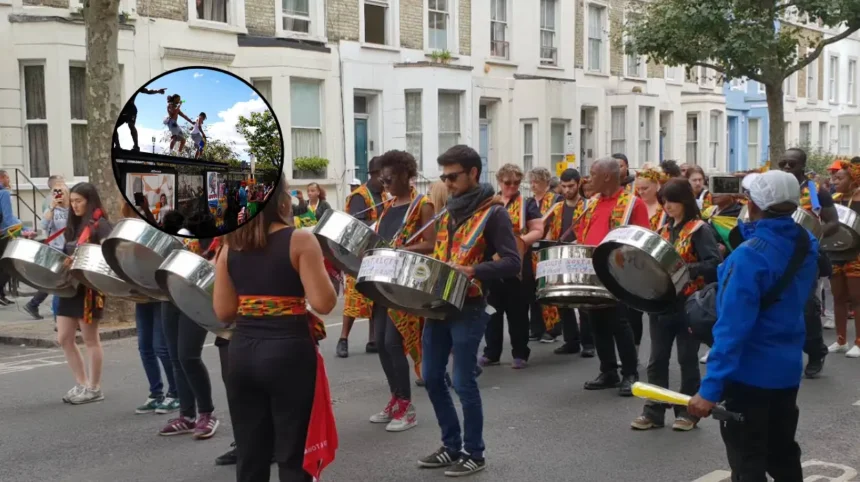
Notting Hill (West London News) September 1, 2026 — Day three of the Notting Hill Carnival is officially under way, with tens of thousands of people gathering in the streets of west London to mark the 60th anniversary of the historic event. Bank Holiday Monday marks the festival’s traditional Adults Day, featuring the centerpiece main parade scheduled to begin at 8pm. The annual Caribbean celebration, which stands as Europe’s largest street festival, has taken over the capital with sound systems, elaborate costumes, and traditional food stalls following months of operational and financial preparations.
Ahead of this milestone anniversary, the Mayor of London announced an injection of £4.66 million in additional funding. The financial package was released following reports last year that carnival organizers and local operational infrastructure were facing substantial financial difficulties. Organizers noted that the dedicated funding stream aims to secure the immediate operational logistics, street management, sanitation, and safety provisions necessary to support the hundreds of thousands of visitors attending across the bank holiday weekend.
The festival atmosphere on Monday follows Sunday’s Children’s Day and the traditional early morning J’Ouvert celebrations, which signal the opening phases of the street carnival. Organizers, local borough councils, and emergency services have deployed expanded resources along the parade routes to facilitate the large crowds gathered across Kensington, Chelsea, and Westminster.
How Will the £4.66 Million Funding Injection Impact Carnival Infrastructure?
The financial allocation announced by City Hall addresses long-standing challenges regarding the scale and cost of managing one of the world’s largest street events. In previous years, rising costs for stewarding, crowd control barriers, sanitation facilities, and licensing had placed significant pressure on the voluntary organizers and local authorities responsible for running the weekend.
The additional £4.66 million is structured to assist with:
- Crowd Management: Upgrading stewarding infrastructure, access routes, and staging zones along the primary parade corridors.
- Local Sanitation: Expanding public amenities, street cleaning operations, and post-event environmental waste management.
- Community Engagement: Providing direct support to static sound system operators, costume bands, and steel bands that form the artistic backbone of the procession.
Local representatives and event stewards confirmed that operational measures were updated to handle the influx of visitors expected for Monday evening’s main parade. Transport for London issued advisory notices regarding station closures and diverted bus routes to prevent severe congestion around Notting Hill Gate, Ladbroke Grove, and Westbourne Park stations.
Background of the Notting Hill Carnival
The Notting Hill Carnival began in the 1960s as a response to racial tensions and as a celebration of West Indian culture in London. Originating from indoor community events organized by activist Claudia Jones in 1959 and subsequent outdoor street festivals led by Rhaune Laslett in 1966, the event grew into an iconic cultural institution.
Over six decades, the carnival evolved from a localized neighborhood gathering into a major global attraction, drawing over a million visitors annually. It plays a central role in preserving Caribbean heritage in the United Kingdom, showcasing traditional calypso music, soca, steel pan competitions, static sound systems, and elaborate mas (masquerade) bands. Despite periodic debates over safety, funding, and local neighborhood impact, the festival remains a cultural cornerstone for London’s West Indian communities and the wider national identity.
Explore More Local West London News
Nepal Flood Vigil Held at Laxminarayan Temple in Hounslow 2026
The Council And Police Are Taking Action Over Illegal Dumping In Southall
Prediction: How Will This Development Affect Local Residents, Businesses, and Future Festivals?
The £4.66 million funding allocation and the execution of the 60th anniversary event set key precedents for several key stakeholder groups:
- For Local Residents and Businesses: Increased financial investment in sanitation, security, and crowd control is projected to reduce localized damage and lower post-event cleaning times in residential neighborhoods. Local traders and hospitality venues within the parade boundaries benefit from significant short-term commercial footfall, though residential movement remains heavily restricted during peak hours.
- For Carnival Organizers and Performers: The financial backing stabilizes the economic model of the event in the short term. It enables masquerade bands, sound system operators, and arts groups to offset soaring material and operational costs, securing high production standards without passing expense onto community participants.
- For London Local Authorities and Future Funding Models: The multi-million-pound intervention demonstrates that municipal government views the event as vital national infrastructure rather than merely a local community party. If this funding framework proves successful in improving safety and operational efficiency during the 60th anniversary, it is expected to establish a permanent baseline for how large-scale cultural events in the capital are underwritten by public funds in future years.