
Soft play centres in West London provide indoor spaces where babies, toddlers and young children climb, crawl, slide, bounce and explore. These venues combine padded play structures, ball pits, slides, sensory features and age-specific areas. They operate as independent businesses, cafés, leisure-centre facilities and community play services.
- What are soft play centres in West London?
- Why is soft play popular with West London families?
- Which areas of West London have soft play centres?
- What age groups do West London soft play centres serve?
- What equipment is found in West London soft play centres?
- How do soft play sessions work?
- What safety standards matter at West London soft play centres?
- Which West London soft play centres are suitable for toddlers?
- Are West London soft play centres suitable for birthday parties?
- What accessibility features should families check?
- What are the benefits of soft play for children?
- How should families choose the best soft play centre in West London?
- How do soft play centres fit into West London’s wider family activity network?
- What is the future of soft play in West London?
- Choosing Soft Play Centres in West London
West London has a broad network of family facilities across Ealing, fulham/hammersmith/">hammersmith-and-fulham/">Hammersmith and Fulham, Hounslow, Richmond upon Thames and neighbouring districts. Local authorities also provide play centres and early-years activities alongside commercial soft play venues. Ealing Council lists play centres serving children from birth through 12 years, while Hounslow’s Family Service Directory lists soft play options including Snakes and Ladders, Lampton Leisure, Rocks Lane Soft Play and Heathrow’s Playgym.
Soft play is particularly relevant to families seeking indoor activities during rainy weather, school holidays and weekends. The format also supports active movement without requiring outdoor space. The Health and Safety Executive recognises play as important for children’s wellbeing and development and supports a balanced approach that controls genuine hazards while retaining beneficial challenge.
What are soft play centres in West London?
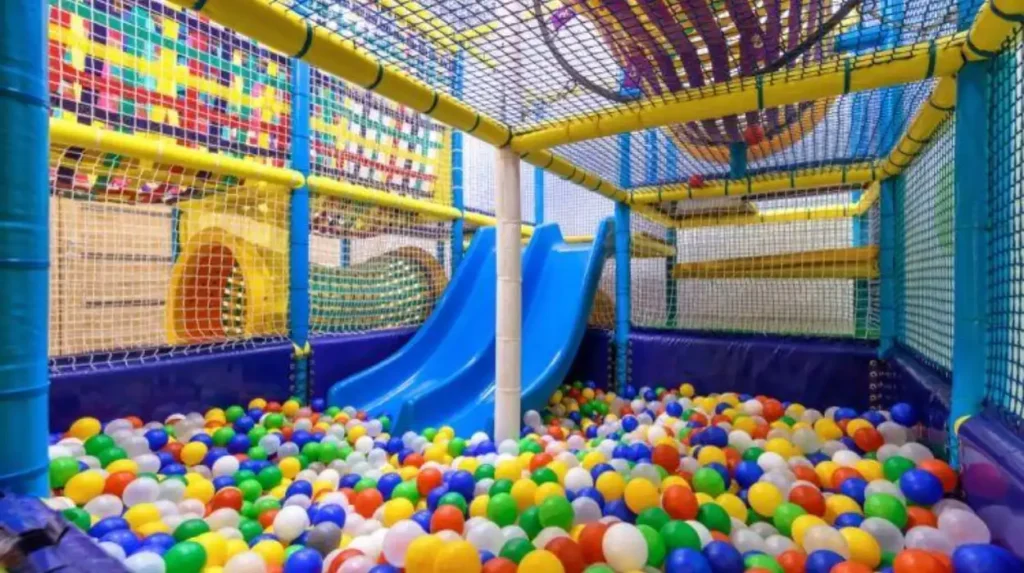
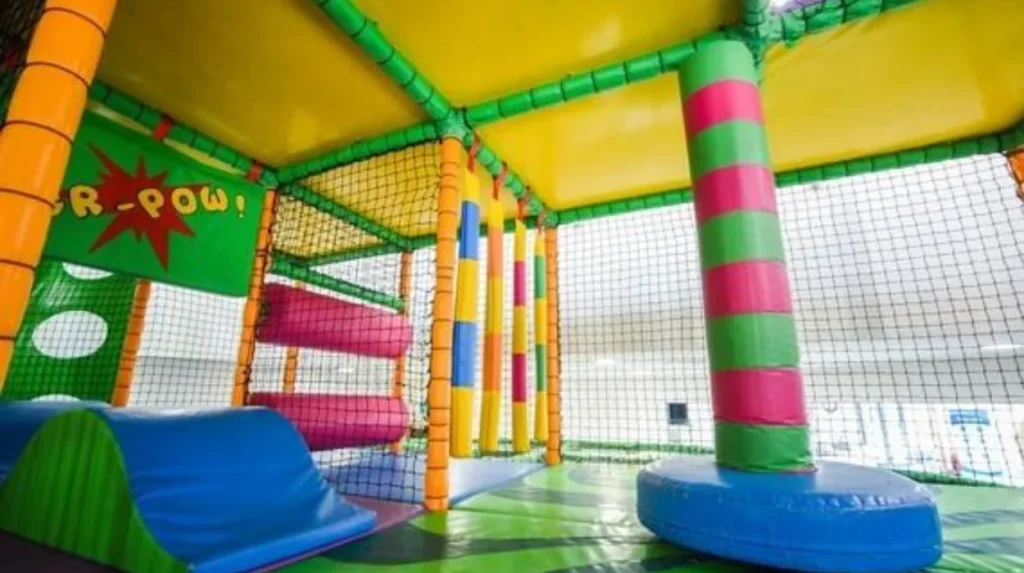
Soft play centres are indoor children’s play venues containing padded climbing structures, slides, ball pits, tunnels and activity equipment. West London facilities serve different ages, with dedicated toddler areas, family sessions, cafés, parties and leisure-centre programmes.
Soft play refers to recreational play equipment designed with cushioned surfaces and impact-reducing materials. Typical equipment includes climbing frames, padded steps, crawl tunnels, slides, ball pools, foam obstacles and low-level activity structures.
The principal purpose is active, self-directed play. Children move through equipment according to their age and ability. This differs from structured childcare because parents or carers generally remain responsible for supervision unless a venue explicitly provides a regulated childcare service.
West London offers several formats. Commercial centres provide dedicated indoor playgrounds. Leisure centres operate scheduled soft play sessions. Cafés combine play facilities with food and seating. Council-run play centres provide community-based opportunities, including early-years sessions.
The distinction between a soft play session and childcare is important. Richmond upon Thames states that parents and guardians must remain with children during its soft play sessions. Hounslow also advises families to check that activities are appropriate and safe before attending.
Why is soft play popular with West London families?
Soft play provides children with accessible indoor physical activity, social interaction and exploration while giving families a weather-independent leisure option. West London venues also support birthday parties, toddler sessions, school-holiday activities and café-based family visits throughout the year.
London weather creates a practical reason for indoor children’s activities. Rain, cold temperatures and short winter daylight hours can limit outdoor plans. Soft play provides an enclosed alternative without removing opportunities for climbing, crawling and movement.
The social dimension is also significant. Children encounter other children during open sessions and develop communication, turn-taking and cooperative behaviours through naturally occurring play.
Play England describes play as essential to children’s social, emotional, intellectual and physical development. Its Charter for Play states that play provides opportunities for children to socialise, remain physically active and choose their own activities.
Recent UK research reinforces the relevance of accessible play spaces. A 2026 Play England report citing the Play Their Way research found that 72% of surveyed parents believed children spent too little time engaged in active play, while 46% identified a lack of safe places to play as a barrier.
For West London families, soft play therefore serves both recreational and practical purposes. It creates a controlled indoor environment for active play while providing a convenient option near residential neighbourhoods, leisure facilities and transport routes.
Which areas of West London have soft play centres?
Soft play facilities are distributed across Ealing, Hammersmith and Fulham, Hounslow and Richmond upon Thames, with additional venues around Acton, Chiswick, Brentford, Fulham, Heston, Teddington and Whitton. Local authority directories provide useful starting points for finding facilities.
Ealing contains council-run play centres alongside independent venues. Ealing Council lists Acton Park Play Centre, Dormers Wells Park Play Centre, Limetrees Park Children’s Centre, Northolt Park Children’s Centre and Pitzhanger Park Play Centre. It also lists facilities with different age requirements, including Islip Manor Park, Lammas Park and Southall Park Play Centres.
Hounslow has a dedicated Family Service Directory section for soft play. Listed facilities include Snakes and Ladders in Brentford, Soft Play at Lampton Leisure, Rocks Lane Soft Play in Chiswick and Heathrow’s Playgym. The directory describes Heathrow’s Playgym as serving toddlers and children up to seven years old.
Richmond upon Thames has soft play sessions connected with its sports and fitness centres. Recent council information identifies Whitton Sports and Fitness Centre and Teddington Sports Centre for soft play aimed at children aged 0 to 5.
Hammersmith and Fulham also has leisure-centre provision. Lillie Road Fitness Centre operates a jungle-themed soft play facility for children aged eight and under, with scheduled sessions and birthday-party packages.
This geographic spread makes soft play available across several distinct West London communities rather than concentrating the activity in one central location.
What age groups do West London soft play centres serve?
Age ranges differ between venues, but West London soft play commonly includes babies, toddlers, preschool children and younger school-age children. Facilities frequently separate younger children from older users through dedicated toddler areas, session limits and age-specific equipment.
Age suitability is one of the most important factors when selecting a venue. Soft play structures differ in height, complexity and physical demand. A climbing frame designed for a six-year-old is not suitable for a crawling baby.
Two Plus Cafe & Soft Play near Acton, Chiswick and Shepherd’s Bush states that its facility serves children aged six months to six years. It includes a separate play room and equipment such as a trampoline, carousel and ball pit.
Dino Soft Play at West London Golf Centre serves children aged one to six years and provides a separate secure toddler area. Its equipment includes ball ponds, slides, rollers and climbing features.
Lillie Road Fitness Centre extends its soft play age range to children aged eight and under. Its birthday-party facility accepts children celebrating birthdays from age one to eight.
Richmond’s leisure-centre soft play is focused on younger children. The council currently identifies sessions for children aged 0 to 5 and requires parents or guardians to stay with their children.
Parents should therefore check the exact age policy before travelling. Age restrictions affect admission, equipment access, session eligibility and party arrangements.
What equipment is found in West London soft play centres?
Typical soft play equipment includes padded climbing frames, slides, ball pits, tunnels, foam obstacles, trampolines and toddler structures. Individual venues add themed features, sensory areas, bouncy equipment and low-level activities according to their available space and target age group.
Soft play equipment is designed around movement. Climbing structures encourage children to use their arms, legs and balance. Slides introduce controlled descent. Tunnels encourage crawling and spatial exploration. Ball pits provide movement through an unstable surface.
The equipment varies significantly between facilities. Dino Soft Play uses a dinosaur theme and includes ball ponds, slides and rollers. Its separate toddler area creates a lower-complexity environment for younger children.
Two Plus Cafe & Soft Play combines a trampoline, carousel and ball pit. The facility is designed for younger children and includes dedicated seating that allows adults to observe the play area.
Lillie Road Fitness Centre uses a jungle-themed soft play design with a bouncy castle, slides and see-saws. Sessions last 50 minutes, providing a defined play period rather than unrestricted all-day access.
The equipment structure affects suitability. Babies require low-level features and clear floor space. Toddlers benefit from smaller climbing elements and simple slides. Older children generally require more challenging structures.
A suitable centre therefore depends on the child’s age, physical development and confidence rather than the size of the venue alone.
How do soft play sessions work?
Soft play sessions normally operate during fixed opening periods or scheduled time slots. Families enter after paying or booking, children use age-appropriate equipment, and parents supervise them. Some venues require advance booking, while others accept walk-in visitors when capacity permits.
The operating model differs between independent centres and leisure facilities. A commercial venue often sells timed sessions. A leisure centre can publish specific sessions within its wider sports timetable.
Two Plus Cafe & Soft Play recommends advance online booking, while also accepting on-the-day purchases subject to availability. Its current operating information shows hourly sessions from Monday to Saturday during its published summer schedule.
Lillie Road Fitness Centre operates 50-minute sessions on selected weekdays and weekends. Families book through the Better UK app or the centre’s online system.
Richmond uses a mixture of drop-in and bookable arrangements depending on the programme. The council has also stated that parents and guardians must remain with children throughout soft play sessions.
The session format affects planning. A timed session provides a defined arrival and departure period. It also helps venues manage capacity and maintain a consistent environment.
Families should check the current timetable before visiting because school holidays, private parties, maintenance and seasonal programming affect session availability.
What safety standards matter at West London soft play centres?
Safety depends on appropriate equipment, effective maintenance, suitable supervision, controlled capacity and clear operating rules. Parents should follow each venue’s age limits, footwear requirements and supervision policies while providers should control genuine hazards without removing beneficial challenge.
The Health and Safety Executive states that play should not be designed around eliminating every form of risk. Instead, providers should identify genuine hazards, control serious risks and preserve the developmental benefits of play.
This principle is particularly relevant to soft play because climbing and movement naturally involve manageable physical challenges. The objective is not to create a completely risk-free environment. The objective is to control unnecessary hazards such as damaged equipment, poor maintenance, overcrowding or unsuitable access.
Equipment standards also form part of responsible play provision. HSE identifies industry standards such as EN 1176 as useful benchmarks for play equipment and supports proportionate risk-benefit assessment.
Parents also have responsibilities. Children should follow venue rules. Adults should remain within the required supervision area. Children should use equipment according to their age and ability.
Some venues impose specific clothing rules. Two Plus Cafe & Soft Play requires socks for children and adults entering its play area.
Supervision requirements are especially important for babies and toddlers. Richmond explicitly requires parents and guardians to stay with children during its soft play sessions.
Safety information should therefore be treated as part of choosing a venue, not as an administrative detail.
Which West London soft play centres are suitable for toddlers?
Toddler-friendly soft play centres provide lower-level equipment, smaller climbing features, controlled sessions and dedicated areas for younger children. Examples include Dino Soft Play, Richmond leisure-centre sessions, Heathrow’s Playgym and Two Plus Cafe & Soft Play.
Toddlers require different play environments from older school-age children. Their balance, coordination, awareness of other children and ability to judge physical risk are still developing.
Dino Soft Play provides a separate secure toddler area alongside its main dinosaur-themed play structure. The centre serves children from one to six years old.
Richmond’s soft play sessions specifically target children aged 0 to 5. The council describes activities including climbing, crawling, bouncing and exploration, with parental supervision required.
Two Plus Cafe & Soft Play serves children from six months to six years. Its separate room and dedicated adult seating create a format designed around younger children and family supervision.
Hounslow’s Family Service Directory identifies Heathrow’s Playgym as a facility for toddlers and children up to seven years old.
For babies, the presence of a separate baby or toddler zone is particularly useful. It reduces direct interaction with larger children using faster and more physically demanding equipment.
Parents should still assess the environment personally. A suitable age label does not replace supervision.
Are West London soft play centres suitable for birthday parties?
Many West London soft play venues offer birthday-party packages that combine private or reserved play areas with food, seating and organised time. Lillie Road Fitness Centre, Snakes and Ladders and independent venues provide examples of party-focused soft play services.
Soft play birthday parties use the same physical environment for a structured celebration. Children receive a defined play period, followed by food, cake or social time in a designated area.
Lillie Road Fitness Centre provides an example of a clearly structured package. Its birthday parties include 60 minutes of jungle-themed soft play followed by 45 minutes in an assigned area with tables and chairs. The published maximum is 20 children, and the listed price is £275.
Hounslow’s Family Service Directory identifies Snakes and Ladders in Brentford as offering party packages, SEND sessions and exclusive hire.
Independent soft play cafés also use their facilities for celebrations. Bella Boo’s in Fulham describes itself as a soft play café and lists birthday-party hire among its services.
Party suitability depends on guest numbers, age range, food arrangements, exclusive-use requirements and available seating. Parents should confirm all package conditions before payment.
The best party venue is therefore determined by logistics rather than equipment alone.
What accessibility features should families check?
Accessibility varies between venues and should be confirmed directly before booking. Families should check step-free entry, accessible toilets, buggy storage, seating, sensory provisions, quieter sessions, equipment access and staff arrangements for children with additional needs.
Accessibility in soft play involves more than wheelchair access. Families need information about entrances, circulation, toilets, seating, sensory conditions and the ability to supervise children comfortably.
Some facilities provide additional programming. Hounslow’s directory specifically lists SEND sessions at Snakes and Ladders in Brentford.
Ealing’s early-years services also include sensory and creative play. An April 2026 programme for Acton Park Children’s Centre describes sensory and creative play for children aged 18 months to five years, using different textures as part of exploration and learning.
Sensory considerations include noise levels, lighting, crowd density and unexpected sounds. A busy weekend session can create a very different environment from a quieter weekday session.
Families should contact the venue before visiting when a child requires specific adjustments. Questions about entry, toilets, sensory conditions, changing facilities and support provide practical information that online listings often do not contain.
Accessibility should be evaluated according to the individual child rather than a single generic label.
What are the benefits of soft play for children?
Soft play supports active movement, coordination, confidence, social interaction and independent exploration. Climbing, crawling, balancing and sliding require children to control their bodies while navigating space, making indoor play a practical complement to outdoor activity.
Physical movement is central to soft play. Climbing requires coordination between the upper and lower body. Crawling develops movement control. Balancing requires postural adjustment. Sliding involves body positioning and spatial awareness.
The Health and Safety Executive recognises play as beneficial for children’s wellbeing and development and states that play helps children explore abilities, learn and develop risk awareness.
Play England also identifies physical, social, emotional and intellectual development as important benefits of play. Its Charter for Play describes opportunities for children to meet friends, remain active and choose their own activities.
Soft play also creates opportunities for social learning. Children share spaces, wait for equipment, negotiate access and interact with peers. These behaviours occur naturally within free play.
The activity does not replace outdoor play, sport or structured physical activity. It forms one component of a broader childhood play environment.
Play England’s recent research highlights the continuing importance of active opportunities. Its 2026 reporting found that 72% of surveyed parents believed children spent too little time engaged in active play.
How should families choose the best soft play centre in West London?
Families should compare age suitability, location, equipment, session length, supervision rules, accessibility, cleanliness, booking requirements, prices and facilities before choosing a soft play centre. The child’s age and individual needs should determine the final choice.
Location is the first practical consideration. A centre near home, school or public transport reduces travel time. West London’s spread of facilities allows families to compare neighbourhood options rather than relying on one venue.
Age suitability comes next. A six-month-old requires different equipment from a six-year-old. Dedicated toddler zones are particularly important where mixed-age sessions operate.
Session length also affects value and convenience. Lillie Road Fitness Centre uses 50-minute general soft play sessions, while other venues operate hourly or longer formats.
Booking rules should be checked before travel. Some venues accept walk-ins, while others recommend or require advance reservations. Private parties can also temporarily remove parts of a facility from general use.
Parents should review supervision requirements. Richmond requires adults to remain with children, while commercial venues have their own rules.
Food and café facilities matter for longer visits. Two Plus Cafe & Soft Play combines its play room with a café, while Dino Soft Play provides access to a café at West London Golf Centre.
The most suitable venue is the one that matches the child’s age, activity level, accessibility needs and the family’s practical requirements.
How do soft play centres fit into West London’s wider family activity network?
Soft play centres form one part of West London’s wider family recreation network alongside parks, playgrounds, leisure centres, libraries, children’s centres, sports clubs and outdoor spaces. Their main role is providing structured indoor opportunities for active, social and self-directed play.
West London has a mixed play infrastructure. Council-run play centres provide community activities. Leisure centres provide sport and soft play. Commercial operators provide dedicated indoor entertainment. Parks and playgrounds provide outdoor alternatives.
Ealing Council’s play-centre network demonstrates how local authority facilities connect play with community and early-years services. Its listed centres serve different age groups and operate during term time and school holidays.
Richmond connects soft play with wider sports and fitness programming. Its leisure centres provide activities for children and young people ranging from toddler soft play to junior sports.
Ealing’s children’s-centre programmes also combine play with learning and development. Acton Park Children’s Centre lists Stay and Play, sensory activities and music and movement sessions for young children.
This wider network is important because children benefit from varied play environments. Indoor soft play provides movement and social interaction. Parks provide open-ended outdoor exploration. Sports clubs introduce structured physical skills. Libraries and community centres provide quieter cultural activities.
A balanced family activity routine therefore uses soft play as one option within a broader local network.
Explore More Area Guide
Kids Clubs and Classes in West London
Family Activities in West London: Best Days Out
What is the future of soft play in West London?
The future of soft play in West London is linked to demand for accessible indoor play, inclusive provision, active childhoods and flexible family services. New leisure developments, changing play needs and stronger attention to accessibility will shape future provision.
West London continues to invest in leisure infrastructure. Ealing Council’s Gurnell Leisure Centre redevelopment includes plans for a new soft play area alongside a 50-metre swimming pool, waterpark, slides, lazy river, exercise studios and café. The council expects the new leisure complex to open towards the end of 2027.
This demonstrates how soft play is increasingly integrated into wider leisure destinations rather than operating only as standalone children’s entertainment.
The wider policy environment also places increasing attention on children’s access to play. Play England’s current strategy aims to restore a play-based childhood in England by 2035. Its 2026 research continues to highlight barriers including insufficient active play and limited safe places.
Future soft play provision therefore has several practical priorities. Facilities need suitable equipment for different ages. They need clear supervision rules. They need accessible design. They need spaces that support active movement without creating unnecessary hazards.
For West London families, the result is a growing choice of indoor play formats across cafés, leisure centres, community facilities and dedicated entertainment venues.
Soft play remains most effective when it complements outdoor play, sport, community activities and everyday opportunities for children to explore independently.
Choosing Soft Play Centres in West London
Soft play centres in West London provide practical indoor opportunities for children to move, explore and socialise. The area offers different formats, from council-run play centres and leisure-centre sessions to specialist indoor playgrounds and café-based venues.
The strongest choice depends on the child’s age, the equipment available, supervision requirements, accessibility, session format and location. Current examples across Acton, Ealing, Chiswick, Brentford, Fulham, Hounslow, Teddington and Whitton demonstrate the breadth of provision.
Parents should always check current opening hours, booking requirements, prices and age restrictions directly with the venue before travelling. Local authority directories are useful for discovering services, while individual venue websites provide the most relevant operational information.
Soft play is not simply an indoor alternative for rainy days. It forms part of a wider play environment that supports movement, social interaction, exploration and childhood development. West London’s combination of commercial, community and leisure facilities gives families multiple ways to incorporate active indoor play into everyday life.
What are the best soft play centres in West London?
West London has a wide range of soft play options for babies, toddlers and young children. Notable examples include Dino Soft Play, Two Plus Cafe & Soft Play, Lillie Road Fitness Centre, Snakes and Ladders and Richmond leisure-centre sessions.