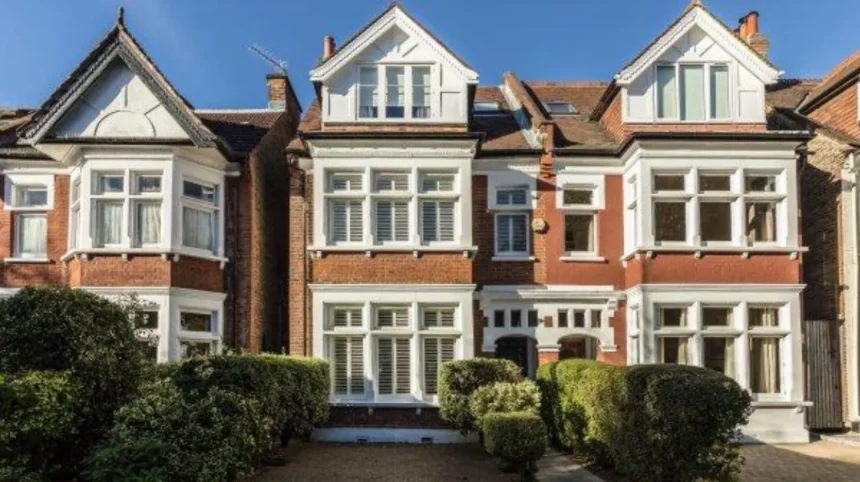
West London has one of the most varied residential property markets in the UK. The area includes established suburban districts, high-value riverside neighbourhoods, major employment centres, and parts of prime central London. Property prices therefore differ substantially between boroughs and individual neighbourhoods.
- What are property prices in West London?
- How have West London property prices developed historically?
- Why do property prices differ between West London boroughs?
- Which West London boroughs have the highest property prices?
- Which West London areas are more affordable?
- How does transport affect West London property prices?
- What property types can buyers find across West London?
- How much do West London rents reveal about property demand?
- What costs should buyers include when calculating West London property prices?
- How do first-time buyer prices compare with wider West London property prices?
- What factors should buyers examine before purchasing property in West London?
- What does the latest West London property data mean for the market?
- What should buyers remember about West London property prices?
The latest official data from the Office for National Statistics (ONS), based on the UK House Price Index produced with HM Land Registry data, shows a wide spread in average property prices. In June 2026, the average house price was £475,000 in Hillingdon, £513,000 in Hounslow, £544,000 in Brent, £576,000 in Ealing, £594,000 in Kingston upon Thames, £726,000 in fulham/hammersmith/">hammersmith-and-fulham/">Hammersmith and Fulham, and £819,000 in Richmond upon Thames. Kensington and Chelsea stood considerably higher at £1.25 million.
These figures demonstrate why a single “West London house price” is not an accurate measure of the whole area. Property type, location, transport access, tenure, condition, land availability, and proximity to employment centres all influence the price of an individual home.
What are property prices in West London?
West London property prices vary sharply by borough, property type, tenure, transport access, and proximity to central London. In June 2026, official ONS averages ranged from £475,000 in Hillingdon to £819,000 in Richmond upon Thames, excluding the prime Kensington market.
The most reliable starting point for understanding West London property prices is the official UK House Price Index. The index measures completed residential transactions rather than simply advertised asking prices. This distinction matters because an asking price represents a seller’s expectation, while a completed transaction records the price actually paid.
London’s overall average house price was £554,000 in June 2026. The figure was down from £568,000 in June 2025, representing a 2.5% annual decline. Across the UK, the average price was £272,000 in June 2026, compared with £267,000 one year earlier.
Several West London boroughs therefore remained above the London average. Hammersmith and Fulham recorded £726,000, while Richmond upon Thames recorded £819,000. Ealing stood at £576,000 and Kingston upon Thames at £594,000.
Other western boroughs remained below the London-wide figure. Hillingdon recorded £475,000 and Hounslow £513,000. Brent recorded £544,000, placing it close to the London average.
The figures show that West London is not a single price market. It is a collection of local housing markets operating within the wider London economy.
How have West London property prices developed historically?
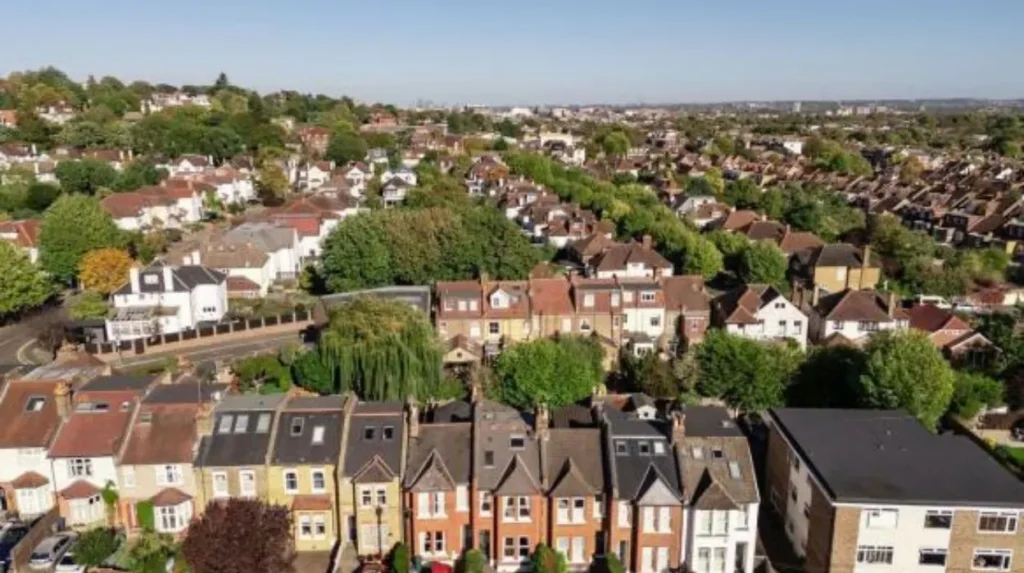
West London became a major residential market through nineteenth-century suburban expansion, railway development, industrial growth, and post-war housing construction. These western districts developed distinct markets, ranging from suburban family housing in Hillingdon to high-value central and riverside property in Richmond.
West London’s modern housing market developed alongside London’s expansion beyond its historic central districts. During the nineteenth century, improved transport allowed residential development to spread further from central London.
Railway construction played an important role. New stations connected expanding suburbs with central employment districts. Housing development followed transport corridors, creating neighbourhoods with distinct architectural and socioeconomic characteristics.
The arrival and expansion of underground railway services further strengthened this pattern. Districts in Hammersmith, Ealing, Acton, Chiswick, and surrounding areas became increasingly integrated into London’s metropolitan economy.
West London’s housing stock also reflects different periods of construction. Victorian and Edwardian terraces remain prominent in several established neighbourhoods. Interwar housing estates and suburban semi-detached properties expanded further west. Post-war developments introduced additional flats and estates.
The borough of Hillingdon illustrates the western suburban model particularly clearly. Its housing market contains detached, semi-detached, terraced and flat properties across a large geographic area. ONS recorded an average property price of £475,000 in June 2026.
Richmond upon Thames represents another part of the West London market. Its combination of established residential districts, riverside locations, green spaces and larger houses supports a substantially higher average. ONS recorded £819,000 in June 2026.
The historical development of transport, housing and land use therefore remains visible in today’s property values.
Why do property prices differ between West London boroughs?
West London property prices differ because boroughs contain different housing stocks, neighbourhoods, transport connections, land constraints, employment centres, and levels of prime property. Flats, terraces, semi-detached houses, and detached homes command different prices, producing large variations within individual borough market.
Property type is one of the most important influences on the average price recorded by ONS. A borough containing many flats produces a different average from a borough containing a large concentration of detached and semi-detached houses.
Ealing demonstrates this variation. In June 2026, ONS recorded an average detached property price of £1.377 million. Semi-detached properties averaged £869,000, terraced properties £698,000, while flats and maisonettes averaged £403,000.
Hillingdon showed a different pattern. Detached homes averaged £946,000 in June 2026, semi-detached properties averaged £588,000, terraced homes £460,000 and flats and maisonettes £289,000.
These differences demonstrate why borough-wide averages should not be used to estimate the value of a particular property.
Housing tenure also matters. Leasehold flats are common across London, particularly in apartment blocks. Leaseholders purchase the right to occupy their property for the remaining lease term. Freehold ownership provides ownership of the property and land, subject to applicable legal obligations.
Condition is another major factor. A refurbished Victorian terrace with modern insulation, a new kitchen and updated services has a different market position from an otherwise similar property requiring substantial renovation.
Energy efficiency is increasingly relevant to property decisions. Buyers examine heating systems, insulation, glazing, Energy Performance Certificate ratings and expected improvement costs.
Outdoor space also affects local demand. Gardens, balconies, terraces and private courtyards are important features in densely developed parts of London.
Which West London boroughs have the highest property prices?
Among major West London markets, Richmond upon Thames and Hammersmith and Fulham recorded high average prices in June 2026, while Kensington and Chelsea was substantially higher. Official ONS figures show major differences between these markets and more affordable western boroughs such as Hillingdon.
Kensington and Chelsea occupies the highest-price position among the boroughs commonly associated with West London. ONS recorded an average house price of £1.25 million in June 2026. The figure was down 14.7% from £1.466 million in June 2025.
The borough’s property structure explains part of the high average. In June 2026, ONS recorded an average price of £4.454 million for detached properties, £2.986 million for semi-detached properties, £2.4 million for terraced properties and £992,000 for flats and maisonettes.
Hammersmith and Fulham recorded an average house price of £726,000 in June 2026. The figure represented a 13.3% annual decline from £837,000. The borough ranked fifth highest in London according to the ONS local housing data.
Richmond upon Thames recorded £819,000 in June 2026. The figure was broadly stable compared with £821,000 in June 2025. ONS ranked Richmond upon Thames fourth highest in London at that point.
Ealing’s £576,000 average was close to the London-wide £554,000 figure. Its first-time buyer average was £483,000, while home movers paid £729,000 on average.
Kingston upon Thames recorded £594,000 and was one of the stronger-performing western markets. Its annual increase was 2.9% in June 2026, contrasting with London’s 2.5% decline.
Which West London areas are more affordable?
Hillingdon recorded the lowest average property price among the principal West London boroughs considered here, at £475,000 in June 2026. Hounslow and Brent also remained below the London average, creating different entry points for buyers across western London.
Hillingdon’s average property price was £475,000 in June 2026. This was broadly unchanged from £477,000 in June 2025. Flats and maisonettes averaged £289,000, while terraced properties averaged £460,000.
Hounslow recorded £513,000 in June 2026. This represented a 1.1% increase from £507,000 one year earlier. First-time buyers paid an average of £448,000, while home movers paid £630,000.
Brent recorded an average of £544,000 in June 2026. The borough’s average price declined 3.4% over the year from £563,000.
Affordability should be assessed against household income rather than price alone. A £475,000 property still represents a substantial financial commitment when mortgage interest, deposit requirements, council tax, insurance and maintenance are included.
First-time buyers also face different financial requirements from existing homeowners. A first-time buyer generally needs to save a deposit while meeting lender affordability assessments. Mortgage lenders examine income, expenditure, credit history, deposit size and the proposed loan.
For buyers comparing western London locations, the difference between borough averages can therefore translate into substantial differences in required deposits and monthly mortgage commitments.
How does transport affect West London property prices?
Transport infrastructure strongly influences West London property values by connecting residential districts with employment centres. Underground, Elizabeth line, rail, and road links affect local commuting times and buyer demand, while proximity to stations often creates a premium for accessible homes.
West London has an extensive transport network. London Underground services connect districts such as Hammersmith, Ealing, Acton and Richmond with central London. National Rail provides additional connections between western suburbs and central stations.
The Elizabeth line has strengthened connections across West London. Stations including Ealing Broadway and Southall provide access to the wider east-west railway network.
Transport affects property markets through accessibility. A home with convenient access to employment centres reduces commuting time for residents whose jobs are concentrated in central London or other major business districts.
However, station proximity is not the only transport factor. Road access, bus services, cycling infrastructure and parking also influence property decisions.
Transport improvements can affect different property types differently. Apartments close to stations often attract commuters seeking convenience. Family houses further from stations compete on space, gardens, schools and local amenities.
Travel time therefore needs to be considered alongside purchase price. A lower-priced home with significantly longer commuting requirements creates a different household cost structure from a higher-priced home with direct transport access.
Transport accessibility also contributes to rental demand. Areas serving major railway and underground corridors attract renters who prioritise reliable connections to employment and education.
What property types can buyers find across West London?
West London contains a broad housing mix including flats, maisonettes, terraces, semi-detached houses, detached houses, period homes, purpose-built estates, and newer developments. Prices depend heavily on property size, condition, tenure, location, and the specific neighbourhood.
Flats and maisonettes form an important part of the West London housing market. They are common in both historic conversions and purpose-built developments.
Ealing recorded an average flat and maisonette price of £403,000 in June 2026. Hillingdon recorded £289,000 for the same category. These figures demonstrate the price difference between western boroughs.
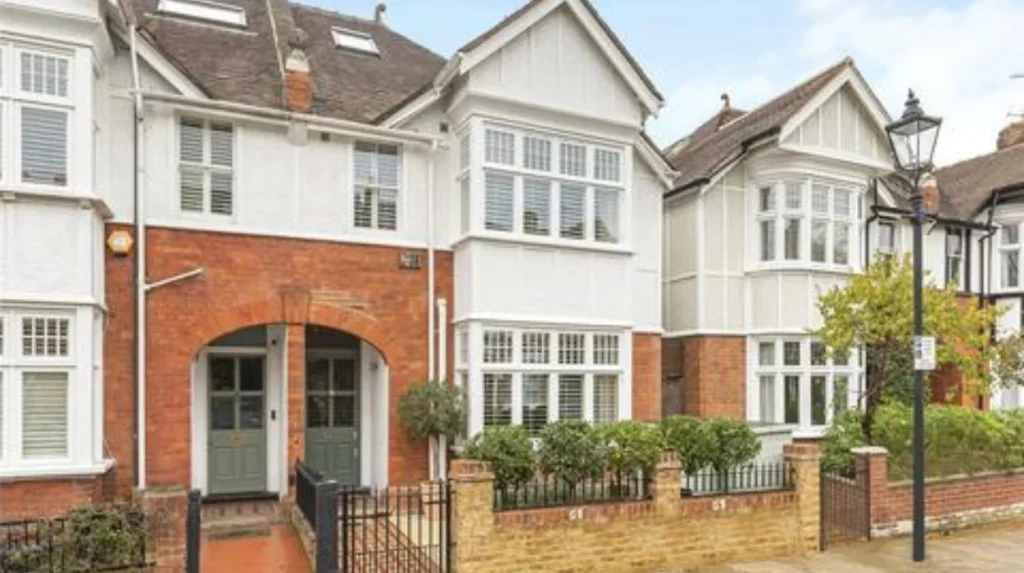
Terraced houses are another major category. Victorian and Edwardian terraces are particularly visible in established neighbourhoods. Their prices depend on floor area, frontage, garden space, renovation quality and proximity to transport.
Semi-detached houses generally provide more internal and external space. They are particularly common in suburban areas further west.
Detached houses form a smaller portion of the overall London housing stock but command significantly higher prices. Ealing’s detached average reached £1.377 million in June 2026, while Hillingdon’s detached average reached £946,000.
New-build developments represent another segment. These properties often feature modern insulation, contemporary layouts, lifts, communal facilities and warranties. Their purchase prices reflect development costs, land values and local demand.
Period properties contain different maintenance considerations. Older roofs, windows, plumbing, electrical systems and heating installations can require substantial investment.
Buyers therefore need to compare properties using floor area, condition, tenure and running costs rather than headline asking prices alone.
How much do West London rents reveal about property demand?
West London rental values provide a separate measure of local housing demand today. In July 2026, ONS recorded private rents of £1,565 in Hillingdon, £2,085 in Ealing, £2,796 in Hammersmith and Fulham, and £2,318 in Richmond upon Thames, respectively.
Rental prices provide useful context for the ownership market because they measure the cost of occupying housing without purchasing it.
ONS recorded an average private rent of £2,317 per month across London in July 2026. The figure increased from £2,250 in July 2025, representing annual growth of 3.0%.
Hammersmith and Fulham recorded an average monthly private rent of £2,796 in July 2026. Annual rental growth was 1.9%.
Richmond upon Thames recorded £2,318 per month, representing a 4.0% annual increase.
Ealing recorded £2,085 per month, up 2.2% from £2,041 in July 2025.
Hillingdon recorded £1,565 per month, up 2.1% from £1,533 one year earlier.
These figures reveal another major difference between West London boroughs. Rental markets are shaped by local employment, transport accessibility, property supply, household formation and the availability of rented homes.
Rent data is not interchangeable with house-price data. A high rent does not automatically mean that buying is financially preferable. Buyers need to consider mortgage rates, deposits, taxes, maintenance, service charges and expected length of ownership.
What costs should buyers include when calculating West London property prices?
West London buyers face costs beyond the purchase price, including Stamp Duty Land Tax, mortgage interest, legal fees, surveys, searches, valuation charges, insurance, service charges, maintenance, and moving expenses. Leasehold flats also involve ground rent and service charges where applicable.
Stamp Duty Land Tax (SDLT) is a major transaction cost for property purchases in England and Northern Ireland. The amount depends on the purchase price, buyer circumstances and applicable tax rules.
Buyers should check the current SDLT thresholds before completing a purchase because tax rules change through legislation.
Mortgage costs represent another major expense. The interest rate, loan-to-value ratio, mortgage term and repayment structure affect monthly payments and total borrowing costs.
A buyer also pays professional costs. Solicitors or licensed conveyancers handle legal work, title checks and registration. Searches identify matters such as planning information, drainage and environmental risks.
A property survey provides information about the condition of a building. The appropriate survey level depends on the property’s age, construction and condition.
Leasehold properties require additional checks. Buyers should examine the remaining lease term, service charges, reserve funds, restrictions and any planned major works.
Service charges can be significant in apartment developments. They fund communal maintenance, cleaning, lifts, building insurance and other shared services.
Homeowners should also budget for ongoing maintenance. Roof repairs, heating replacement, decorating, plumbing, electrical work and external repairs form part of the long-term cost of ownership.
These costs demonstrate why the purchase price alone does not represent the full financial commitment of buying a home in West London.
How do first-time buyer prices compare with wider West London property prices?
First-time buyer prices are generally below overall borough averages because first-time buyers purchase different property types and sizes. In June 2026, ONS recorded first-time buyer averages of £403,000 in Hillingdon, £448,000 in Hounslow, and £483,000 in Ealing.
First-time buyers form an important part of the West London market. Their purchasing capacity is strongly influenced by deposit savings, household income and mortgage affordability.
Hillingdon’s first-time buyer average was £403,000 in June 2026. The overall borough average was £475,000.
Hounslow’s first-time buyer average was £448,000 against an overall average of £513,000.
Ealing recorded £483,000 for first-time buyers compared with £576,000 across all buyers.
Kingston upon Thames recorded an average first-time buyer price of £476,000 compared with £594,000 across the borough.
Hammersmith and Fulham recorded £620,000 for first-time buyers compared with £726,000 overall.
These differences reflect the types of properties first-time buyers typically purchase. Smaller flats and maisonettes generally require less capital than large family houses.
Affordability remains a key issue because London property prices are high relative to many other parts of Britain. First-time buyers therefore need to consider both the property price and the amount of mortgage debt required.
What factors should buyers examine before purchasing property in West London?
Buyers should assess completed sale prices, property type, floor area, tenure, transport, local services, building condition, service charges, council tax, mortgage costs, and future infrastructure before comparing West London properties or making an offer.
The first step is to establish realistic local market evidence. Buyers should compare recently completed transactions for similar properties rather than relying solely on current asking prices.
Property size is particularly important. Two homes with identical bedroom counts can have substantially different floor areas. A larger property generally carries a different valuation from a smaller property with the same number of bedrooms.
Tenure requires careful examination. Freehold and leasehold properties have different legal structures and ongoing obligations.
Building condition should also be assessed. Structural movement, damp, roof condition, windows, insulation, electrical systems and heating can affect the total cost of ownership.
For flats, buyers should examine service charges and planned major works. They should also review the lease length and management arrangements.
Location requires more than checking the postcode. Buyers should assess walking distance to transport, schools, shops, parks, healthcare services and employment areas.
Flood risk and environmental information should also be checked where relevant, particularly for properties close to the River Thames and other waterways.
Planning applications can affect individual properties and neighbourhoods. New developments, road schemes and commercial projects can change local conditions.
A mortgage affordability assessment should incorporate interest rates, deposit size and monthly expenditure. Buyers should calculate the complete monthly housing cost rather than focusing only on the mortgage payment.
Explore More Area Guide
EV Charging Points in West London: Complete Guide 2026
Travel Connections to Central London from West London
What does the latest West London property data mean for the market?
West London property prices remain closely connected to London’s wider economy, interest rates, household incomes, housing supply, taxation, infrastructure, and demand. Official data shows different borough trajectories in 2026, making local transaction evidence more useful than a single regional average.
The 2026 ONS figures show a fragmented West London market.
Kensington and Chelsea recorded a substantial annual decline, while Richmond upon Thames remained broadly stable. Kingston upon Thames recorded annual growth, while Hillingdon was broadly unchanged. Hounslow recorded modest growth, whereas Ealing, Brent and Hammersmith and Fulham recorded annual declines.
This divergence demonstrates the importance of local analysis.
Interest rates influence mortgage affordability because borrowing costs affect how much buyers can finance. Household incomes also influence purchasing power.
Housing supply affects market balance. Areas with limited land and strong demand face different pressures from areas with larger development opportunities.
Transport investment can change accessibility. New or improved services can strengthen connections between residential areas and employment centres.
Taxation also influences transaction decisions. Changes to SDLT and other property-related policies can affect buyer behaviour, particularly at higher price points.
Prime property markets operate differently from mainstream residential markets. Kensington and Chelsea’s £1.25 million average in June 2026 illustrates the scale of the premium associated with high-value central-west London housing.
For residents and buyers, the most useful approach is therefore to examine the specific borough, neighbourhood, property type and recent transactions.
What should buyers remember about West London property prices?
West London property prices cover a broad spectrum. Official June 2026 figures range from £475,000 in Hillingdon to £819,000 in Richmond upon Thames, while Kensington and Chelsea recorded £1.25 million. The London-wide average was £554,000.
The market is shaped by location, housing stock, transport, property size, tenure and demand. The same borough can contain relatively affordable flats alongside multimillion-pound houses.
Ealing demonstrates this clearly, with average prices ranging from £403,000 for flats and maisonettes to £1.377 million for detached properties. Hillingdon shows a similar pattern, from £289,000 for flats and maisonettes to £946,000 for detached properties.
Rental data provides additional context. July 2026 rents ranged from £1,565 in Hillingdon to £2,796 in Hammersmith and Fulham among the boroughs examined here.
For anyone researching West London property prices, borough-level statistics provide the starting point. A proper assessment then requires recent comparable sales, property type, floor area, tenure, condition, transport access and total ownership costs.
The most authoritative source remains the ONS and HM Land Registry UK House Price Index, which provides consistent official data for monitoring completed residential transactions and long-term housing market trends.
What is the average property price in West London?
The average property price varies significantly across West London. In June 2026, official ONS figures included £475,000 in Hillingdon, £513,000 in Hounslow, £576,000 in Ealing, £726,000 in Hammersmith and Fulham, and £819,000 in Richmond upon Thames.